





























A widely mocked AI startup says its chatbot can handle everything from booking dates to remembering important moments.
Good news for bad partners: If you’re the type to forget such essential moments as anniversaries because you were busy playing video games, a new AI startup has your back.
 ADVERTISEMENT
ADVERTISEMENT
ADVERTISEMENT
Orchid is Silicon Valley’s latest disruptor solving problems few people outside Silicon Valley seem to have, offering an AI assistant that can perform tasks for you by texting it as if it were your friend.
But that’s not entirely what the product claims to be. The startup argues that Orchid isn’t an assistant but rather “a second brain”, solving life’s most challenging problems for the glassy-eyed, from organising flights to telling you when your milk has expired.
Turning to AI when a calendar would have sufficed
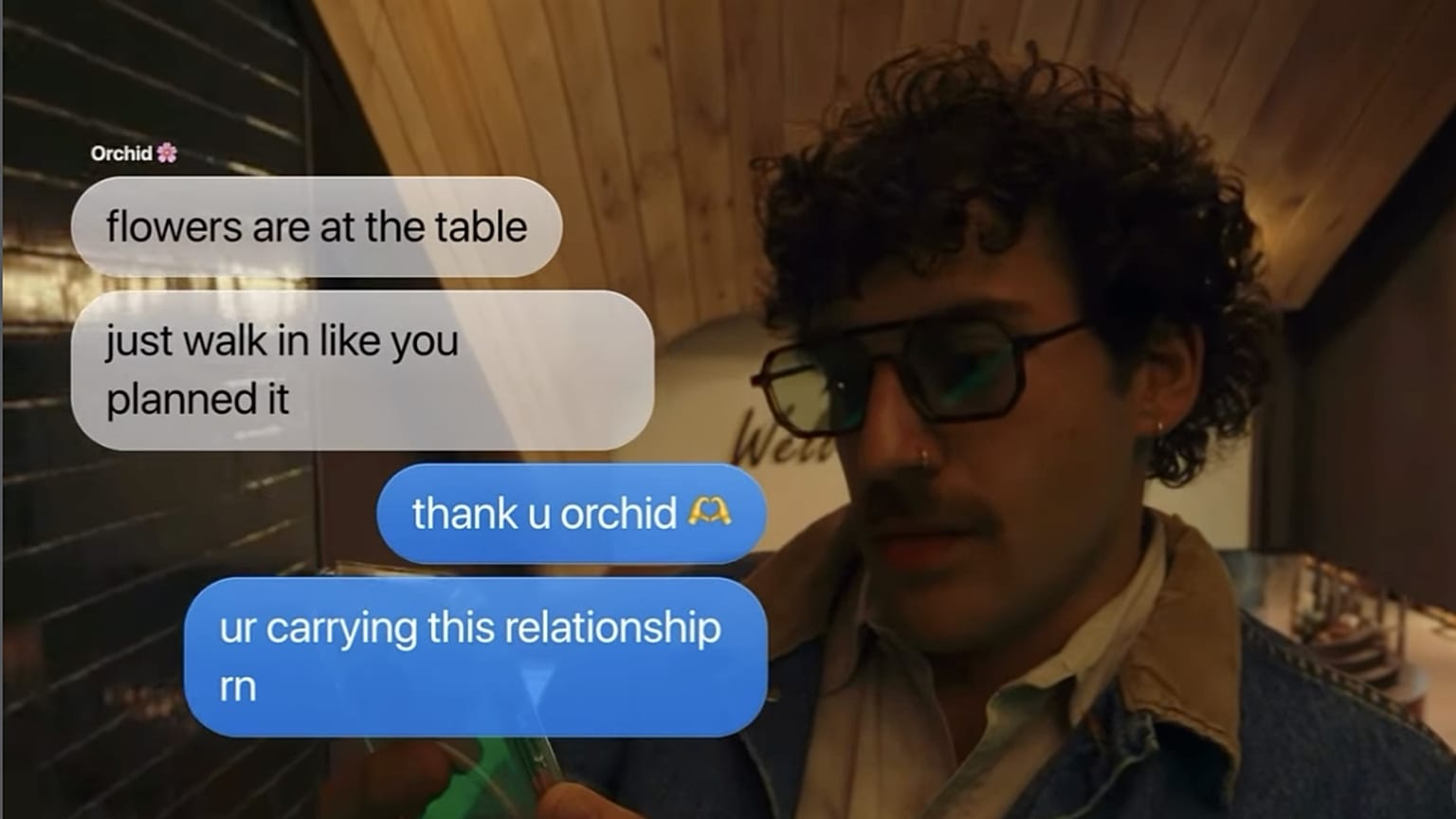
In a widely panned launch video released late last week, Orchid demonstrated its use case in warm-lit tones and the language of the extremely online.
The two-minute ad showed how the AI bot could save the day in a story built “around a real situation”, the team explained in a behind-the-scenes video.
That real situation goes like this: A twentysomething man forgets his anniversary because he’s too busy gaming. His surprisingly chill and professionally dressed partner texts Orchid to prompt him that today is their anniversary and that, hey, maybe he should do something about it. Then Orchid comes to the rescue, instantly booking a restaurant and buying lilies, because it remembers that his partner prefers them to roses.
“ok. ok. i can do this,” the man texts.
“you literally can’t. that’s why I’m here,” Orchid responds, the entire conversation rendered in lower-case and emojis.
A quick scan of comments on Instagram reveals the depths to which consumers seem to loathe the very premise of the product.
“Whats the point of being in relationship if you outsource all the effort and compassion?”, wrote one, while another added: “This is so disgusting and dystopian. Imagine that now you can have a relationship with no effort nor intention. This is actually nefarious.”
Another commented: “this is gross and if it doesn't end humanity is doomed.”
It gets worse
As if outsourcing love and affection weren’t frightening enough, Orchid has made other out-there proposals about how its AI assistant could optimise your life.
Orchid can respond to emails from brands inviting you to work together when you’re too petrified to do it yourself, and you can bounce ideas off it when you’re stuck. You know, that role friends, colleagues or neighbours once served.
In a more troubling and since-deleted ad, the company also suggested its AI agent could scan your food and check it for allergens before you eat.
“It could be anything. And the list of things that put me in a hospital is long enough that anything is the problem,” the script read – and was just as quickly panned by social media users, considering the obvious risks in trusting AI to vet food if you have severe allergies.
As head-scratching as it may seem, though, Orchid’s emergence reflects a growing trend of consumers using AI for mundane tasks.
Last year, economists at OpenAI and Harvard analysed 1.5 million ChatGPT conversations over three years between 2022 and 2025. They found that 75 per cent of interactions involved non-work tasks, such as practical guidance, information seeking and writing. They defined that as anything from cooking advice to help finding the nearest pharmacy.
‘AI situationships’ and the dawn of a new reality
With AI infiltrating every aspect of our lives, it’s becoming more than a tool for some people.
Earlier this year, the French dating app happn declared the “AI situationship” an emerging trend. Not unlike the suddenly prescient movie Her, these informal relationships have become common as people increasingly use chatbots as “a form of emotional training” or “emotional mirrors, spaces for dialogue and attentive listening”.
The AI-ification of love also reflects rising concerns about loneliness.
A YouGov survey last year revealed that three in 10 Australians have been emotionally vulnerable to an AI chatbot.
A study conducted by the Austrian Safer Internet Centre also revealed the same in Europe. About a fifth of adults in Europe are using AI chatbots for romantic conversations, and more than a quarter believe that young people could fall in love with one of them.
Whether someone could fall in love with a chatbot, forget their anniversary and then rely on that same chatbot to “fix everything”, as Orchid promises, remains to be seen.