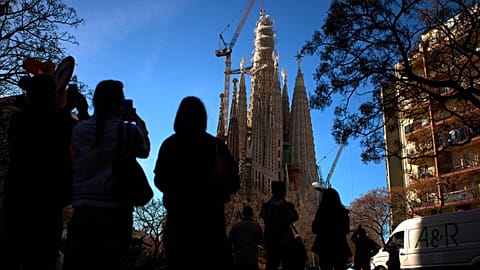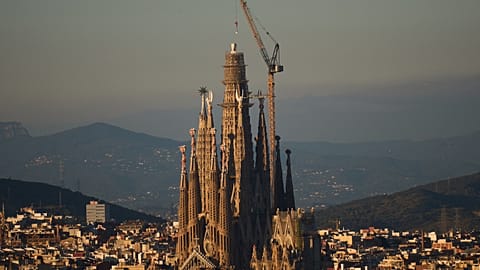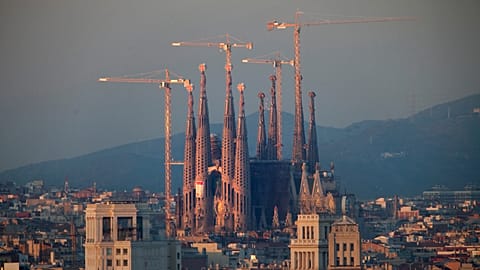
















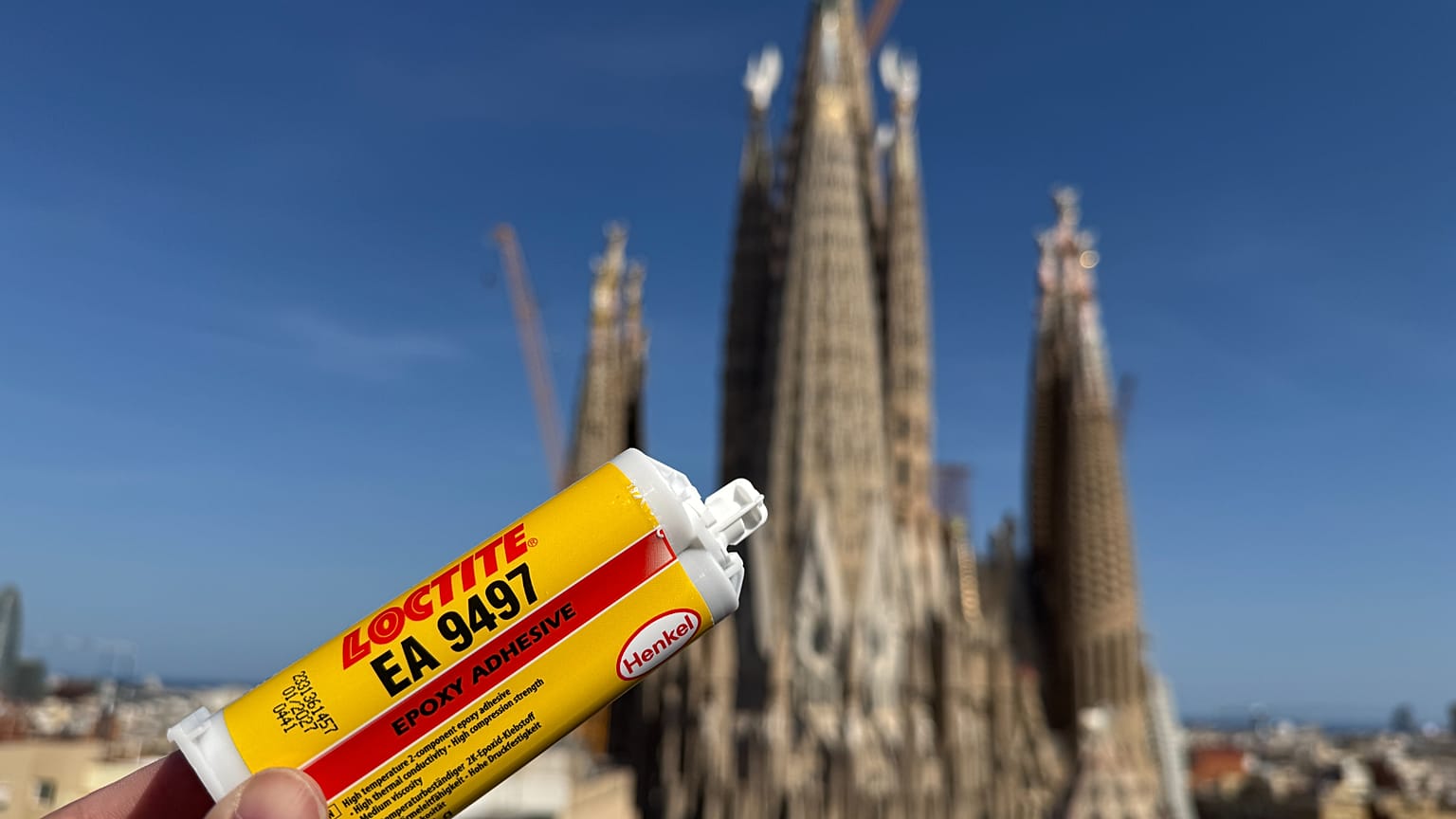













Loctite tech binds stone and steel in 826 panels of the basilica, the tallest in the world at 172 metres. The Pope recently blessed the Jesus Christ tower, its central spire.
For Antoni Gaudí, completing the Sagrada Familia was always a matter of time, not of imagination. He knew exactly what the six central towers should look like. What he did not know was that, more than a century later, technology would prove him right.
 ADVERTISEMENT
ADVERTISEMENT
ADVERTISEMENT
The towers have now been completed, just in time for the centenary of the architect’s death. But behind this visual milestone there is a main player no one would expect in a cathedral of such scale: an adhesive. Specifically, Loctite EA 9497 from Henkel (source in Spanish), the product that has made it possible for stone and steel to behave as a single material.
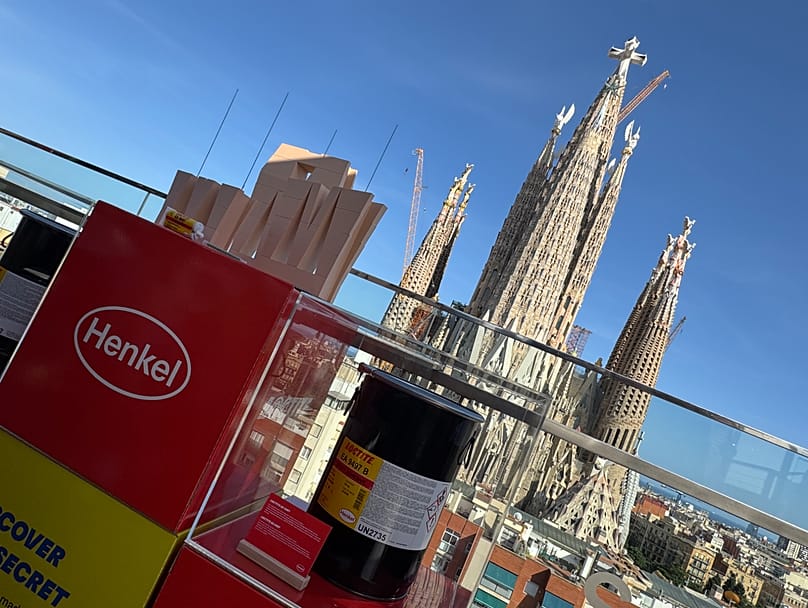
The challenge was immense. The towers have been built using a modular system of prestressed stone panels, 826 in total, incorporating more than 2,100 stone elements bonded to metal structures. Each panel requires around 30 kilograms of adhesive. In all, 24 tonnes applied in liquid form, able to fill every cavity and secure the joint before beginning a curing process of around 24 hours.
Up to 100,000 people per square metre
The result is not only aesthetic, but structural. The bond can withstand loads equivalent to 100,000 people per square metre – the full capacity of a stadium such as Camp Nou, or the weight of 1,600 African elephants. A figure that explains why the Tower of Jesus Christ, the tallest of the ensemble, can support the large cross that crowns it without compromising a single millimetre of stability.
The surroundings also play a role. The basilica stands just over two kilometres from the Mediterranean, exposed to constant salinity and a permanent risk of corrosion. And underground, two metro lines transmit constant vibrations throughout the structure.
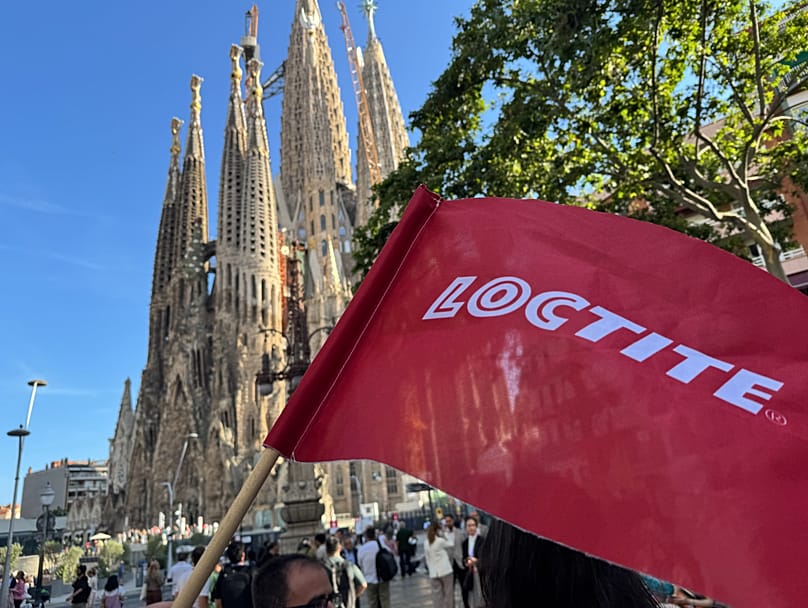
The collaboration between Henkel and the Sagrada Familia did not start yesterday. It has been under way for more than a decade, with testing that goes beyond usual standards and a logistical supply chain that has had to adapt to something rare in the construction world: a project funded solely by visitors’ contributions, with no fixed timetable or closed budget.
The tallest temple in the world
The upshot of all this is already part of history. At 172.5 metres, the Sagrada Familia is now the tallest religious building in the world, ahead of Ulm Minster in Germany.
"This project shows how innovation and collaboration continue to drive progress," says Adrián Orbea, president of Henkel Ibérica. It is a line that, who knows, Gaudí himself might have endorsed if he had had another century ahead of him.