
















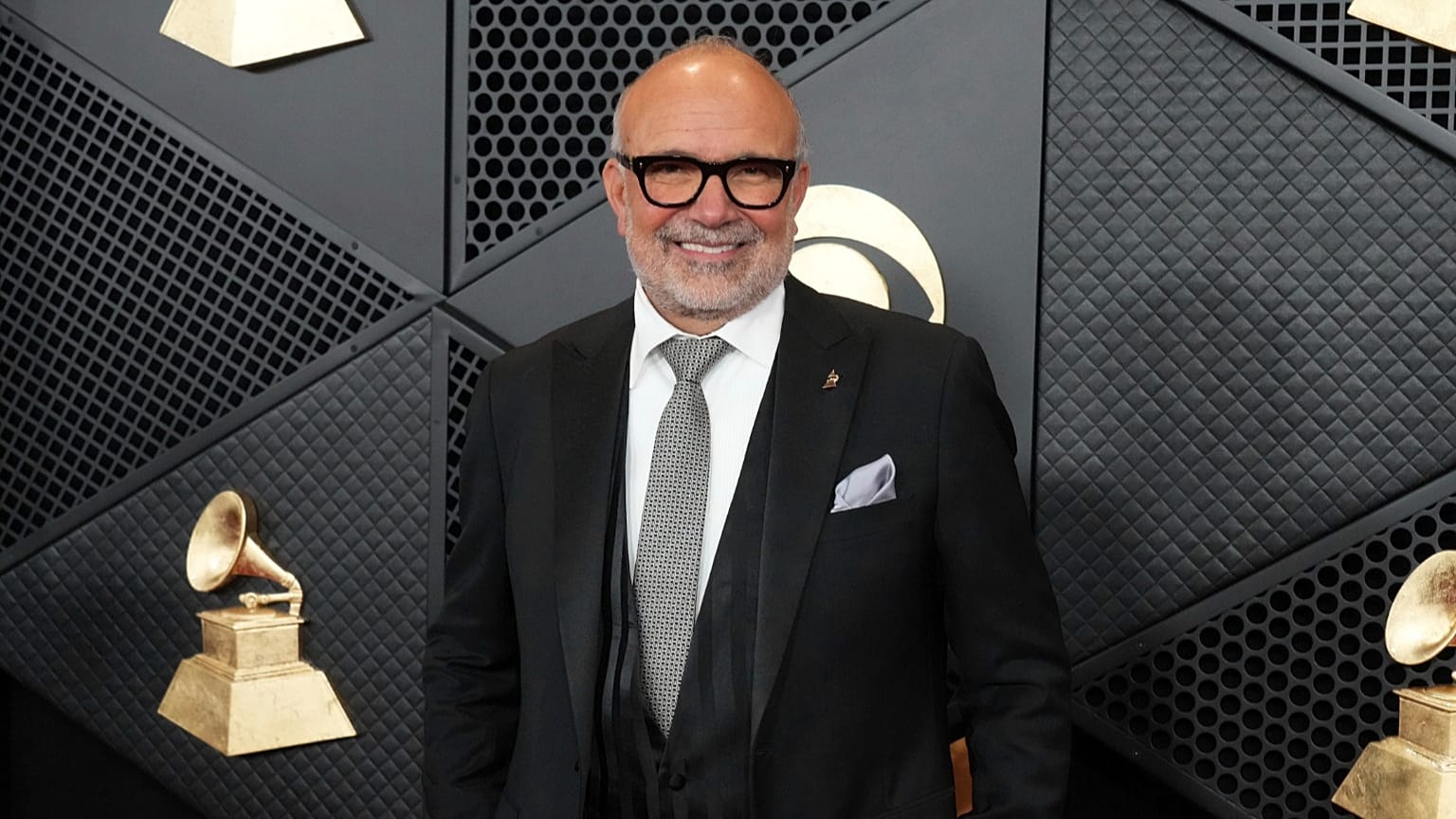














In an interview with Euronews, Manuel Abud, director of the Latin Recording Academy predicts the award show will be held in Spain again in the next two years discusses his belief that Latin artists no longer need to sing in English to succeed.
The Latin Grammy Awards could return to Spain again in the next two years.
 ADVERTISEMENT
ADVERTISEMENT
ADVERTISEMENT
This is according to Manuel Abud, executive director of The Latin Recording Academy, who has confirmed that the organisation is already in talks with possible destinations after the great cultural and economic impact of the edition held in Seville, the first outside of the United States.
In an interview with Euronews, Abud also discusses the enormous global expansion of Latin music and changing tastes which have meant for the first time, international success no longer requires songs to be sung in English.
The edition held in Seville turned the city into the centre of the Latin music industry for a week. According to Abud, that is precisely one of the objectives of moving the ceremony outside the Americas: to bring the event to new audiences and generate a cultural and economic impact on the host city.
"Yes, there is the possibility. What's more, I won't tell you the possibility: I'll tell you the probability of us returning to Spain. We are already in talks with some destinations. And yes, I think it's likely that in the next two years we'll probably have another edition of the Latin Grammy Awards in Spain," said Abud.
In addition to the cultural impact, Abud underlines the economic return of organising the event, which mobilises thousands of industry professionals, artists and visitors: "It is an investment, because we give them a return of more than ten times what is invested. There is an important economic spillover: hotel activity, catering, people who come, who spend and who stay afterwards," added Abud.
Latin artists no longer need to sing in English
Beyond the future of the Latin Grammy Awards in Spain, Abud believes that Latin music is going through a historic moment driven by two major transformations: the artistic evolution of creators and the streaming revolution: "We are living a great moment that has been the result of many years of evolution. The phenomenon of globalisation of Latin music is here to stay."
Digital platforms have radically changed the way music is distributed, allowing artists to reach global audiences immediately. Streaming has allowed music to be distributed universally, almost without filters.
But for Abud, the most significant change is cultural: for the first time, Latin music is succeeding internationally without having to adapt to English: "In the past, the most important artists had to sing in English to make the famous crossover. The phenomenon that excites me most today is that music sung in Spanish is being recognised".
A good example, according to the director, is the international success of Bad Bunny, whose album made history by becoming the first all-Spanish album to win Album of the Year at the Grammy Awards.

In previous decades, artists such as Ricky Martin and Gloria Estefan achieved their greatest global exposure by performing songs in English, a strategy that is no longer essential for the new generations.
The future of Latin music
As for the creative evolution of the genre, Abud believes that Latin music will continue to transform itself through the mixing of styles: "Music is not a static object, it is a living animal."
Fusions between genres, from urban music to pop to influences such as flamenco, will continue to shape the development of the sector. At the same time, digital distribution has changed the balance of power in the industry.
"This distribution capacity generates a tremendous Darwinian effect. The survivor is the strongest and fittest," said Abud. Although Latin music has experienced different booms in the past, he believes that this time the phenomenon is more solidly based.
"There's no turning back. The combination of young talent and global access to music distribution is expanding opportunities for artists from all over the world. We are firm believers that talent is distributed globally. It is often the opportunity that is not equally distributed," said Abud.
And in that new scenario, he concludes, Latin music is going through one of the most promising moments in its history.