
















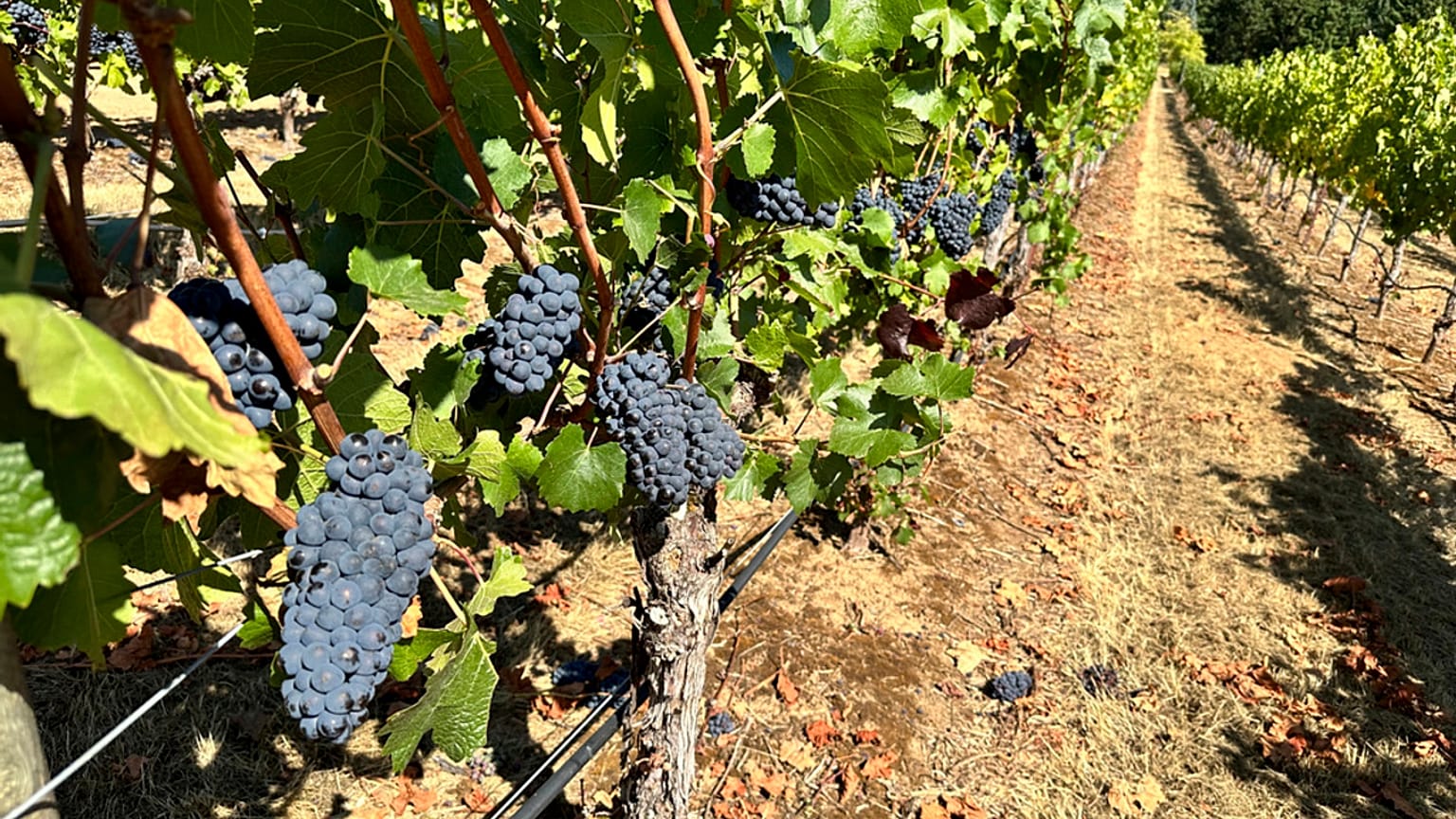














A 600-year-old grape seed discovered in the toilets of a medieval French hospital is genetically identical to the grapes still used today to produce pinot noir, scientists announced on Tuesday.
Found in the famous wines of Champagne as well as those of the Côte d'Or, Pinot Noir is an emblematic grape variety of French vineyards – and quite possibly has been for longer than previously thought.
 ADVERTISEMENT
ADVERTISEMENT
ADVERTISEMENT
A study tracing the genome of grape seeds found on various archaeological sites has identified this fruit, in the same genetic form, in a medieval "rubbish pit" in Valenciennes, in northern France.
Even though it was clearly consumed, scientists do not yet know whether the inhabitants of 15th-century Valenciennes drank it as juice or wine, or ate it as table grapes. But the sequencing results alone, even before any research into historical documents that might explain how different grape varieties spread, are already exciting the scientific community.
"The 15th century marks the end of the Hundred Years' War, it's Joan of Arc. In a way, that means she could have bitten into the same grape as we do", palaeogeneticist Ludovic Orlando, co-author of the study published in Nature Communications, told AFP.
Beyond the anecdote, the scientists have shown that Pinot Noir has changed very little over the last 600 years, preserved by winegrowers thanks to "clonal propagation" techniques such as cuttings, with the aim of maintaining the grape variety's emblematic characteristics.
Characteristics that are still very much in demand – indeed more sought-after than ever, according to winegrower Lorraine Oddo. "Today, especially in the southern regions, we are going back to these ancestral grape varieties," she explains. "Some varieties have been somewhat forgotten and we are currently carrying out a major study to track down these ancient grapes, because they provide, shall we say, a great deal of insight into climate change, particularly into varieties that will also prove more resilient."
The history of French wine through its DNA
Based on 54 grape seeds dating from the Bronze Age to the Middle Ages, the study has made it possible not only to sketch out the beginnings of a family tree for different grapes in French vineyards, but also to map the exchange of cuttings around the Mediterranean.
France's wine trade with the Mediterranean basin is long established. The large number of amphorae that have been unearthed attests to its links with the ancient Greeks and Etruscans. But the DNA analysis of the grape seeds has revealed long-distance exchanges of domesticated grape varieties originating in particular from Spain, the Balkans, the Caucasus and the Middle East.
According to the study, the spread of domesticated grape cultivation dates back to even earlier periods. "Vegetative propagation, evidenced by genetically identical clones found on different sites and over centuries, emerged around the middle of the Iron Age and has since become a cornerstone of viticultural practice," the article explains.