














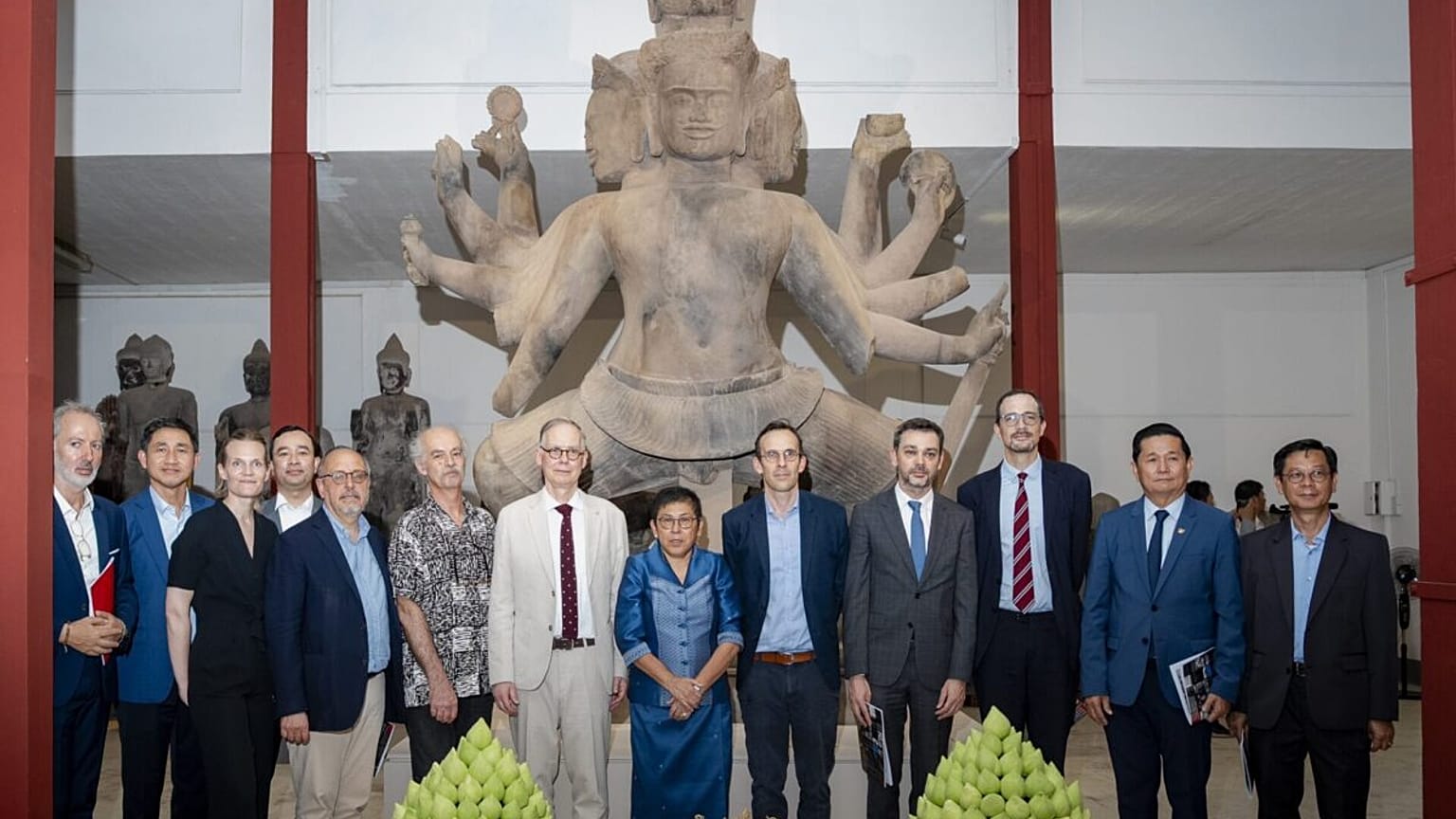













Cambodia has unveiled a restored 10th-century Dancing Shiva statue from Koh Ker, rebuilt from more than 10,000 fragments after years of careful conservation.
A centuries-old Cambodian sculpture has been brought back to life after years of painstaking restoration, marking a significant moment for the country’s cultural heritage.
 ADVERTISEMENT
ADVERTISEMENT
ADVERTISEMENT
The “Dancing Shiva” statue, a towering five-metre sandstone sculpture dating back to the 10th century, was unveiled this week at the Angkor Conservation Centre in Siem Reap.
Originating from Koh Ker, once a capital of the Khmer Empire, the statue depicts the Hindu god Shiva with ten arms and five faces, symbolising cosmic energy and balance.
The seven-ton sculpture’s journey to restoration has been long and complex.
It was believed to have been toppled centuries ago and later heavily damaged during periods of conflict and looting in Cambodia. Over time, it was reduced to more than 10,000 fragments.
A joint effort between Cambodian experts and the French School of the Far East (EFEO) led to the statue’s reconstruction over five years.
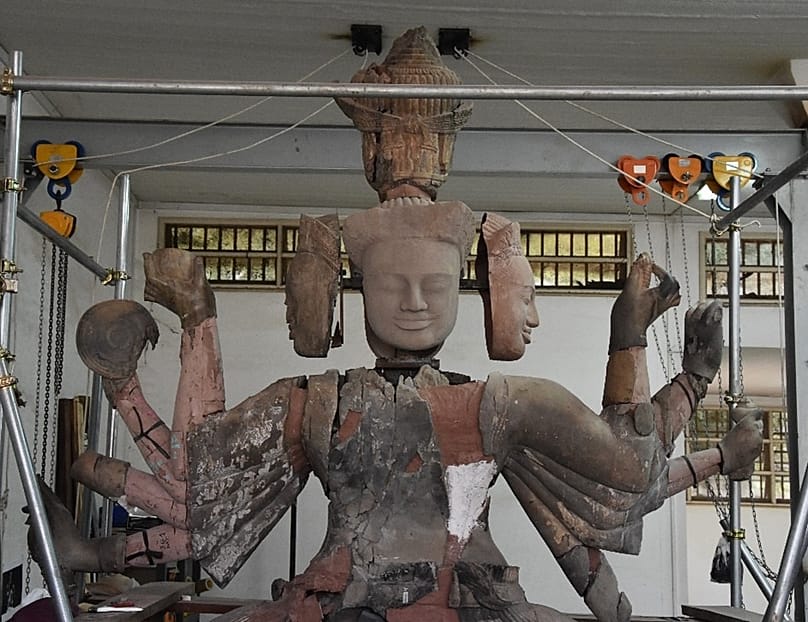
During the process, thousands of fragments were catalogued and carefully reassembled, with experts identifying more than 700 precise joins to rebuild the figure.
Officials say the restoration represents more than just technical achievement. It is also a symbolic act of cultural recovery, underscoring efforts to reclaim and preserve Cambodia’s heritage after decades of loss and trafficking.
Koh Ker itself was added to the UNESCO World Heritage list in 2023, highlighting its historical importance and increasing interest in the region.
Authorities now hope the restored statue will eventually return to its original site, helping to draw visitors and deepen appreciation for Cambodia’s ancient past.
Cambodia has also been stepping up efforts to recover heritage lost to decades of looting.
Last month, the country received 74 cultural artefacts that had been taken abroad and were later linked to British antiquities smuggler Douglas Latchford.
Officials and experts believe thousands of Cambodian relics have been trafficked out of the country over many years. The trade expanded between the 1960s and the 1990s, during a long period of conflict and political upheaval that left many historic sites vulnerable.
For Cambodia, the return of the Dancing Shiva stands as a statement of resilience and a a step toward restoring and preserving its history and heritage.