














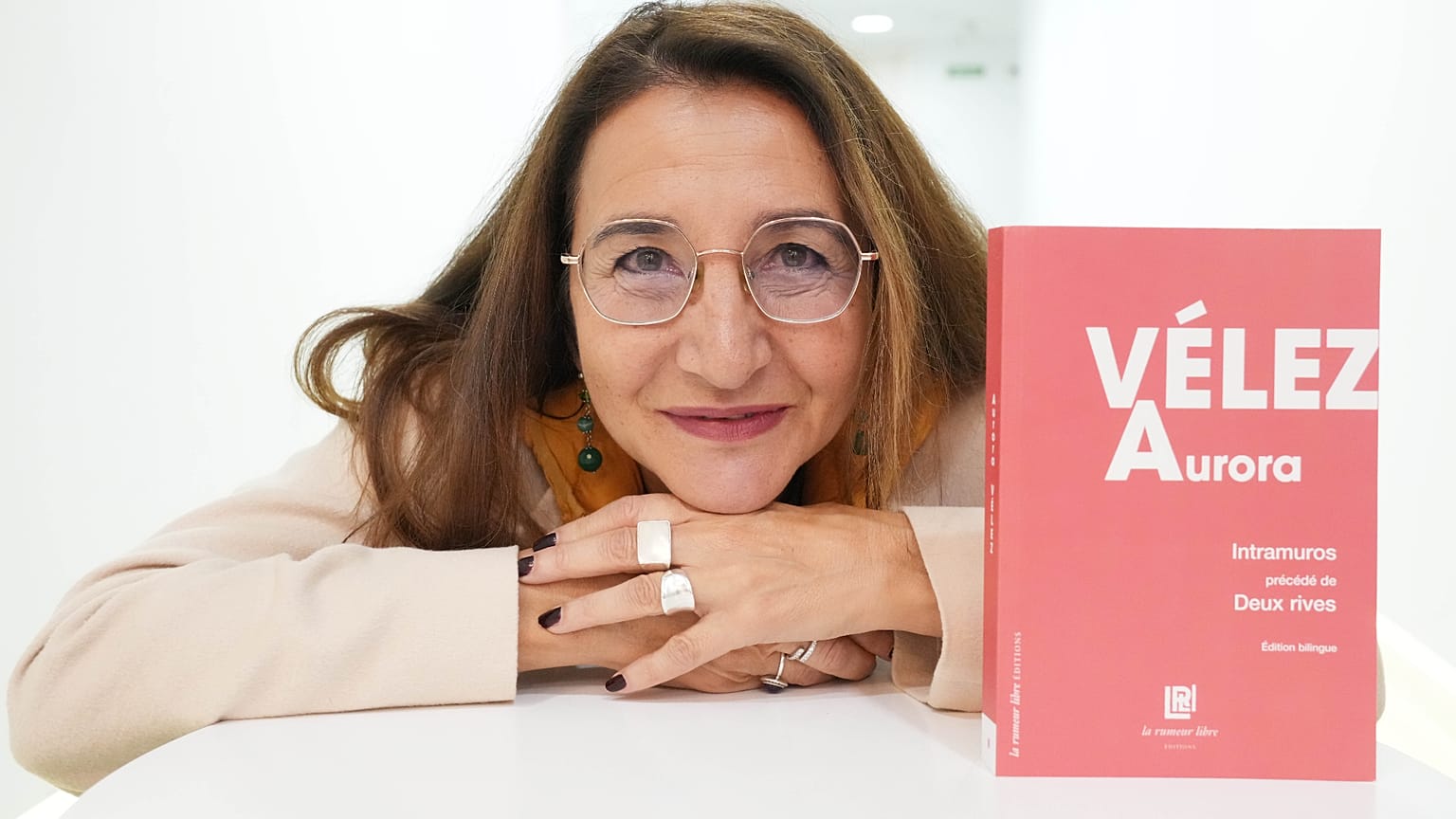













Euronews Culture's poet-in-residence Aurora Vélez has advice on how you can start writing about life, love and everything in-between and World Poetry Day is the perfect place to start.
At the dawn of the new millennium, UNESCO inaugurated the annual World Poetry Day.
 ADVERTISEMENT
ADVERTISEMENT
ADVERTISEMENT
Its aim was to honour humanity’s most treasured forms of cultural and linguistic expression and identity.
Since then, on the 21 March every year, World Poetry Day promotes awareness, linguistic diversity, endangered languages, and celebrates poets of course!
This year, we've decided to explore close to home, where many tongues are spoken, and talk to Aurora Vélez, a Euronews senior reporter - and our very own poet-in-residence.
When she's not crisscrossing the continent sharing stories about 'Smart Regions', and Europe's innovative projects helping people live better lives, she's spends a lot of time reading and writing poetry.
Author of four poetry collections in Spanish, "Errante" is her third bilingual Spanish–French book. In her work she explores intimate and universal themes, advocating for a living, committed poetry without borders. She is also part of the collective Voix de l’extrême, which promotes poetry that crosses languages and territories.
To describe it as a leisurely pastime,however, is an understatement. It's a deep-rooted passion that provides both solace and succour in her daily life.
Path to poetry
Originally from Bilbao, a city in northern Spain, Vélez was introduced to poetry at a young age when her great-uncle would recite stories and poetry to her family. “That is how poetry entered my life, when I was a child, through his voice.”
Velez’s great-uncle wasn’t her only inspiration; she also cites two Spanish poets as being important in her journey: Ramiro Pinilla, whose workshop she participated in, and Gloria Fuertes, one of Spain’s most renowned 20th-century poets. Thanks to Ramiro Pinilla’s weekly workshops, she was able to publish her own collection of poetry at the age of 20, and her experiences led her to write poetry every day, in both Spanish and French, a practice she's always maintained.
Poetry in motion
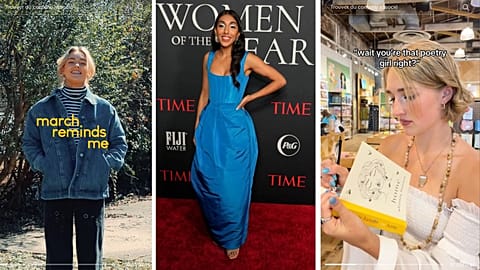
‘Poetry has become fashionable again, and I am glad,’ Vélez says. After the COVID pandemic, she noticed a rise in young people picking up poetry and how poetry was expanding beyond just paper, with young people also consuming it via music and images.
Vélez believes poetry is evolving by doing away with traditions and classic conventions. Some prepared to break the rules are making it more expressive she says and that means there's greater freedom and acceptance among new generations.
"Poetry is young: it is rap, it is on TikTok and Instagram, I too draw inspiration from this: if I have time during filming, I record myself reading some of my favourite living poets in several languages."
Will Artificial Intelligence write poetry tomorrow?
One reality facing many forms of artistry now is the inevitable rise of AI, and as many artists worry about it's affecting artistic expression, Vélez says she's neither fearful nor excited about the possibilities, but rather intrigued: "Artificial intelligence is devoid of emotional consciousness. It knows nothing of love, loss, grief… of the experiences that nourish our existence. Can it venture into them?", she wonders.
For Vélez, poetry is deeply rooted in the human experience and practicing poetry makes people more aware of several forms of consciousness. “It connects with the deepest human substratum, with the most profound part of the unnamed self.”
She likens poetry to music, rhythm, and colour, and says it is exercise for neurons. "If they connect with the reader’s emotions, are they poetry? I suppose they are. I observe the progress, but I still think that poetry is deeply linked to the human condition."
For the love of language
World Poetry Day is designed to promote different languages, especially endangered ones, and this aspect is something Vélez cares deeply about. She's a long practitioner of Spanish and French, and has more recently been stretching her skills in English and Italian; she also loves mixed-language poetry.
Vélez also stresses the importance of oral traditions in promoting language on World Poetry Day, noting that, for the thousands of endangered languages, word of mouth exchanges or sharing of poetry is crucial to the preservation of language and traditional culture for future generations.
“In these times of disbelief, horror, and dystopia, literature, and poetry in particular, is more necessary than ever," adds Vélez. "If you have something to say and write a poem, don’t just keep it to yourself, offer it to the world."
So, is there a better time than World Poetry Day to start collating your own thoughts and feelings about life and events around you? Take the plunge, Vélez says.
Whether you use a piece of paper or your smart phone, her advice is to start writing today, whenever you can, wherever you are.
“No one is judging you. And you will see: one day what you write will almost not feel as if you are the one writing it, because you will be connected to something else.”