














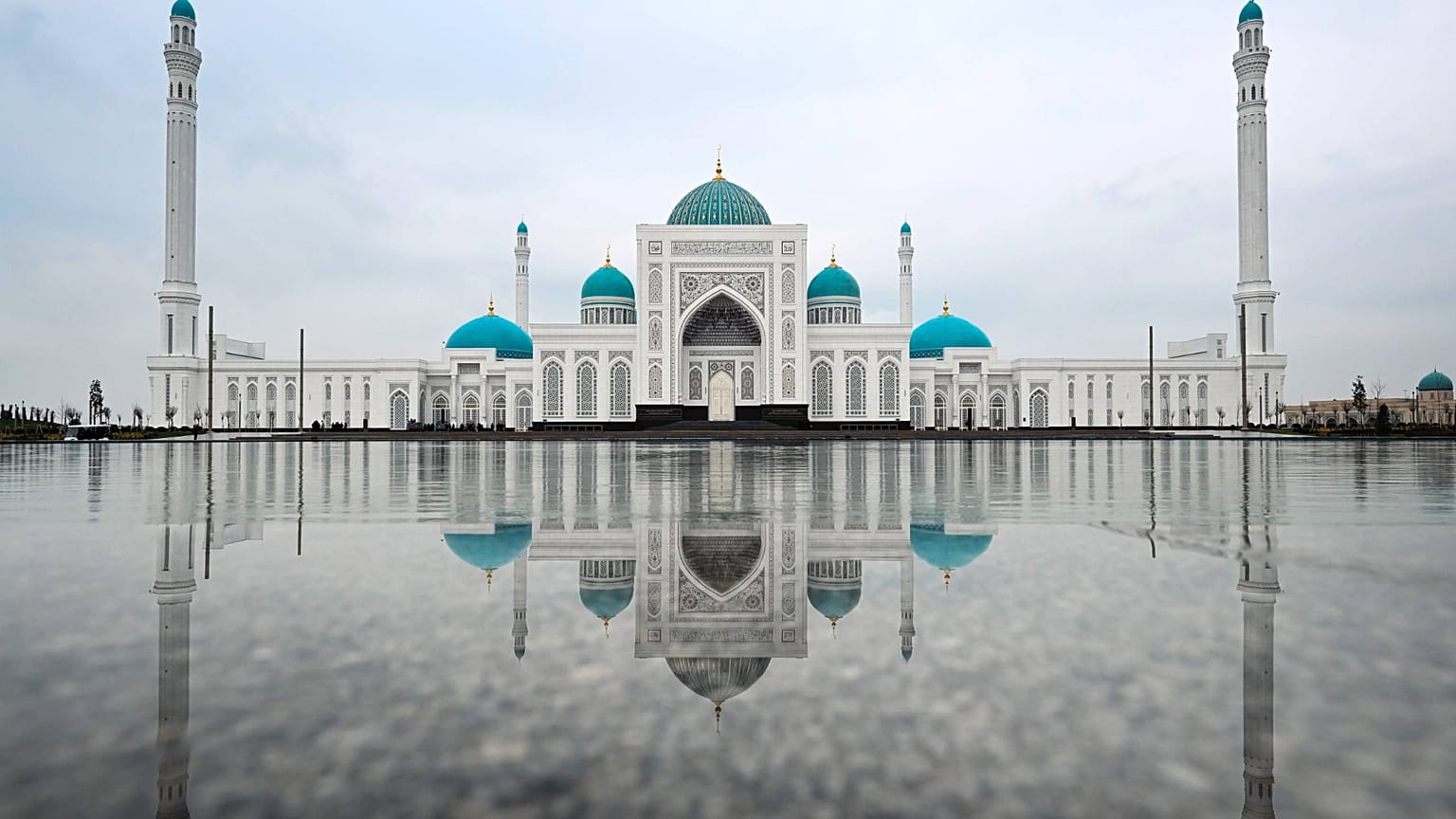














The site includes a mosque, museum and structured visitor services designed to manage high daily attendance. Accommodation and transport infrastructure have also been developed to support access.
A newly built memorial complex dedicated to Imam al-Bukhari has opened in Samarkand, Uzbekistan, and is now receiving visitors and pilgrims. The site was inaugurated by the country’s president ahead of Eid al-Fitr, marking the completion of a large-scale reconstruction project.
 ADVERTISEMENT
ADVERTISEMENT
ADVERTISEMENT
Imam al-Bukhari is widely recognised in the Islamic world for compiling a collection of hadiths that is considered the most authoritative source after the Qur’an. His mausoleum now forms the centre of a complex designed to accommodate significantly higher visitor numbers and provide expanded facilities.
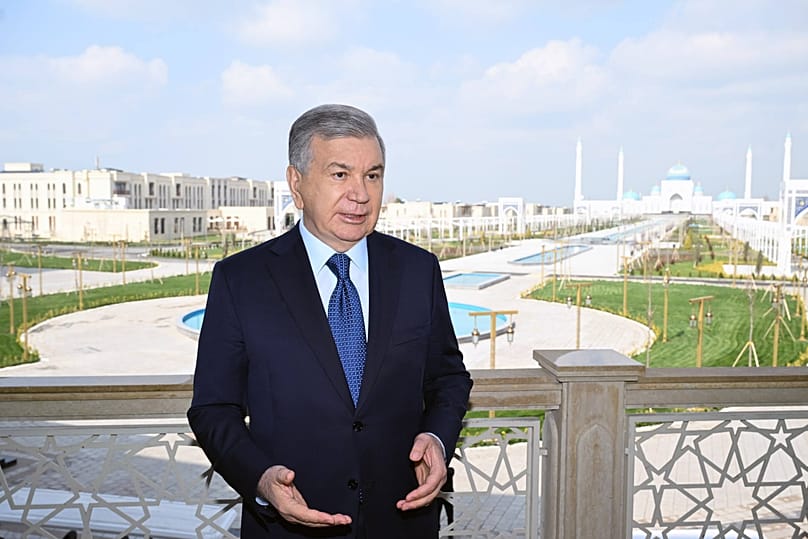
Speaking at the opening ceremony, the President of Uzbekistan, Shavkat Mirziyoyev, said the project reflects the country’s development priorities and its investment in religious and cultural infrastructure. He also stated that the site is expected to serve as a place of learning and reflection for visitors from Uzbekistan and abroad.
Site scale, visitor capacity and museum facilities
The complex covers 45 hectares and includes a central mosque, the mausoleum of Imam al-Bukhari, administrative buildings and an aivan supported by 154 columns. Four minarets rise to 75 metres, and the site includes fourteen domes.
Capacity has increased substantially compared with the previous site. While the earlier complex received up to 12,000 pilgrims per day, the new layout allows for up to 65,000 visitors daily. The mosque itself can accommodate 10,000 worshippers, while the courtyard can host between 35,000 and 40,000 people during major religious events such as Eid prayers.
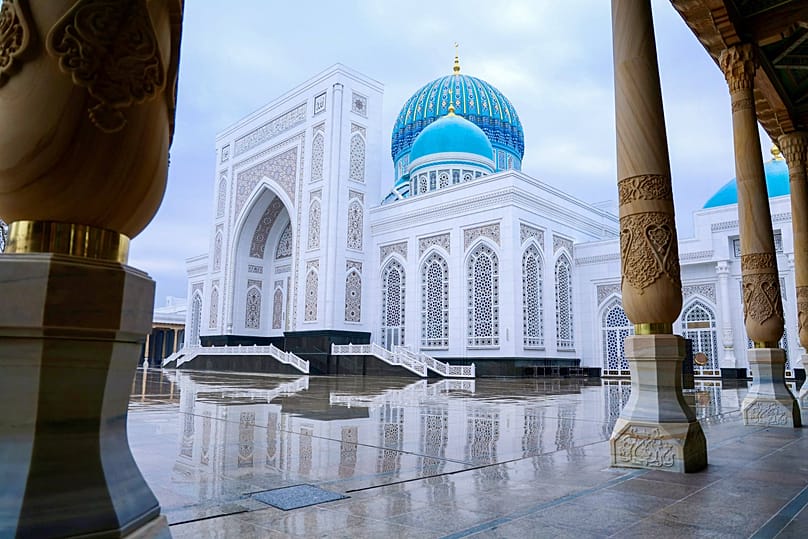
A museum with nine pavilions has been developed as part of the complex. It presents the life and work of Imam al-Bukhari and explains the process of collecting and recording hadiths. The exhibition also includes material on the prophets mentioned in the Qur’an, as well as historical information related to the life of the Prophet Muhammad in Makkah and Madinah.
Facilities designed for high visitor numbers
According to Sahobiddin Arzikulov, Department Director of the complex, the project was built using current construction standards. He confirmed that the facilities were designed to handle large numbers of visitors, with dedicated areas for prayer and support services.
Ablution facilities have been installed for both women and men, and are equipped to serve high volumes of visitors. Guided services have also been organised to manage the flow of pilgrims and provide information about the site.
Construction materials were sourced internationally. Stone used on the exterior was brought from Türkiye, Greece, Italy and China, while the mausoleum features natural stone crafted by artisans from India. In total, eighteen types of stone, including marble and granite, were used across the site.
Visitors have focused on the materials and construction details when describing the complex.
One visitor from Türkiye, Abidin Ozkul, who works in the marble sector, said the quality of the stonework is evident across the site and reflects the use of imported materials and specialised craftsmanship.
Another visitor, Havva Nur, also from Türkiye, referred to the atmosphere of the complex and its suitability as a place dedicated to Imam al-Bukhari.
Tourism infrastructure and visitor services
In addition to the religious and cultural facilities, a tourist centre has been developed next to the complex on a 15-hectare site. The area includes one four-star hotel, two three-star hotels, 22 family guesthouses with a total of 176 beds, and a parking area.
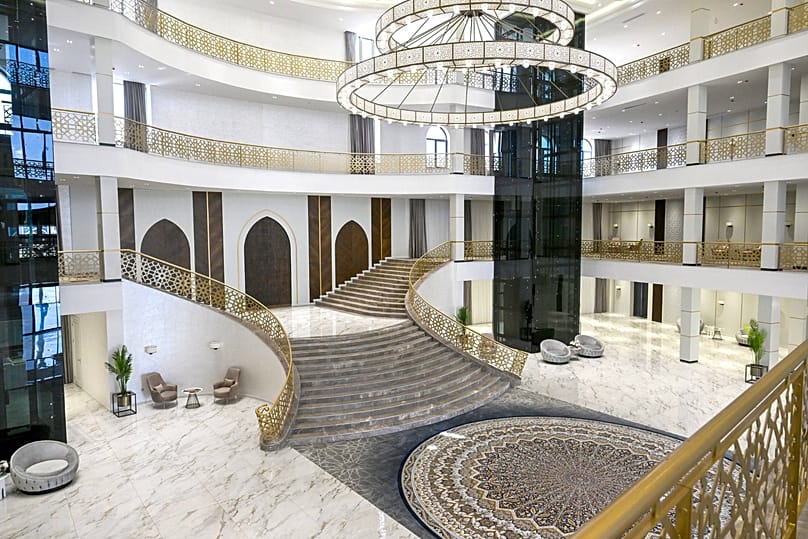
Communication networks have been installed, and the surrounding territory has been landscaped to support visitor access.
Following the completion of construction, the first Eid al-Fitr prayer was held at the new mosque. The complex is now fully operational and open to pilgrims and visitors travelling to Samarkand.