














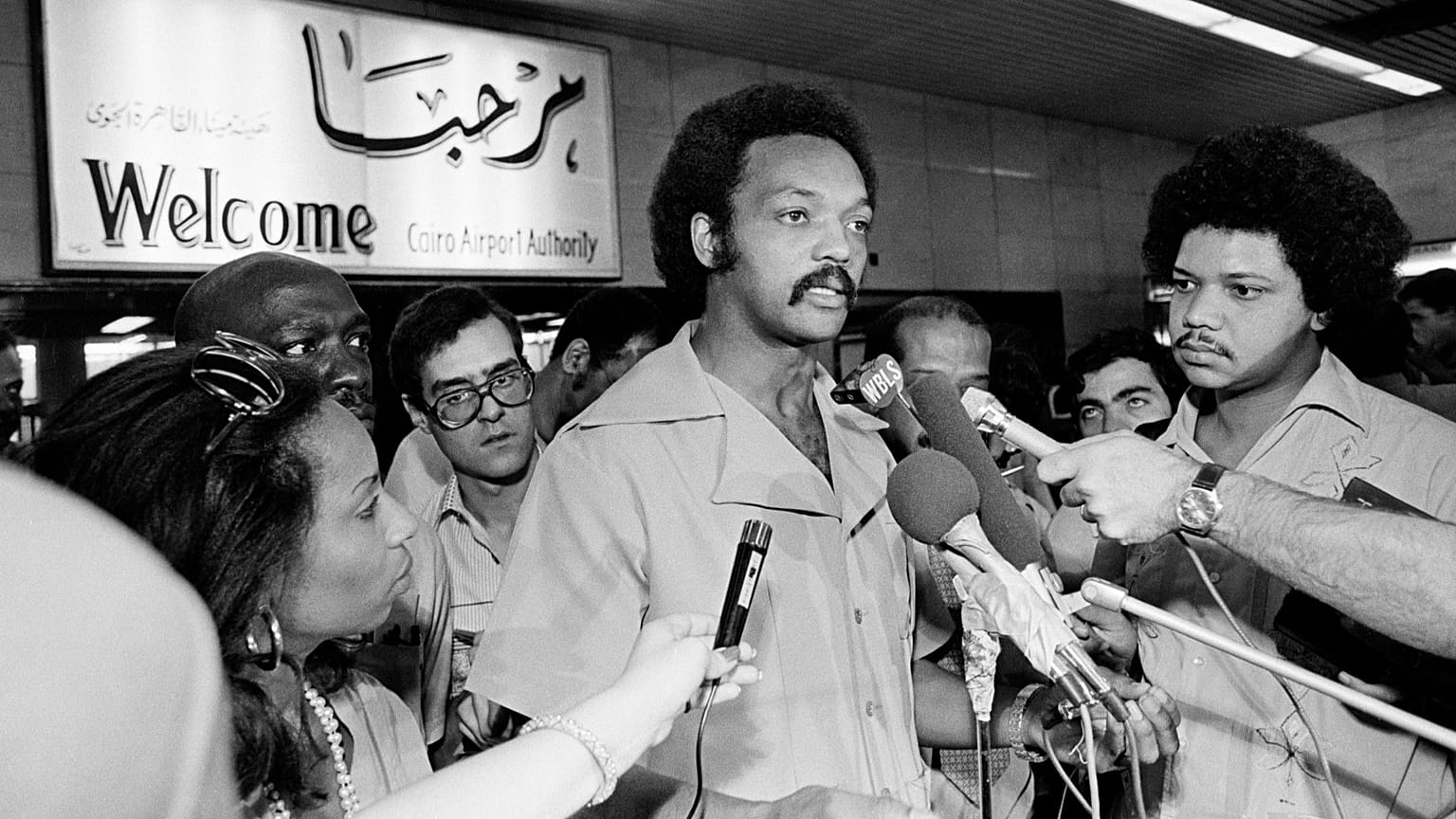














Reverend Jesse Jackson was a prominent civil rights campaigner who ran twice for the US Democratic Party's nomination for president in 1984 and 1988.
US civil rights leader and two-time presidential candidate Reverend Jesse Jackson has died aged 84.
 ADVERTISEMENT
ADVERTISEMENT
ADVERTISEMENT
The news was confirmed by his family, who said that he died peacefully surrounded by loved ones.
"His unwavering commitment to justice, equality, and human rights helped shape a global movement for freedom and dignity,” the Jackson family said. “A tireless change agent, he elevated the voices of the voiceless from his Presidential campaigns in the 1980s to mobilising millions to register to vote - leaving an indelible mark on history.”
"Our father was a servant leader - not only to our family, but to the oppressed, the voiceless, and the overlooked around the world. We shared him with the world, and in return, the world became part of our extended family.”
The statement added: “His unwavering belief in justice, equality, and love uplifted millions, and we ask you to honor his memory by continuing the fight for the values he lived by.”
A cause of death was not immediately given, but Jackson was hospitalized in November for treatment to regulate his blood pressure, having been under observation for progressive supranuclear palsy (PSP) - “a rare neurological disorder that affects body movements, walking and balance, and eye movements,” according to the US National Institute of Neurological Disorders and Stroke.
He announced he had been diagnosed with Parkinson’s disease in 2017.
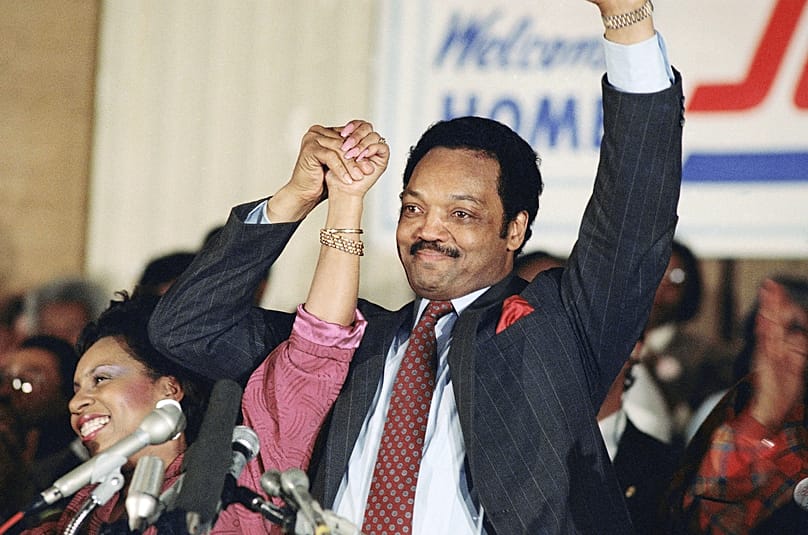
Born on 8 October 1941 in Greenville, South Carolina, Jackson rose to prominence in the 1960s as a leader in Martin Luther King's Southern Christian Leadership Conference.
By 1965, he joined the voting rights march King led from Selma to Montgomery, Alabama. King dispatched him to Chicago to launch Operation Breadbasket, a Southern Christian Leadership Conference effort to pressure companies to hire Black workers.
Jackson was with King on 4 April 1968, when the civil rights leader was slain at the Lorraine Motel in Memphis, Tennessee. Jackson’s account of the assassination was that King died in his arms.
He launched two social justice and activism organisations: Operation PUSH (originally named People United to Save Humanity) in 1971, and the National Rainbow Coalition years later. He advocated, in the US and abroad, for the poor and underrepresented on issues from voting rights and job opportunities to education and health care.
He scored diplomatic victories with world leaders, and through his Rainbow/PUSH Coalition, he channeled cries for Black pride and self-determination into corporate boardrooms, pressuring executives to make America a more open and equitable society.
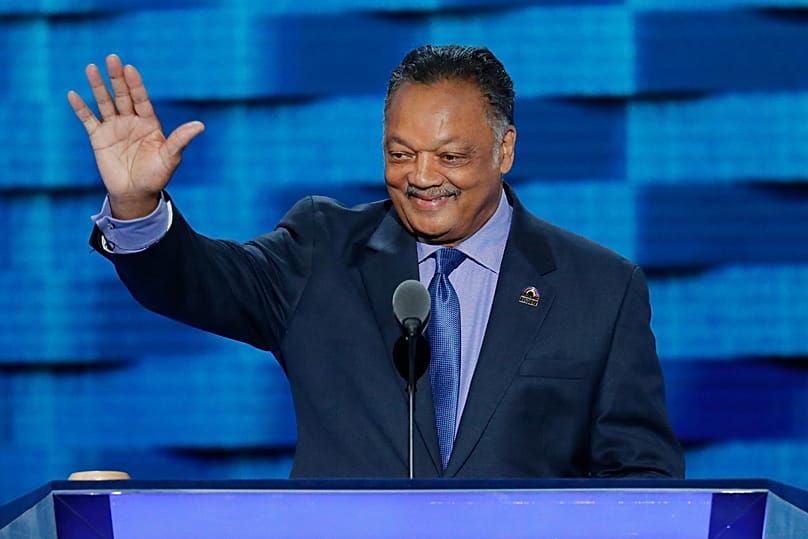
When he declared, “I am Somebody,” in a poem he often repeated, he sought to reach people of all colours.
“I may be poor, but I am Somebody; I may be young; but I am Somebody; I may be on welfare, but I am Somebody,” Jackson intoned. It was a message he took literally and personally, having risen from obscurity in the segregated South to become America’s best-known civil rights activist since King.
Despite health challenges in his final years, Jackson continued protesting against racial injustice into the era of Black Lives Matter.
“Even if we win,” he told marchers in Minneapolis before the officer whose knee kept George Floyd from breathing was convicted of murder, “it’s relief, not victory. They’re still killing our people. Stop the violence, save the children. Keep hope alive.”
Donald Trump has responded to the protest - the largest civil unrest movement in the US since the 1960s - by threatening to send in the military. Jackson warned that this would only lead to "a massive fight back".
"We'll have to go to jail, we will resist," he told Euronews at the time. "Our democracy cannot give way to a police state."
In 2024, he appeared at the Democratic National Convention in Chicago and at a City Council meeting to show support for a resolution backing a ceasefire in the Israel-Hamas war.
Reverend Jackson is survived by his wife, Jacqueline, their children - Santita, Jesse Jr., Jonathan, Yusef, Jacqueline, daughter Ashley Jackson, and grandchildren.