
















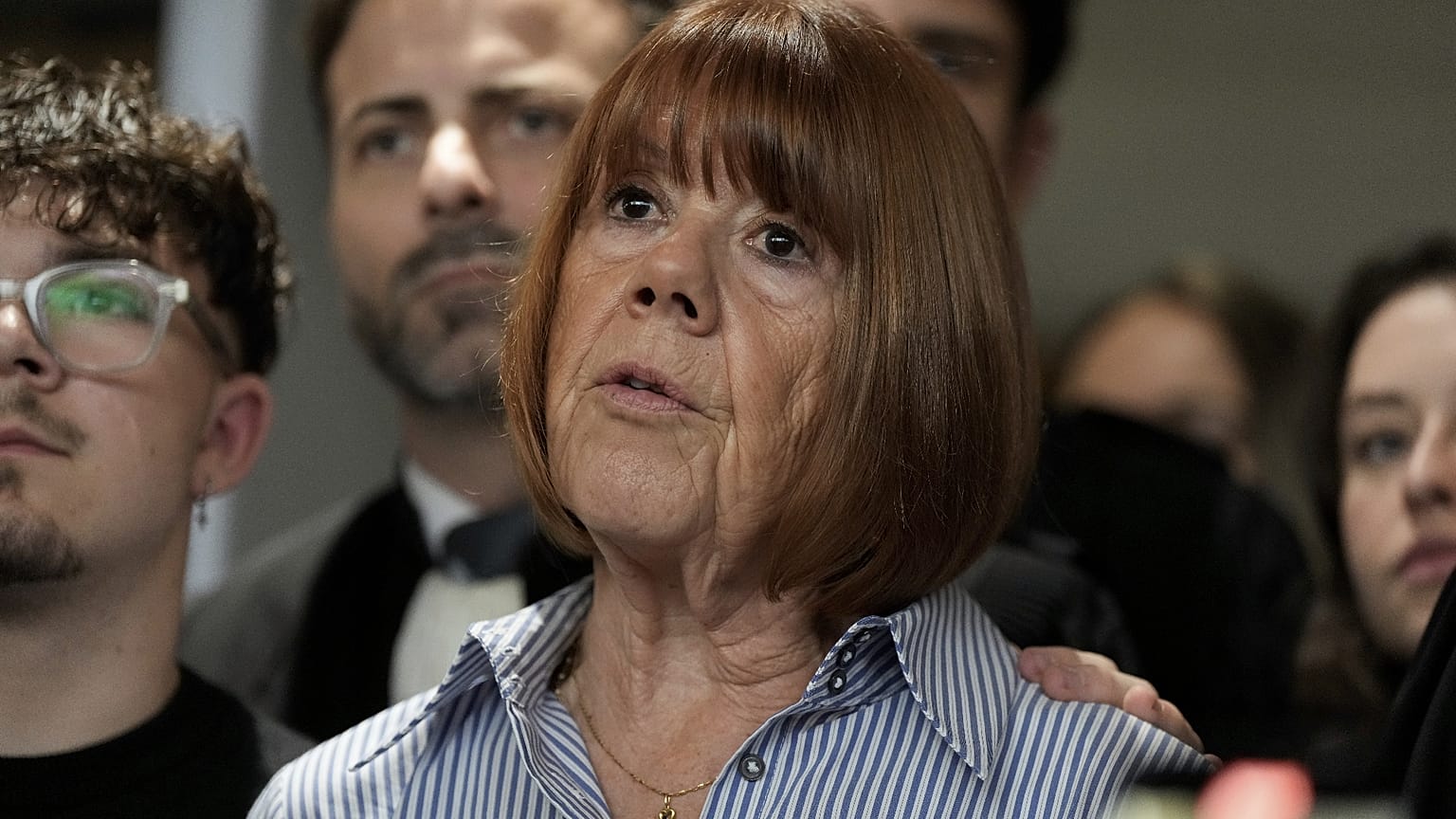














Gisèle Pelicot's memoirs "A Hymn to Life" are her first account of her rape ordeal, the subsequent trial, waiving her right to anonymity and the consequences of her choices.
Gisèle Pelicot will perhaps be experiencing a renewed sense of freedom today.
 ADVERTISEMENT
ADVERTISEMENT
ADVERTISEMENT
Her memoir "A Hymn to Life: Shame has to change sides" is now available in 22 languages across the world, marking a major milestone in publishing.
The book recounts, for the first time, her version of surviving being the unconscious victim of rape by her husband and dozens of other men. In the end, 51 men were found guilty of rape and sexual assault.
Her British publishers Penguin describe it as an "unwavering honest account of her enduring a difficult childhood, her first love, her career and motherhood." Like millions of others, her family life and relationship has been filled with extremely tough moments.
But rarely has the world learned of such devastating details. An ordinary woman confronted with an extraordinary ordeal and alarming discoveries about the man with whom she shared a life for half a century.
Gisèle Pelicot become the face of the Mazan village rape trial last year when she waived her right to anonymity. Her account of what she suffered at the hands of her ex-husband, who secretly drugged her for over a decade, made her a leading international figure in the fight against sexual violence.
From her meeting with Dominique Pelicot to her life after the trials, the 73-year-old reveals her story co-written by the French journalist and author Judith Perrignon.
The victim - in the legal sense, but not in the face of life as she's made clear in various media interviews - seizes control of her story without asking the reader to feel sorry for her or admire her.
Reliving the nightmare
It all began with a phone call and an appointment at the police station in Carpentras on the morning of 2 November 2020.
Dominique Pelicot had been called in for questioning after a supermarket security guard caught him secretly filming up women’s skirts.
A police officer questioned her, then showed her photos of herself asleep and raped by people she did not recognise. Gisèle Pelicot didn't recognise herself either.
"This woman's cheek was so flaccid_,"_ she describes. "Her mouth was so soft. She was a rag doll. My brain stopped in Sub-Brigadier Perret's office," she recounts.
At the end of the investigation, she recounts how stunned she was when she read the details of what happened:_"_The dates hurt. I kept seeing the moment before, the moment after, where we were, what we were experiencing and what I thought was a happy moment. It was my birthday, it was the evening of New Year's Eve that we had spent alone for once, it was just after our children had left."
Then, in 2024, came the trial. And the chance to see accused face to face. After initially wanting to keep the affair private and fearing having her face splashed across the papers, she explains why she changed her mind about appearing in public.
"I couldn't wait to see him face to face. I was afraid of their numbers,"she recalls."So much so that, more and more, the closed door of the courtroom, which was supposed to protect me from stares, the press and comments, worried me. It would leave me alone to face them."
Pelicot also makes clear there was an extremely important additional reason for reversing her decision so that: "all women who have been raped should no longer feel ashamed".
She doesn't regret her choice, but in the book Pelicot adds another dimension: "Today, when I think back to the moment when I made my decision, I say to myself that if I had been twenty years younger, I might not have dared refuse to go behind closed doors,"she explains.
"I would have been afraid of the stares, those pesky stares that a woman of my generation has always had to deal with, those pesky stares that make you hesitate in the morning between trousers and dress, that escort you or ignore you, that flatter you and embarrass you, those pesky stares that are supposed to say who you are, what you're worth, and then drop you when you get older."
Attacks and applause
During her seven weeks in court, Gisèle Pelicot recalls the"incessant attacks"but also the fear that disappeared. And then there was the reactions from the crowds that gathered_._ During the four days of hearings at the Gard Assize Court, she was applauded at every turn.
"For four years, I had been running away from the strong embraces of the people who love me, I didn't want anyone's compassion, I was relying only on my own strength, and no doubt on oblivion. But this crowd was fed up with oblivion, with the way life cuts us up and leaves us alone, with our pain unacknowledged. This crowd saved me," she writes.
In December 2025, Dominique Pelicot, who organised the rapes of his ex-wife over a decade, was sentenced to 20 years in prison, the maximum penalty.
His co-defendants received sentences ranging from three years' imprisonment, two of which were suspended, to 15 years.
"A Hymn to Life" by Gisèle Pelicot is available in 22 languages from 17 February 2026.