














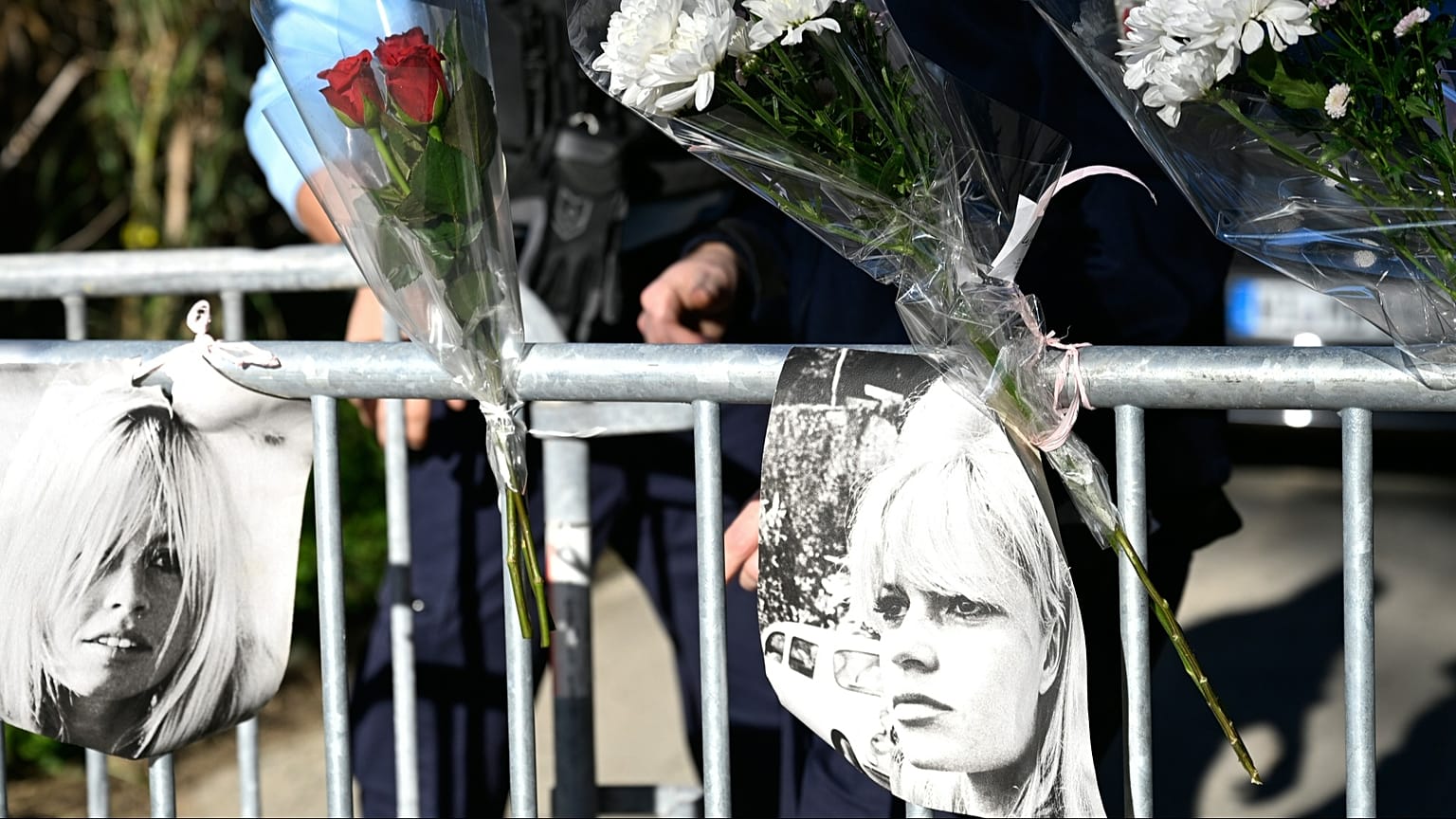













The death of Brigitte Bardot has sparked a fierce political debate in France, after right-wing figures called for a national tribute to the screen legend.
French politicians are deeply divided over how - or whether - to honour Brigitte Bardot, following her death as the screen legend's later-life politics proved as controversial as her films were influential.
 ADVERTISEMENT
ADVERTISEMENT
ADVERTISEMENT
Bardot died on Sunday aged 91 at her home in Saint-Tropez on the southern Mediterranean coast. News of her demise prompted an outpouring of tributes, celebrating a woman who became a symbol of French culture, sexual liberation and cinematic glamour, through films such as And God Created Woman, Le Mépris and The Night Heaven Fell.
She will also be remembered for her animal rights activism. She traveled to the Arctic to blow the whistle on the slaughter of baby seals; she condemned the use of animals in laboratory experiments; and she opposed sending monkeys into space.
Yet her legacy remains sharply contested.
Why is Bardot a controversial figure?
In later years, Bardot became closely associated with the far right and was convicted five times for inciting racial hatred, largely over comments targeting Muslims and what she called an “invasion” of foreigners in France, as well as the residents of the French Indian Ocean island of Réunion, whom she once described as “savages”.
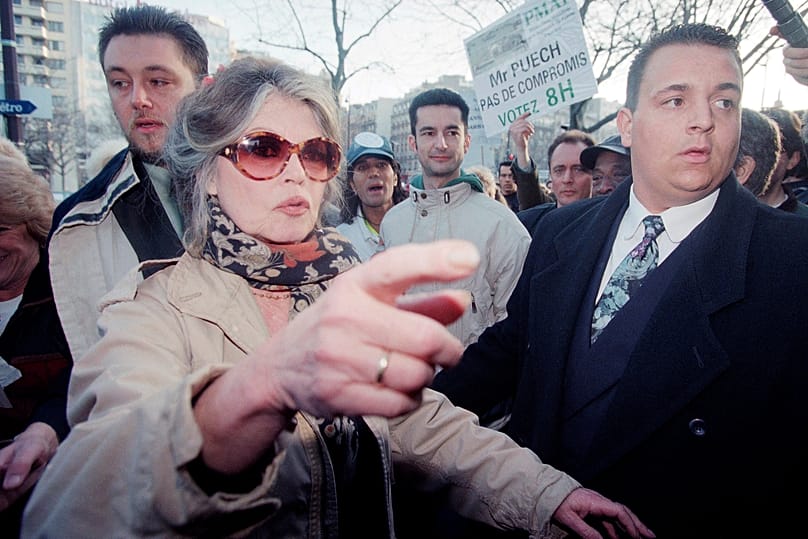
Notably, she criticised the Muslim practice of slaughtering sheep during annual religious holidays like Eid al-Adha. "It’s true that sometimes I get carried away, but when I see how slowly things move forward ... my distress takes over," Bardot told the AP when asked about her racial hatred convictions and opposition to Muslim ritual slaughter.
In her final years, Bardot was critical of the #MeToo movement. She said in an interview that most actors protesting sexual harassment in the film industry were “hypocritical” and “ridiculous” because many played “the teases” with producers to land parts.
She said she had never had been a victim of sexual harassment and found it “charming to be told that I was beautiful or that I had a nice little ass.”
In her final television interview earlier this year, Bardot dismissed feminism outright. "Feminism isn’t my thing… I like men,” she told BFM TV, before cutting off the interviewer’s suggestion that the two were compatible with a blunt: “No!”
Resurfaced tension surrounding her legacy
Following her death, the political tensions surrounding her life have resurfaced. Right-wing figure Éric Ciotti has called for a national tribute, arguing that France should honour one of its most recognisable cultural figures.
"The President of the Republic must have the courage to organise a national tribute for our BB!" reads an online petition, which has nearly 25,000 signatures at the time of writing. It suggests a mass public farewell similar to those given to rock star Johnny Hallyday in 2017 or singer and actor Charles Aznavour in 2018.
Far-right leader Marine Le Pen, who is currently barred from holding public office pending an appeal hearing in January, also joined the tributes, describing her as an "exceptional woman" and "incredibly French: free, untameable, whole."
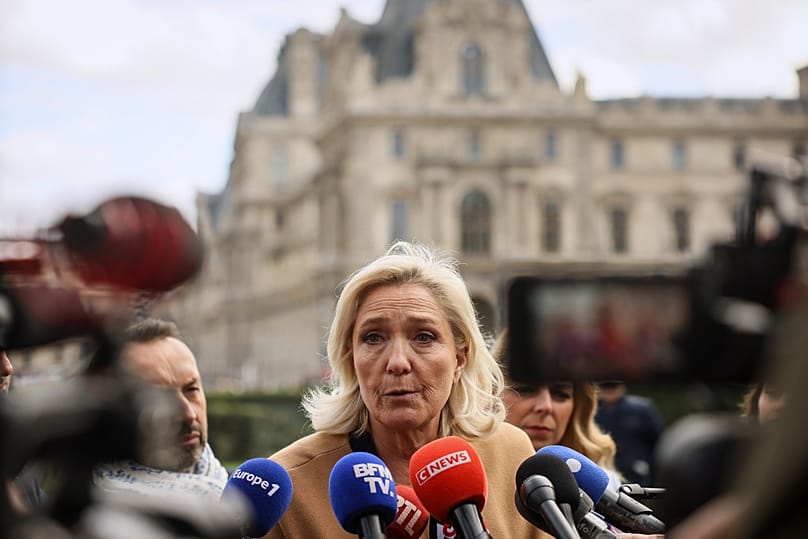
According to the AFP news agency, the office of President Emmanuel Macron reportedly offered to organise a tribute to Bardot but her family failed to respond to the proposal.
On Sunday, shortly after death was announced Macron posted on X to share his condolences. "We are mourning a legend,'' he wrote. "Her films, her voice, her dazzling fame, her initials, her sorrows, her generous passion for animals, her face that became Marianne - Brigitte Bardot embodied a life of freedom. A French existence, a universal radiance. She touched us. We mourn a legend of the century."
Meanwhile, Nice's mayor Christian Estrosi has said the city plans to name an “iconic site" after Bardot in her honour.
But some on the left have been more critical. "To be moved by the fate of dolphins but remain indifferent to the deaths of migrants in the Mediterranean -- what level of cynicism is that?" said Green MP Sandrine Rousseau on social media.
Socialist leader Olivier Faure said that while Bardot was undeniably an iconic actress, national homages are reserved for figures who rendered “exceptional services to the nation”. He argued that Bardot had "turned her back on republican values."
Bardot will be buried privately in Saint-Tropez’s marine cemetery overlooking the Mediterranean. Her funeral will take place on 7 January at the Notre-Dame de l’Assomption church, with the service broadcast on screens across the town.
Whether France will grant Bardot a national tribute remains undecided, leaving the nation to debate how - and if - it should formally honour someone whose life was as legendary as it was divisive.