












A dinosaur that looks like a tiny Tyrannosaurus rex is now one of the world's most expensive fossils having been sold at a Sotheby's auction for €42.6 million in New York.
A rare skeleton of a smaller cousin of the Tyrannosaurus rex has sold for a record €42.6 million at an auction in New York.
 ADVERTISEMENT
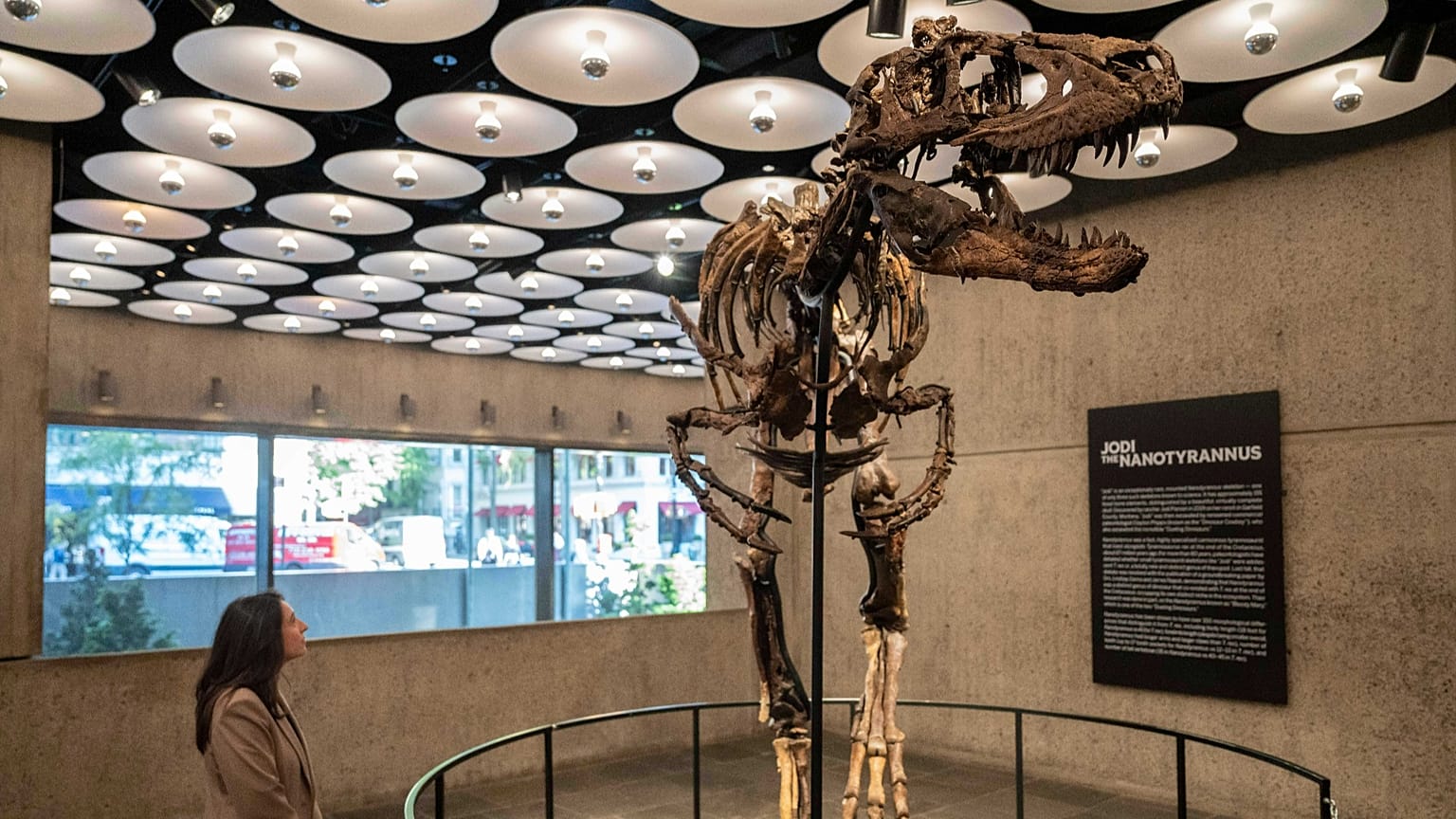
The Nanotyrannus, nicknamed "Jodi" after the person who discovered the remains in 2019, was bought by a mystery buyer after a 12-minute bidding battle online and over phones. Sotheby's had expected it to fetch anywhere from €4 to €7 million.
In a statement, the auction house said the deal now ranks the junior T.rex as the world's second most valuable dinosaur ever sold. This summer, a T. rex fossil known as “Gus” sold for a record €44 million at Sotheby's
Close family claws and controversy
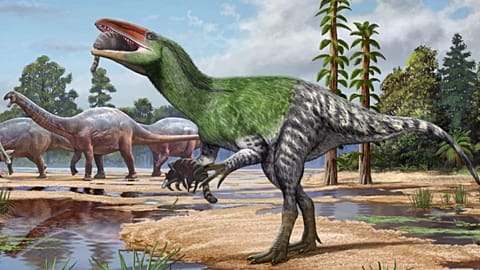
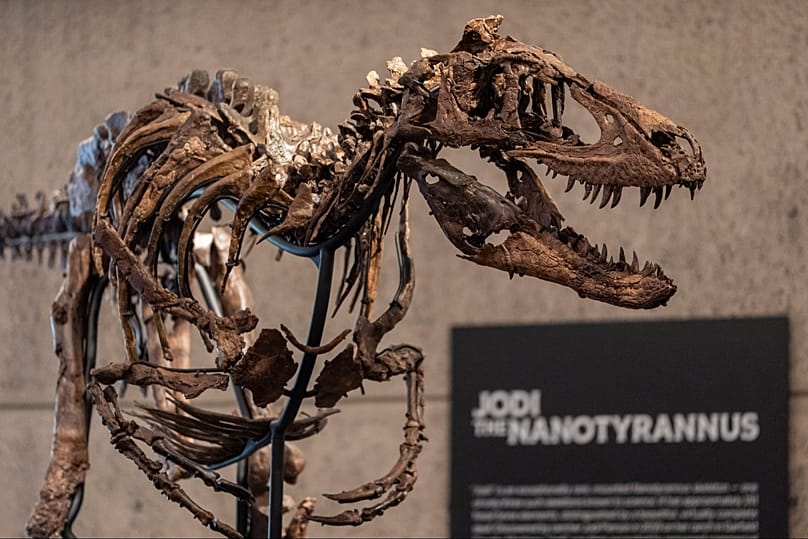
A Nanotyrannus was about half the length of an adult T. rex, and the two creatures coexisted during the Cretaceous period some 67 million years ago. Nanotyrannus had relatively longer forelimbs and larger hand claws, as well as more slender, blade-like teeth than its famous cousin.
“Jodi” is one of only three such skeletons known to exist. Standing 2.9 metres and stretching nearly 6 metres, it has been on display at the auction house’s upper Manhattan headquarters since earlier this month, and is considered almost 70% complete.
However, some scientists have opposed such private sales, saying “Jodi” and other significant fossils should be displayed in museums or other institutions so they can be studied by researchers and viewed by the public.
Sotheby’s, in a statement, thanked the team of professional fossil hunters whose efforts to discover and excavate the specimen were the focus of the Discovery Channel documentary series “Dino Hunters” in 2020.