




























Former French President Nicolas Sarkozy's prison memoir hits shelves today. In it, he describes his 20-day prison stay, including his diet and weak showers, and advises on appealing to the far-right.
Former French President Nicolas Sarkozy’s book about his 20 days behind bars, titled “A Prisoner’s Diary” ("Le journal d'un prisonnier" in French), hit shelves today.
 ADVERTISEMENT
ADVERTISEMENT
ADVERTISEMENT
The 216-page long prison memoir (that’s about 11 pages per day of incarceration) describes La Santé prison - where he was incarcerated for criminal association in financing his 2007 campaign with funds from Libya - as a noisy, harsh “all-grey” world of “inhuman violence".
It’s worth reminding that Sarkozy was held in solitary confinement and kept strictly away from other inmates for security reasons.
Sarkozy writes that his cell looked like a “low-end hotel, except for the armored door and the bars,” with a hard mattress, a plastic-like pillow and a shower that produced only a thin stream of water.
“The worst part was that this thin stream of water stopped very quickly, like a timer. You constantly had to find the button and press it.”
Clearly Sarkozy never experienced the joys of public gym or swimming pool showers.
Opening the window on his first day behind bars, he heard an inmate who “was relentlessly striking the bars of his cell with a metal object.”
“The atmosphere was threatening. Welcome to hell!”
“The most inhumane violence was the daily reality of this place,” he continues, raising questions about the prison system’s ability to reintegrate people once their sentences are served.
Sarkozy confirms that he declined the meals served in small plastic trays along with a “mushy, soggy baguette” - their smell, he wrote, made him nauseous. Instead, he ate "dairy products, cereal bars, mineral water, apple juice and a few sweet treats." He was allowed one hour a day in a small gym room, where he mostly used a basic treadmill.
Throughout the book, Sarkozy describes his daily routine (“Wake up early. Make the bed immediately. Wash, shave, dress properly. No pajamas, no negligence”) and paints the picture of a man who has greatly suffered - and who wishes the reader to empathise with his many woe-is-me “revelations”.
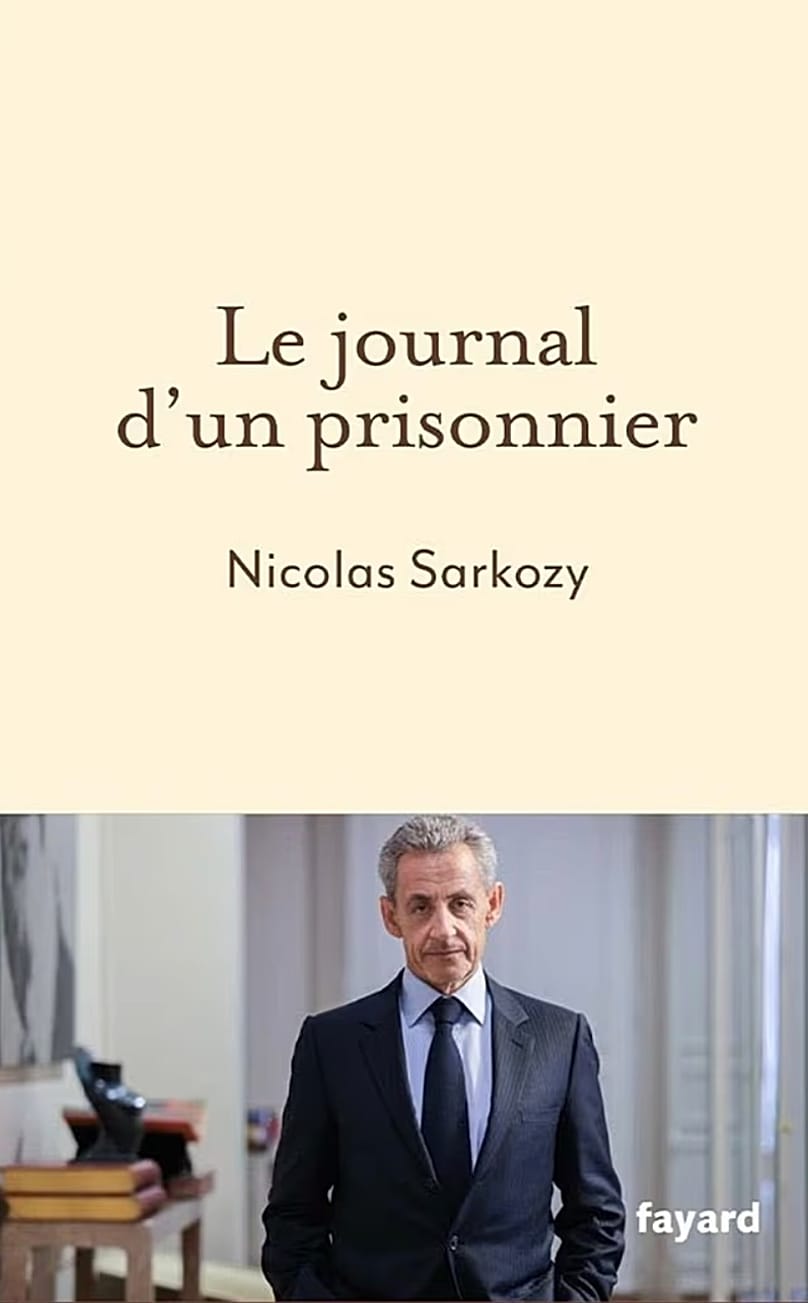
Sarkozy also uses the book to claim his “complete innocence” (“As long as I have breath in my body, I will fight with all my strength to prove it, no matter how long it takes”) and to offer political advice for his conservative Republicans party - specifically how the party should appeal to far-right voters.
He reveals he spoke by phone from prison with far-right leader and once rival Marine Le Pen.
Le Pen’s National Rally is “not a danger for the Republic,” he writes. “We do not share the same ideas when it comes to economic policy, we do not share the same history… and I note that there may still be some problematic figures among them. But they represent so many French people, respect the results of the elections and participate in the functioning of our democracy.”
Sarkozy argues that the reconstruction of his weakened Republicans party – which had for decades moved to counter the far-right - “can only be achieved through the broadest possible spirit of unity, without anathema or exclusion.”
Acknowledging the weakness of his former political family, the memoir sees Sarkozy apparently suggesting that an alliance with the far right is inevitable, despite him saying that he has “many differences with Le Pen’s National Rally party.

Sarkozy also mentions his former friendship with centrist President Emmanuel Macron.
According to Sarkozy, Macron raised security concerns at La Santé prison and offered to transfer him to another facility. Sarkozy apparently declined. Instead, two police officers were assigned to the neighbouring cell to protect him around the clock.
Sarkozy says he lost trust in Macron after the president did not intervene to prevent him from being stripped of the Legion of Honor, France’s highest distinction, in June.
“I had nothing to say to him and had little desire for a friendly chat.”
Sarkozy was granted release under judicial supervision after 20 days at La Santé prison. He was sentenced to a year in prison, half of it suspended, which he now will be able to serve at home, monitored with an electronic bracelet or other requirements to be set by a judge.
Sarkozy’s appeal against the conviction is scheduled to be heard from 16 March to 3 June 2026. In the meantime, Sarkozy and his publisher Fayard, part of the media group controlled by right-wing billionaire Vincent Bolloré, are hoping that “A Prisoner’s Diary” will be a late 2025 favourite, having been strategically published just before the Christmas holidays.