




























The Tashkent International Financial Centre will operate under a separate legal framework as officials seek closer links with British counterparts. The wider push also includes international listings and efforts to attract more private capital.
Uzbekistan plans to build direct links between its new international financial centre and the City of London as it creates a special legal regime based on English common-law principles to attract foreign investment.
 ADVERTISEMENT
ADVERTISEMENT
ADVERTISEMENT
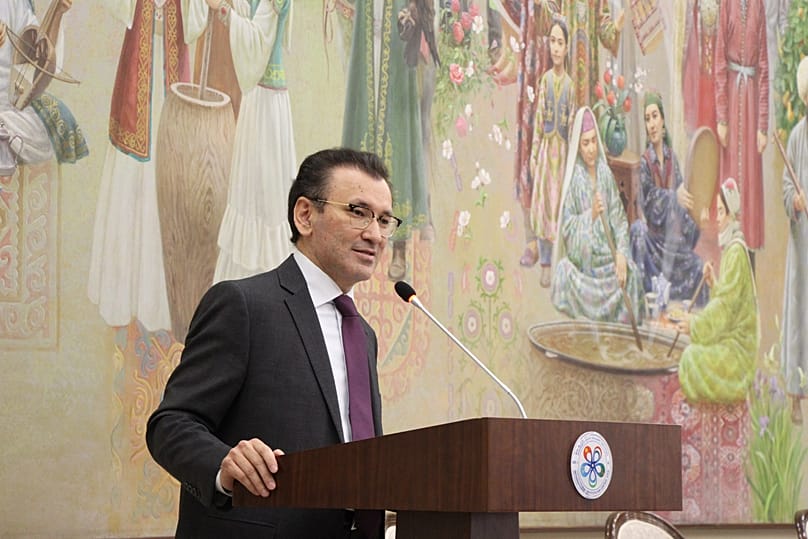
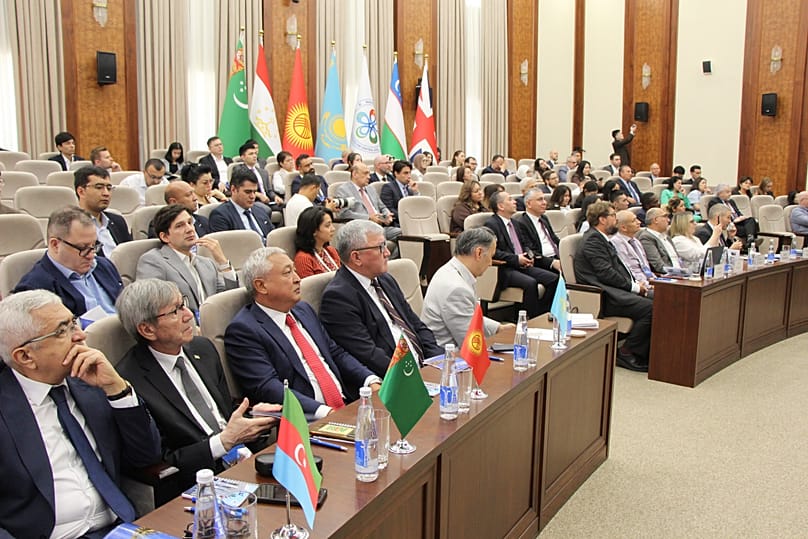
“The United Kingdom might offer its own investment expertise and of course English common law,” Javlon Vakhabov, Director of the International Institute for Central Asia, told Euronews at the inaugural Central Asia–UK Think Tank Forum in Tashkent.
Uzbekistan, he said, wants the new Tashkent International Financial Centre to cooperate with British counterparts, “particularly with the City of London”.
Bringing English law to Tashkent
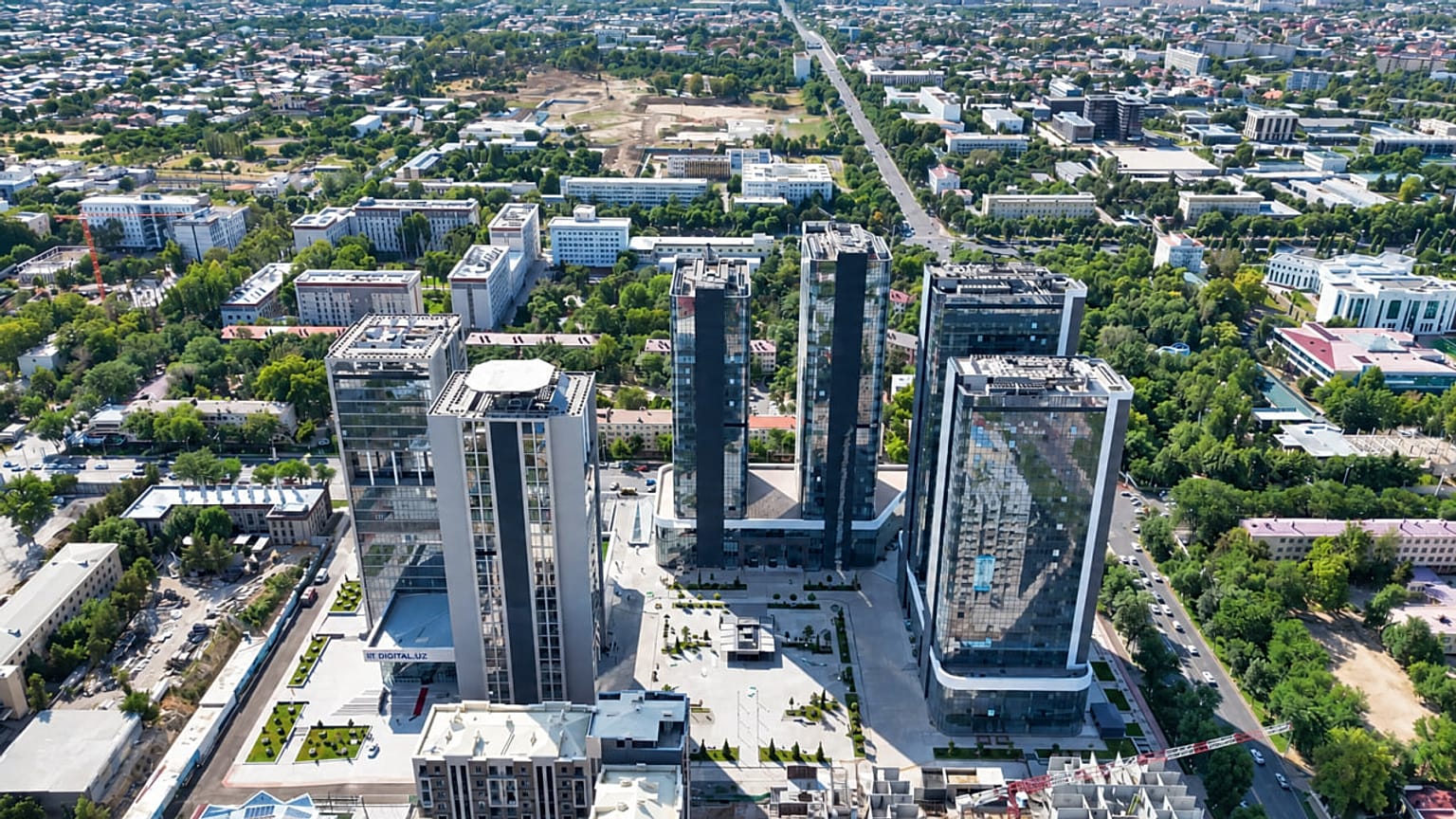
The Tashkent International Financial Centre was established by presidential decree in March.
The centre will operate under a separate legal framework within Uzbekistan, using English common law principles for commercial activity inside the centre, together with an independent international commercial court and arbitration mechanisms.
The system will not replace Uzbekistan’s wider civil-law framework. Companies operating through the centre would instead have access to legal rules and dispute-resolution mechanisms widely used in international business.
Uzbekistan took another step on 10 September, when President Shavkat Mirziyoyev approved organisational measures for launching the centre.
Vakhabov said British knowledge and expertise could strengthen cooperation with Uzbekistan and the wider Central Asian region.
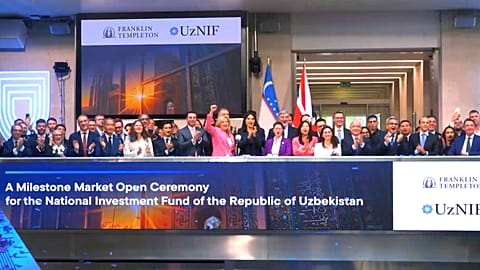
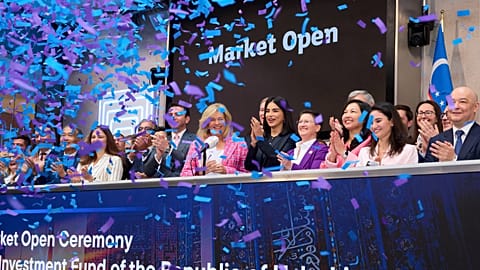
In May, the National Investment Fund of Uzbekistan, managed by Franklin Templeton, became the first Uzbek fund to list internationally when it made its debut in London.
Further state-linked companies are now being prepared for potential international listings, as Uzbekistan seeks to attract private capital while introducing stronger financial reporting and corporate-governance standards.
From political dialogue to private capital
The first CA5+UK foreign ministers’ meeting was held in London in February, establishing a new platform for regional cooperation. Vakhabov described relations as entering a “new and more structured phase”.
Across the investment discussions, participants repeatedly focused on the conditions needed to turn political interest into investable projects.
Rebecca Nadin, Director of Global Risks and Resilience at ODI Global, identified potential cooperation in critical minerals, agriculture, education, technology, digitalisation and artificial intelligence.
“What we need to do is find the mechanisms to make those opportunities into commercially viable projects,” she told Euronews.
Critical minerals provided one example.
Uzbekistan and other resource-rich Central Asian countries have said they want to move beyond exporting raw materials and retain more of the value created through processing and manufacturing.
“It requires the legislative processes to be in place; it requires the investors to have confidence,” Nadin said.
“And it requires, most importantly, the ability to transport those goods from source to market.”
Participants in a separate discussion on investor confidence went into more detail about what access to international capital can require.
The issues raised included due diligence, anti-money-laundering rules, procurement, transparency, sanctions compliance and reputational risk. Legal certainty, protection of investors’ rights and mechanisms for resolving commercial disputes were also among the areas discussed.
British expertise in finance, English law, arbitration and compliance was repeatedly identified as relevant to those requirements.
Research, processing and finance
The discussions also produced more specific examples of where British involvement could go beyond simply purchasing raw materials.
Kirsty Benham, Co-Founder and CEO of the Critical Minerals Association UK, pointed to partnerships with British universities and research institutions, specialist training for geologists, engineers and environmental scientists, and cooperation on mineral processing.
She also discussed the recovery of materials from mining waste and tailings and possible processing arrangements between countries.
Financing was another part of the discussion. One possible model discussed involved UK-backed finance for overseas critical-mineral projects where long-term agreements were in place to supply British manufacturers.
These were presented as possible areas for cooperation rather than announced projects.
Political agreements do not guarantee investment
Annette Bohr, Associate Fellow at Chatham House’s Russia and Eurasia Programme, highlighted another difference between British economic engagement and models in which governments can mobilise state-controlled companies behind strategic projects.
“These Western firms are not state-run. So that’s automatically an impediment,” she told Euronews.
Bohr said the private-sector model makes it harder for political agreements alone to translate into investment.
Read more