















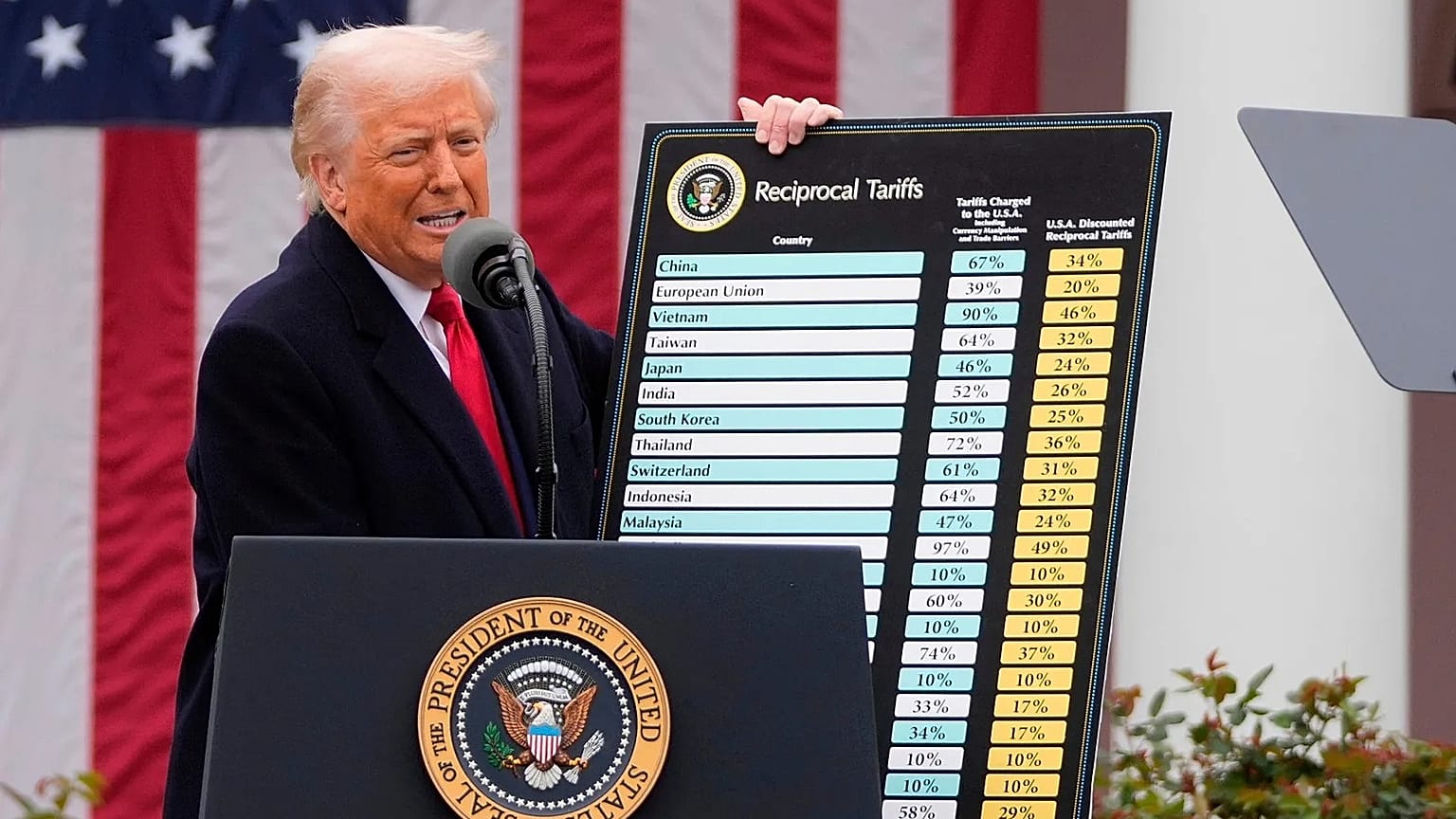













The refunds follow a February US Supreme Court 6-3 ruling stating that Trump had acted beyond the Congress’ tax-setting authority and had no constitutional authority to impose these import taxes.
US President Donald Trump’s government has paid back around $100 billion (€86.6bn) in “Liberation Day” tariffs to a range of businesses through customs officials.
 ADVERTISEMENT
ADVERTISEMENT
ADVERTISEMENT
This accounts for approximately 60% of all tariffs collected by the administration under this initiative, according to recent court documents from US Customs and Border Protection. Currently, around $165 billion (€143bn) has been collected in “Liberation Day” tariffs, as reported by Financial Times.
However, almost $29bn (€25.1bn) worth of potential refunds is still being reviewed by trade authorities, whereas approximately $1.6bn (€1.4bn) has not been processed yet due to importers not submitting their banking details.
Back in April this year, a long-anticipated refund portal had been launched for US businesses to start claiming refunds on Trump’s “unlawful” tariffs.
At the time, around $127bn (€110bn) in eligible claims including interest had already been filed, out of the $166bn (€143bn) worth of tariffs paid by over 330,000 importers across more than 53 million shipments according to AP.
This was following a February US Supreme Court ruling stating that Trump had acted beyond the Congress’ tax-setting authority and had no constitutional authority to impose these import taxes.
The "Liberation Day" tariffs had originally been imposed under the International Emergency Economic Powers Act (IEEPA), a 1977 law giving the president power to "regulate" trade in cases of emergencies — the same authority the Supreme Court found did not extend to imposing tariffs.
The act does not provide a specific definition or detailed list of what exactly constitutes an emergency.
Instead, the President is granted broad discretion to declare a national emergency, under 50 U.S.C. § 1701, with the statute only stating that the emergency powers may be used to deal with any "unusual and extraordinary threat."
These threats only have to meet vague categories such as threatening US national security or economy and being a foreign source.
Widespread domestic outrage at Trump’s tariffs
The current Trump administration has heavily relied on tariffs as a core economic and leverage strategy, which has led to significant outcry, especially among domestic US businesses.
This is because tariffs are paid mainly by importers and domestic US businesses once goods reach customs, rather than by overseas exporters and foreign governments.
This has placed a huge burden on these businesses in the last couple of years, due to them also having to pass on higher costs caused by these taxes to consumers through a surge in retail prices.
Some companies like Amazon, which has already received around $600 million (€519.7m) in refunds, have also decided to use a portion of the funds for customer relief and to subsidise lower store prices.
However, this is entirely up to company discretion and is not legally mandated under US customs law.
Despite these massive refunds, Trump has not been deterred, having recently imposed a 50% tariff on Canada and also implementing new tariffs on 60 trading partners due to claims of not dealing with forced labour adequately.