
















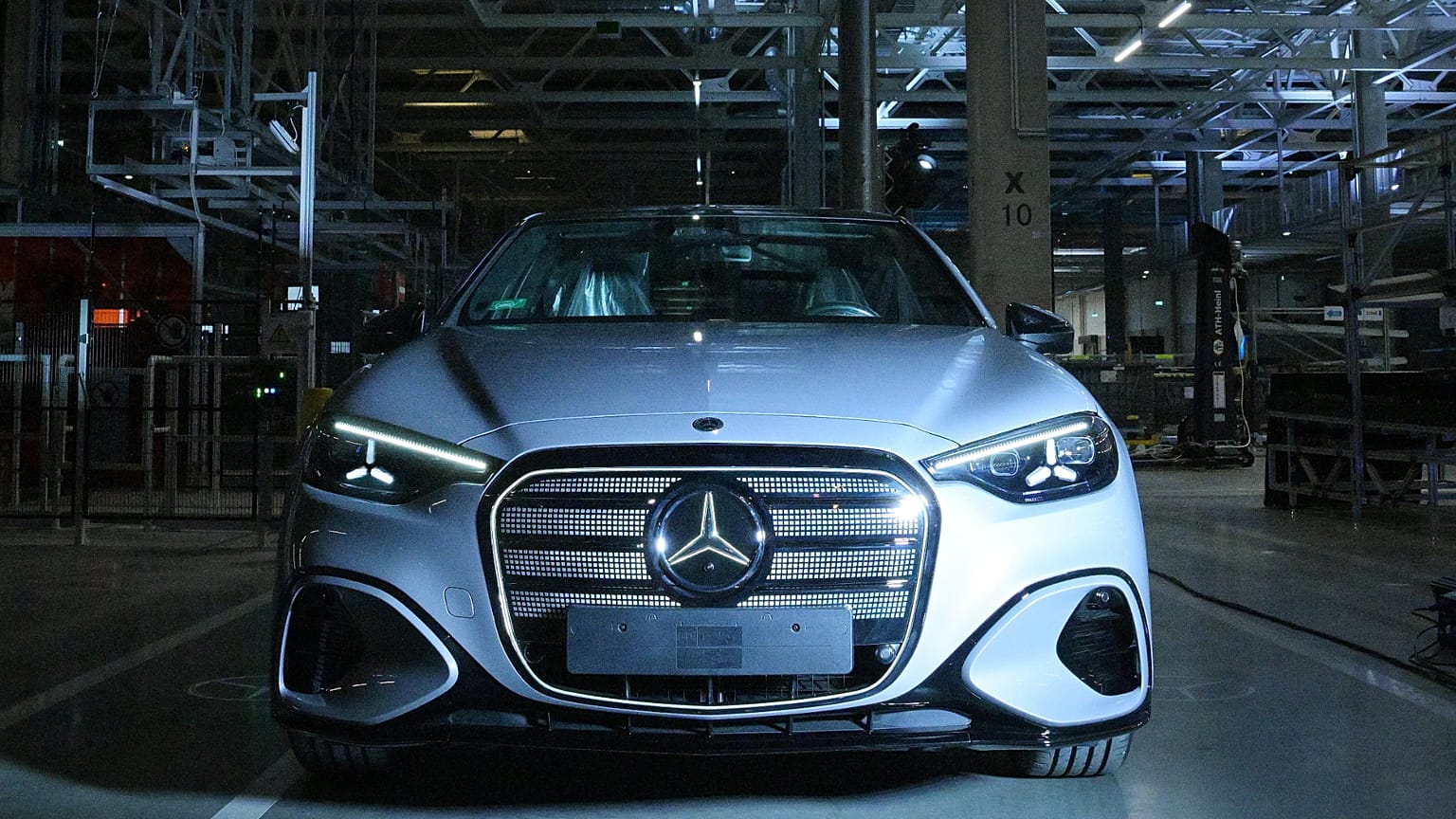













German premium carmaker Mercedes-Benz reported a 22% rise in second-quarter operating profit but cut its full-year car sales forecast due to weakness in China.
Mercedes-Benz shares rose by more than 5% in Frankfurt on Tuesday morning after the carmaker reported higher second-quarter profit, while warning that continued weakness in China would weigh on full-year car sales.
 ADVERTISEMENT
ADVERTISEMENT
ADVERTISEMENT
The company cited “in particular, the negative development of the Chinese market” as it said Mercedes-Benz Cars’ unit sales were now expected to be slightly below the previous year’s level.
This could translate into a decline of between 2% and 7.5% in full-year car sales, according to the definitions used in the carmaker’s 2025 annual report. Reflecting the weaker sales outlook, Mercedes-Benz also expects group revenue to come in slightly below last year’s level. It had previously forecast broadly stable car sales and revenue.
Mercedes-Benz announced the revised outlook alongside its second-quarter results on Tuesday.
Mercedes-Benz reported second-quarter operating profit of €1.55 billion, up 22% from €1.27 billion a year earlier. Revenue fell by 3% to €32.1 billion from €33.2 billion.
Ola Källenius, Chief Executive Officer of Mercedes-Benz Group AG, said: "Despite a demanding market environment, we remained on track in the second quarter while continuing to advance our product launch programme. Customer response to our new models is strong, with Mercedes-Benz Cars BEV sales up 51% and BEV order intake in Europe more than doubling in the quarter."
The company’s overall performance was boosted by its vans and financial services businesses. However, adjusted operating profit at its core cars division fell by 26% to €909 million, as tougher competition in China weighed on earnings.
Car sales in China fall by 30% but rise in Europe
Mercedes-Benz blamed the decline in earnings at its cars division on tougher market conditions, particularly in China, as well as a less profitable mix of models sold and costs linked to product updates and new launches. Efficiency savings partly offset these pressures.
Sales of fully electric Mercedes-Benz cars increased by 51% year on year to 52,852 units in the second quarter, driven by growth of 87% in Europe. Overall car sales climbed by 4% in Europe and by 10% in the United States.
This partly offset a 30% decline in China, where intense competition, subdued demand and changes across the company’s model range continued to affect sales. Excluding China, global car sales increased by 2% year on year.
Reported operating profit at the cars division fell to €49 million from €783 million. The result included €704 million in write-downs linked to investments in China. The accounting charges did not result in a corresponding cash outflow during the quarter and were excluded from adjusted operating profit.
“The Chinese market and customers in China remain of high strategic importance to Mercedes-Benz,” the company said in a statement.
Premium German carmakers have not been spared the fierce competition in China that has also hit mass-market manufacturer Volkswagen.
Porsche on Monday said it would cut a further 5,000 jobs by 2035, taking the total number of planned reductions to about 9,000. BMW, meanwhile, lowered its full-year automotive profit-margin forecast in June to between 1% and 3% and said it was preparing further cost-cutting measures.
For the full year, Mercedes-Benz expects the global car market to remain weak. Sales in Europe are forecast to remain at last year’s level, while the US market is expected to be slightly smaller. In China, the market is forecast to be significantly weaker than last year.
Mercedes eyes expansion into the defence sector
The company has also identified security and defence vehicles as a “strategic development area”. It plans to expand its involvement in the sector as governments respond to a changing security environment.
Mercedes-Benz said it would build on more than 45 years’ experience in supplying vehicles for security, rescue and defence purposes, including modified versions of its G-Class, Sprinter and Vito models.
As part of the push, the carmaker has signed a memorandum of understanding with Munich-based defence company TYTAN to explore a potential partnership.
The companies will “explore potential cooperation in the area of vehicle-based defence applications”, including a G-Class-based system for drone defence and operations, as well as a Sprinter-based mobile drone carrier and command unit.