
















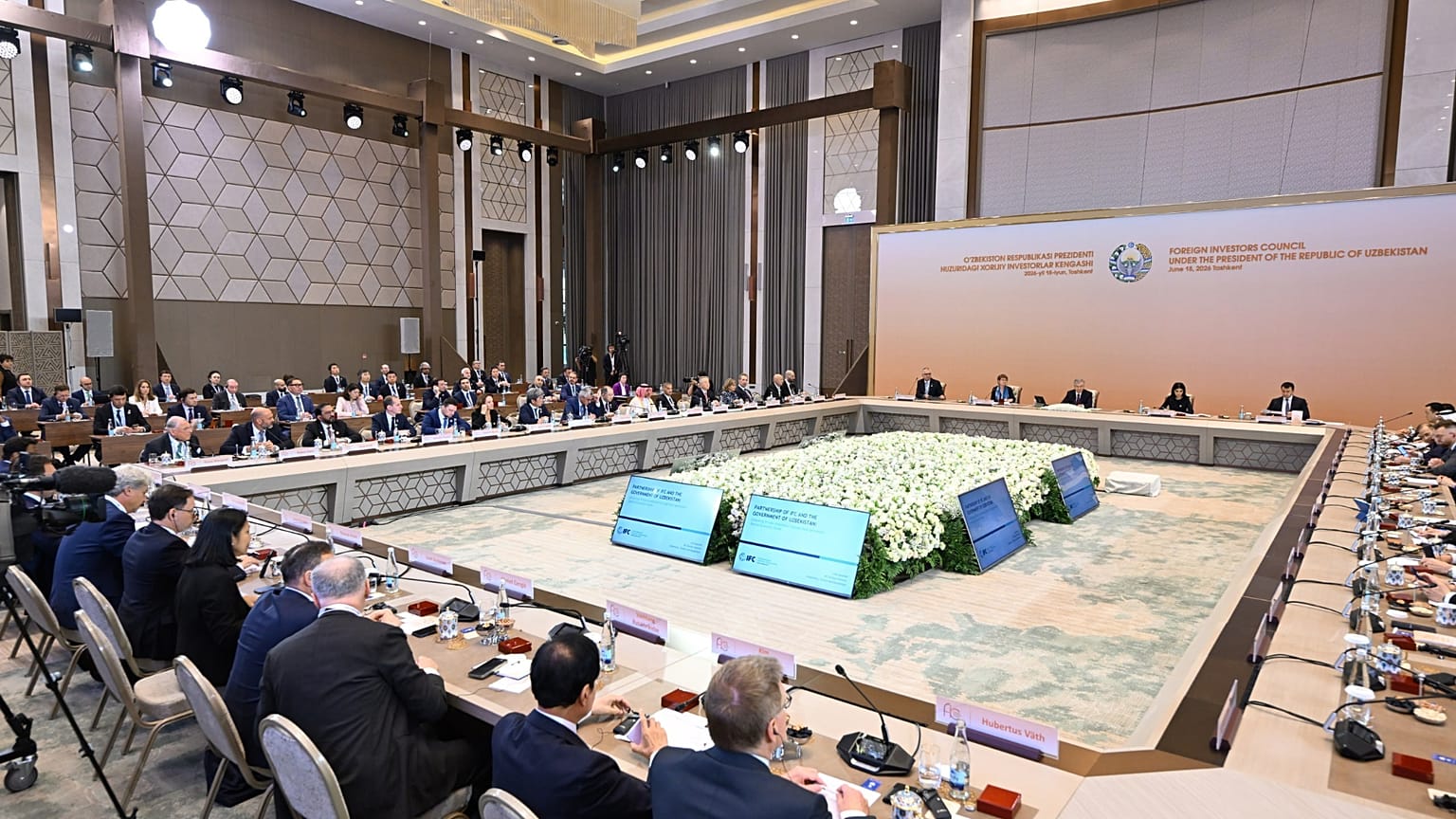














Recommendations submitted by international investors during meetings held alongside the Tashkent International Investment Forum will be incorporated into a government reform roadmap covering banking, energy, artificial intelligence, capital markets and corporate governance.
Uzbekistan plans to prepare a formal roadmap based on 120 recommendations submitted by foreign investors, following discussions held alongside the final day of the Tashkent International Investment Forum.
 ADVERTISEMENT
ADVERTISEMENT
ADVERTISEMENT
The proposals were presented during a meeting of the Foreign Investors Council, which brought together international investors, development banks and financial institutions gathered in Tashkent for the three-day forum.
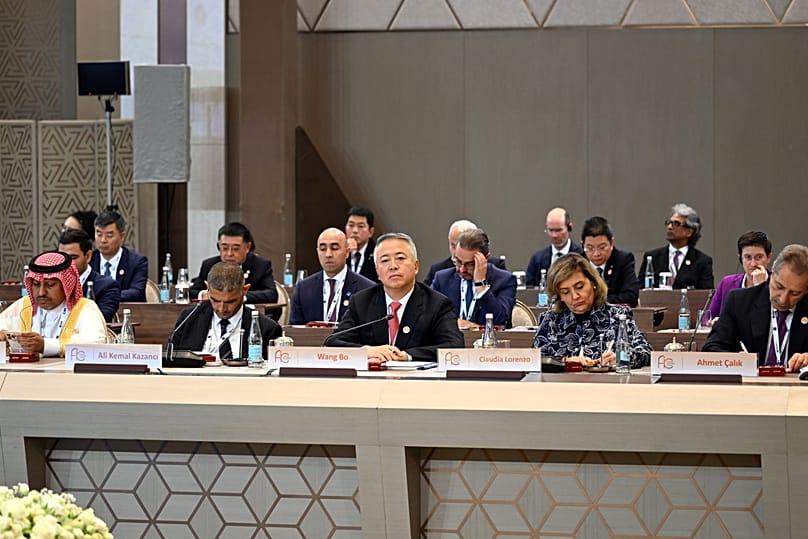
The government will monitor implementation of the recommendations and report progress directly to President Shavkat Mirziyoyev, officials said.
The proposals cover sectors ranging from banking and energy to artificial intelligence, capital markets and corporate governance.
Investor proposals enter policymaking
Speaking at the meeting, Mirziyoyev said recommendations from foreign investors had already contributed to changes in tax legislation, financial regulation and reporting requirements for international companies operating in the country.
"The investors' proposals are being translated into practical government policies," he told participants.
According to the president, the Foreign Investors Council has expanded from 54 to 85 member companies over the past year and now represents businesses operating across 23 sectors of the economy. The council's executive committee includes representatives from the European Bank for Reconstruction and Development (EBRD), the Asian Development Bank and the International Finance Corporation.
Among the reforms under discussion are plans to establish the Tashkent International Financial Centre and adopt a constitutional law governing its operation. Uzbekistan has also begun the process of joining the OECD Declaration on International Investment and Multinational Enterprises, a move aimed at bringing the country's investment framework closer to international standards.
Meetings with development banks
During talks with EBRD President Odile Renaud-Basso, the two sides reviewed a partnership portfolio worth more than $7 billion (€6.1bn), making Uzbekistan the bank's largest partner in Central Asia. New agreements were signed covering sustainable transport, railway digitalisation, entrepreneurship, housing finance and support for the country's startup ecosystem.
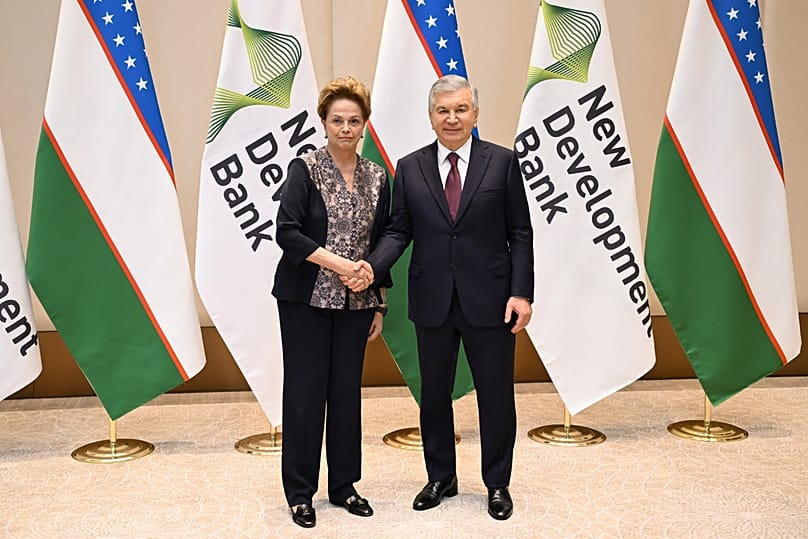
Mirziyoyev also met Dilma Rousseff, President of the New Development Bank, to discuss future cooperation in energy, water management, transport infrastructure and private-sector development. The bank expressed interest in supporting environmentally focused projects as well as regional transport corridors.
Rule of law remains a priority
While investors pointed to progress in economic reforms, legal certainty remained one of the most frequently discussed issues.
Eduards Stiprais, the European Union's Special Representative for Central Asia, said international companies continue to raise concerns about regulatory predictability and the stability of legal frameworks.
"Most complaints which are coming [are about] the often-changing legislation," he said. "The second extremely important issue is the rule of law."
Stiprais highlighted the importance of independent courts and effective legal protections for investors, adding that discussions surrounding the proposed Tashkent International Financial Centre could help address some of those concerns.
Capital markets and investor confidence
Investor confidence was also a recurring theme during discussions on privatisation and capital market development.
Julia Hoggett, Chief Executive Officer of the London Stock Exchange, said international investors tend to evaluate emerging markets through the lens of economic stability, regulatory consistency and legal protections.
"The thing investors really want to know is that they'll put their money in and that they'll get their money back," she said.
Hoggett said Uzbekistan's reform programme and recent market developments had helped strengthen investor confidence, adding that international investors are paying growing attention to Central Asia as a region with significant long-term growth potential.
Artificial intelligence and future growth
Artificial intelligence was among the sectors highlighted in the recommendations submitted by investors and featured in discussions about future economic growth.
Benedict Macon-Cooney said countries seeking to benefit from the AI economy must focus not only on adopting new technologies but also on building the infrastructure needed to support them.
"Companies need to think about data as their competitive asset, and nations need to think of data as their strategic asset," he said.
As this year's investment forum came to a close, discussions highlighted the growing role international investors are playing not only in financing projects, but also in shaping the reforms they believe are needed to support long-term growth.