





























European oil and gas companies that posted huge profits in the first quarter on soaring prices caused by the war in the Middle East face new calls from London to Paris to tax their outsized gains.
European oil and gas companies benefited from higher energy prices caused by the disruption linked to the Iran conflict, helping boost profits across the sector.
 ADVERTISEMENT
ADVERTISEMENT
ADVERTISEMENT
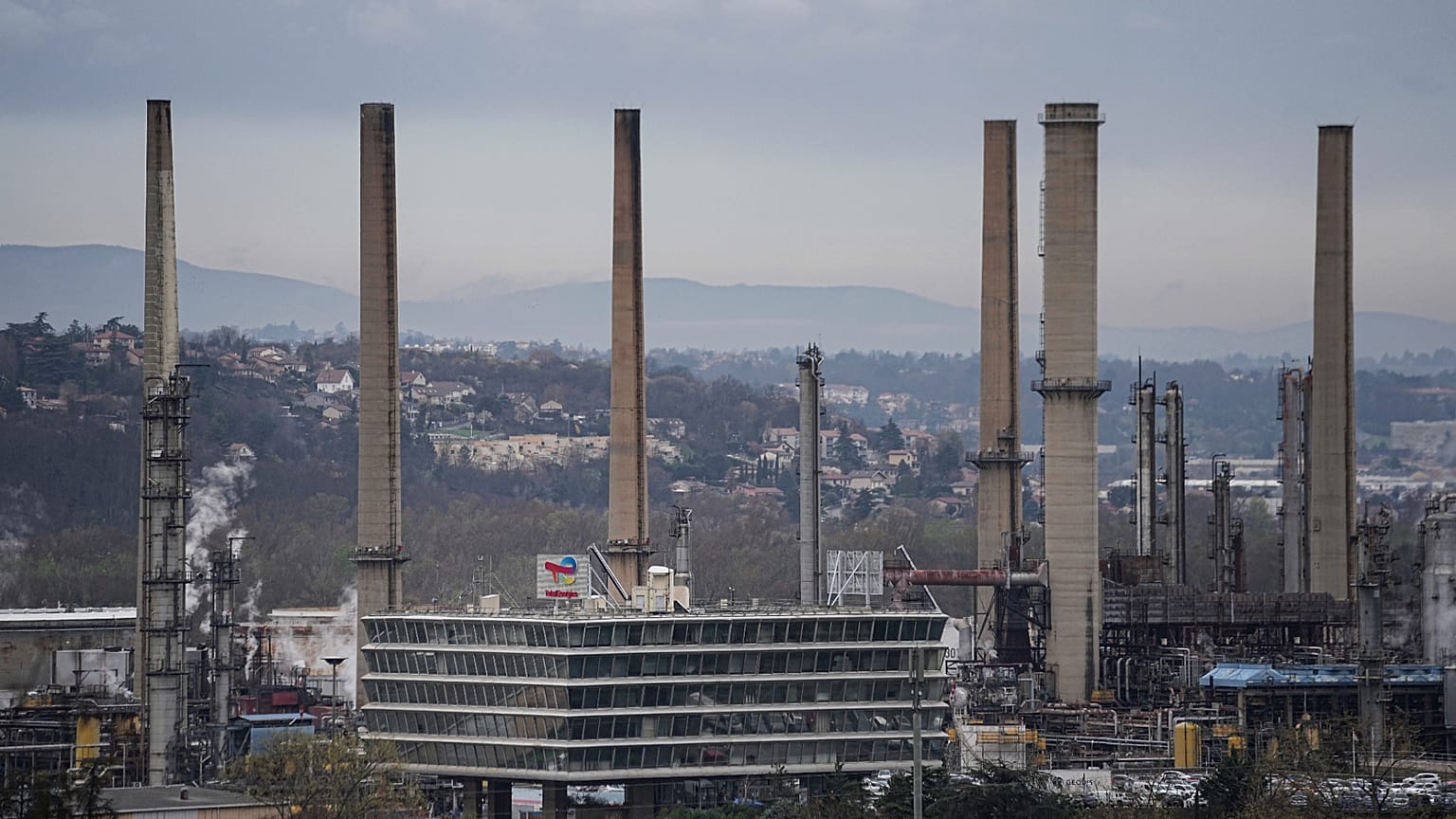
Oil giant Shell plc reported a 24% rise in first-quarter profit on Thursday. Rival BP also reported higher profits last month, while France’s TotalEnergies said net profit jumped 51% to $5.8bn in the first quarter.
Analysts expect earnings to remain strong this year.
According to Oxfam, six of the world’s biggest fossil fuel companies — Chevron, Shell, BP, ConocoPhillips, ExxonMobil and TotalEnergies — are projected to earn an additional $37m (€31.5m) a day in 2026 compared with 2025.
Volatility drives profits
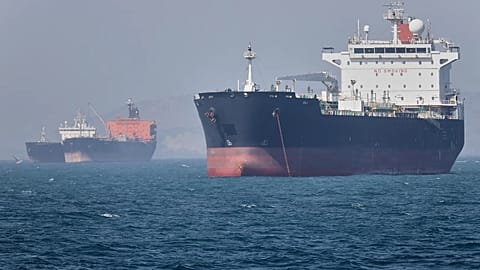
The Iran war disrupted shipping through the Strait of Hormuz, a vital route for global energy supplies, triggering sharp swings in oil prices.
Brent crude, the global benchmark, rose to around $100 a barrel during the conflict, briefly topping $126, compared with about $70 before hostilities began in late February.
The price swings particularly benefited European oil majors BP, Shell and TotalEnergies, which have large trading operations. Their US rivals ExxonMobil and Chevron rely more heavily on oil and gas production.
“BP, Shell and Total benefited not only from higher oil prices, but also from the market turbulence itself,” said Stephen Innes of SPI Asset Management.
“The European majors looked less like traditional oil companies this quarter and more like sophisticated volatility traders operating inside the global energy system,” he added.
Europe revives calls for windfall taxes
The strong results have renewed calls across Europe for windfall taxes on energy company profits, similar to measures introduced after Russia’s invasion of Ukraine in 2022.
In early April, Germany, Austria, Spain, Italy and Portugal jointly urged the European Commission to introduce an EU-wide levy on excess profits made by energy companies during the Iran-related oil shock.
The five countries said the measure could help fund consumer support schemes, curb inflation and ease pressure on public finances.
A month later, after the biggest energy firms reported strong earnings, the debate intensified.
“Once again, the fossil fuel giants are raking in massive profits,” said Danny Gross of Friends of the Earth, calling for higher taxes on the sector.
In the UK, companies operating in the North Sea remain subject to the Energy Profits Levy, a temporary windfall tax introduced in 2022.
The levy currently stands at 38% until 2030, in addition to existing sector taxes, although it applies only to profits from UK oil and gas production.
The latest profit surge at Shell and BP has prompted renewed calls to increase the levy, with UK Energy Minister Ed Miliband criticising what he described as “excessive profits”.
In France, Socialist and Green MPs submitted a bill in April proposing a windfall tax on energy company profits.
Prime Minister Sébastien Lecornu said he had “no objection in principle” to taxing what he called “exceptional” profits, although he stopped short of backing coordinated EU-wide action, according to Le Monde.
French President Emmanuel Macron has meanwhile called for a European response to what he described as excessive profits and speculative behaviour in energy markets.
What higher oil prices mean for energy security
Analysts expect major energy companies to continue reporting strong profits in the second quarter.
"Even if tensions ease, markets do not suddenly snap back to normal overnight," observed Innes.
"I am not sure this conflict will get resolved that easily," said Adi Imsirovic, senior lecturer in energy systems at Oxford University. That would keep prices higher for longer.
That scenario is likely to stimulate new oil and gas projects, as envisaged by TotalEnergies, involving small-scale fields capable of rapid production.
Innes believes companies will prefer to put their faith in low-cost projects rather than rushing "blindly" into massive expansion.
"The winners will likely be the projects that are low-cost, flexible, and geopolitically secure, rather than massive expansion for expansion’s sake," he added.
In recent years, BP and Shell have scaled back several climate targets in favour of continuing oil and gas production.
More recently, TotalEnergies announced it could no longer commit to its 2050 carbon neutrality target, stressing the world was not yet ready to move on from oil.
The conflict has, nonetheless, brought the role of renewable energy in energy security back into the spotlight.
"This has not gone unnoticed in all capitals across the globe," said Imsirovic.