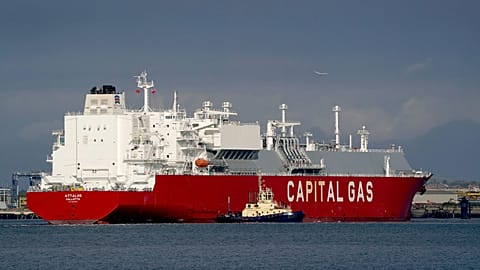

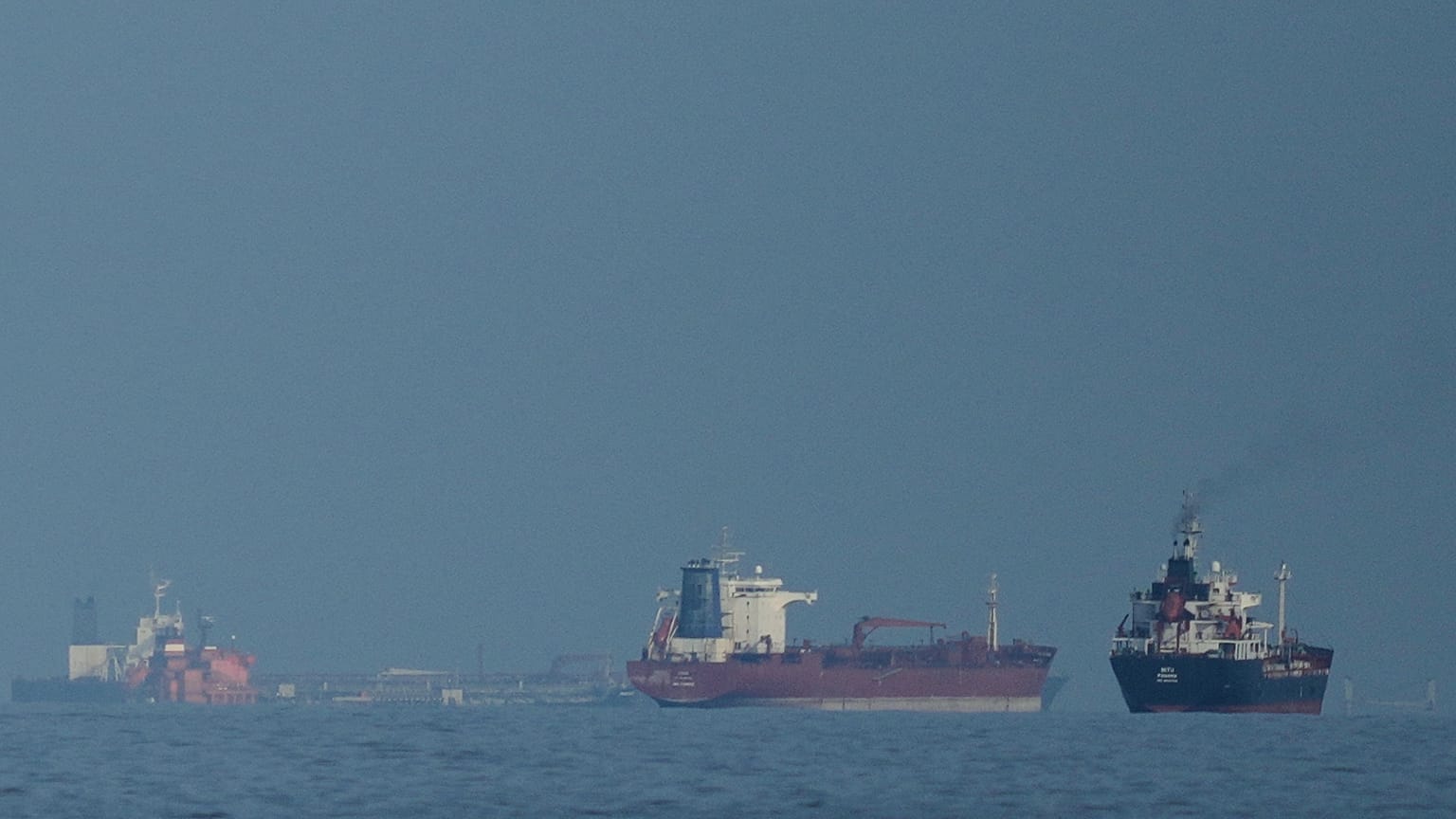














The US has expanded a temporary sanctions waiver on the purchase of stranded Russian oil from India alone to all countries worldwide as part of ongoing efforts to ease pressure on global energy prices.
US Treasury Secretary Scott Bessent announced on Thursday that the department is issuing a temporary authorisation allowing countries around the world to purchase Russian oil currently stranded at sea.
 ADVERTISEMENT
ADVERTISEMENT
ADVERTISEMENT
According to Secretary Bessent's statement shared on X, the step aims “to increase the global reach of existing supply” while addressing instability caused by the Iran war.
The measure extends a 30-day waiver previously granted only to Indian refiners.
Secretary Bessent stressed that the authorisation “will not provide significant financial benefit to the Russian government, which derives the majority of its energy revenue from taxes assessed at the point of extraction.”
The corresponding Russia-related general waiver was published the same day by the Treasury’s Office of Foreign Assets Control.
It explicitly limits the scope to shipments already loaded and rules out any new trade, in line with the US' broader sanctions framework.
The decision represents the latest initiative by the Trump administration to contain oil price volatility. Disruptions in the Strait of Hormuz, through repeated Iranian attacks on oil infrastructure and vessels, have tightened supply routes.
On Wednesday, the International Energy Agency (IEA) announced its biggest emergency stockpile drawdown in history, with member countries agreeing to release 400 million barrels. The US alone committed 172 million barrels.
However, persistent Iranian strikes and fears of a prolonged closure of the strait muffled the expected dampening effect of the IEA's intervention on oil prices. In fact, benchmarks traded higher following the announcement.
Moreover, on Thursday, reports indicated that the Trump administration is set to suspend the 1920 Jones Act to help ease domestic fuel costs.
The federal maritime law requires that goods shipped between US ports travel exclusively on American-built, owned and crewed vessels. A suspension would allow foreign tankers to cheaply transport cargo along the US coastline.
The waiver extension on stranded Russian oil therefore arrives against a backdrop of supply concerns that even record reserve injections, and expectations of further measures, have so far been unable to resolve.
At the time of writing, benchmark oil prices are trading slightly above $100 a barrel.
Bessent meets Chinese counterpart in Paris ahead of Trump's China visit
In a separate development, Secretary Bessent has confirmed he will travel to Paris on 15 and 16 March for economic talks with Chinese Vice Premier He Lifeng.
The US Trade Representative Jamieson Greer will also join the meetings, as confirmed by his office.
The US Treasury described the gathering as the latest round in the US-China trade and economic dialogue, building on “bonds of mutual respect between President Trump and President Xi.”
The Paris session is seen as preparation for President Trump’s planned visit to Beijing at the end of March.
US Secretary of State Marco Rubio is reportedly expected to accompany President Trump despite past sanctions imposed on him by Beijing, including a travel ban, due to his stark hawkish stance on China prior to joining the administration.