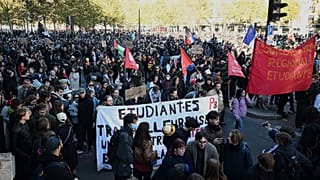













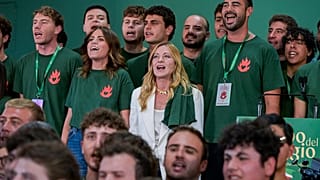
The school decree, which includes new rules on digital transition, was finally approved in the Chamber on Thursday. During the vote, opposition MPs displayed signs saying "At school no one is a foreigner".
Italy has approved a controversial education reform introducing a ban on face coverings in schools and a 30% cap on students of foreign origin in first-year classes, prompting accusations of discrimination from opposition parties.
 ADVERTISEMENT
The cap will not apply to students who have already achieved an adequate knowledge of the Italian language, while the ban on face coverings will prevent Muslim female students from wearing burqas and niqabs in class.
The legislation also introduces Italian language courses for foreign parents.
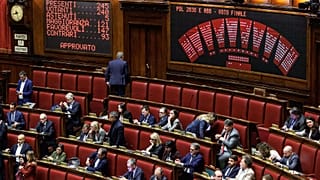
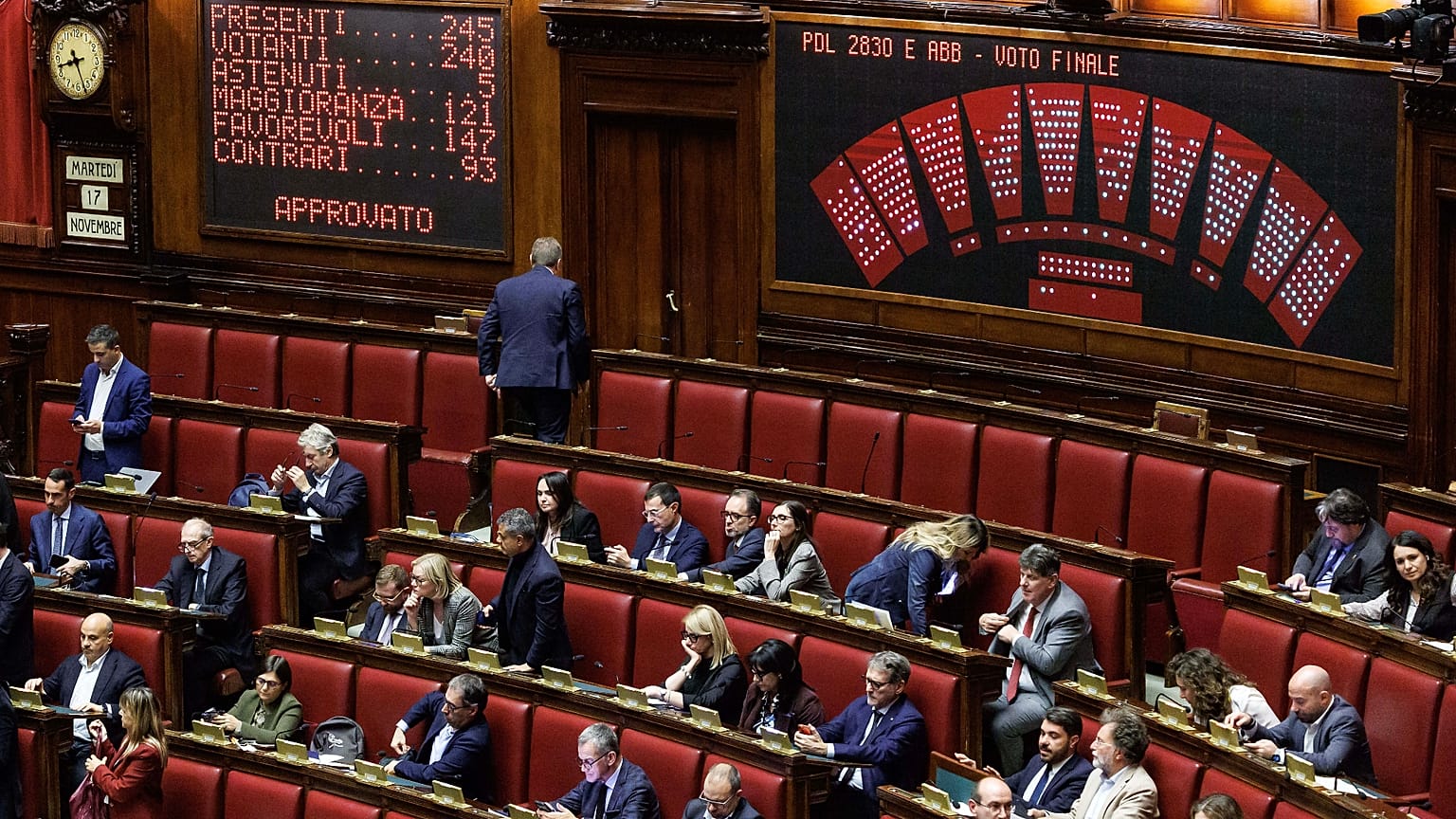
The Chamber of Deputies gave its final approval to the Decreto Scuola with 142 votes in favour, 112 against and four abstentions, following its approval by the Senate on 20 November.
Decree-law 170 of 30 September 2026, which introduces urgent provisions to ensure the regular start of the 2026/2027 school year, support measures under the National Recovery and Resilience Plan (PNRR) and promote the integration of foreign students, had already secured the government's confidence.
The final vote was marked by protests from opposition MPs, who displayed a sign in the chamber reading "At school nobody is a foreigner".
Opposition accuses government of discrimination
Opposition parties sharply criticised the new restrictions, accusing the government of failing to address the real challenges facing Italy's education system.
"The problem is not how many foreign children there are in a class, but how many teachers and what tools we provide to guarantee everyone the right to learn. Everything else is discrimination and racism," Five Star Movement (M5S) MP Antonio Caso said.
"Alessandro Ingusci died because of indifference, while he was asserting the right to study and to housing. And this should be the real urgency for a government that issues decrees to address emergencies in schools. Yet this decree does not tackle any of the real urgent issues: not the safety of school buildings, not the low salaries of teachers, not the right to study," he added.
Irene Manzi, the Democratic Party's national head for schools and leader of its group on the education committee, also condemned the measures.
"A decree that divides girls and boys within classes and moves them from one school to another if the 30 per cent limit is exceeded, ignoring their stories, the contexts in which they live, the environment in which they grow up. It treats them like parcels," Manzi said.
"And it adds sanctions for parents and reports from educational institutions such as the CPIA, breaking that climate of trust on which the educational community should be based. As if foreign families had fewer rights."
"What has been approved is a decree without vision," she added.
Meanwhile, the governing majority expressed "maximum satisfaction" with the final approval of the legislation.
"Today's vote is also a significant show of unity of the majority around our government and its reforming action," Minister for Education and Merit Giuseppe Valditara said in a statement.

Digital textbooks divide governing coalition
Despite the controversy surrounding restrictions on foreign pupils, the fiercest clash between the majority and the opposition concerned a provision on school and university e-books, which also divided the governing centre-right coalition.
Under the new legislation, publishers of school and university textbooks will be required to offer digital versions of their publications at 50% of the price of their printed equivalents.
The measure aims to make educational materials more accessible and ease the financial burden on families.
However, the Italian Publishers Association (AIE) expressed strong opposition to the provision.
"Our deep opposition remains unchanged to a measure that does not bring real economic benefits to families and students but places on educational and academic publishing the burden of a support policy that should be a public responsibility," AIE President Innocenzo Cipolletta said.
"A provision that is not consistent with the results of countless international scientific studies, that interferes with copyright, opens the door to piracy, alters the economic value of the work, puts at risk the sustainability and jobs of companies and ultimately undermines the cultural value of books in the educational path."
Within the governing coalition, Forza Italia opposed the measure on e-books, while Brothers of Italy (Fratelli d'Italia) supported it. The majority subsequently closed ranks for the final vote.
Rosaria Tassinari, Forza Italia's group leader on the Culture Committee, welcomed the final approval of the decree.
"Forza Italia has expressed a clear and consistent position, opening a debate that led to the agenda item signed within the majority, which represents a point of balance between the different sensitivities that emerged," she said.
What else does the new school law introduce?
The legislation also introduces changes to teacher recruitment, including permanent appointments, and modifies specialisation pathways for support teachers.
It updates the timing and procedures for drafting Individual Education Plans and introduces additional funding for administrative, technical and auxiliary staff, as well as for the fund aimed at improving educational provision.