




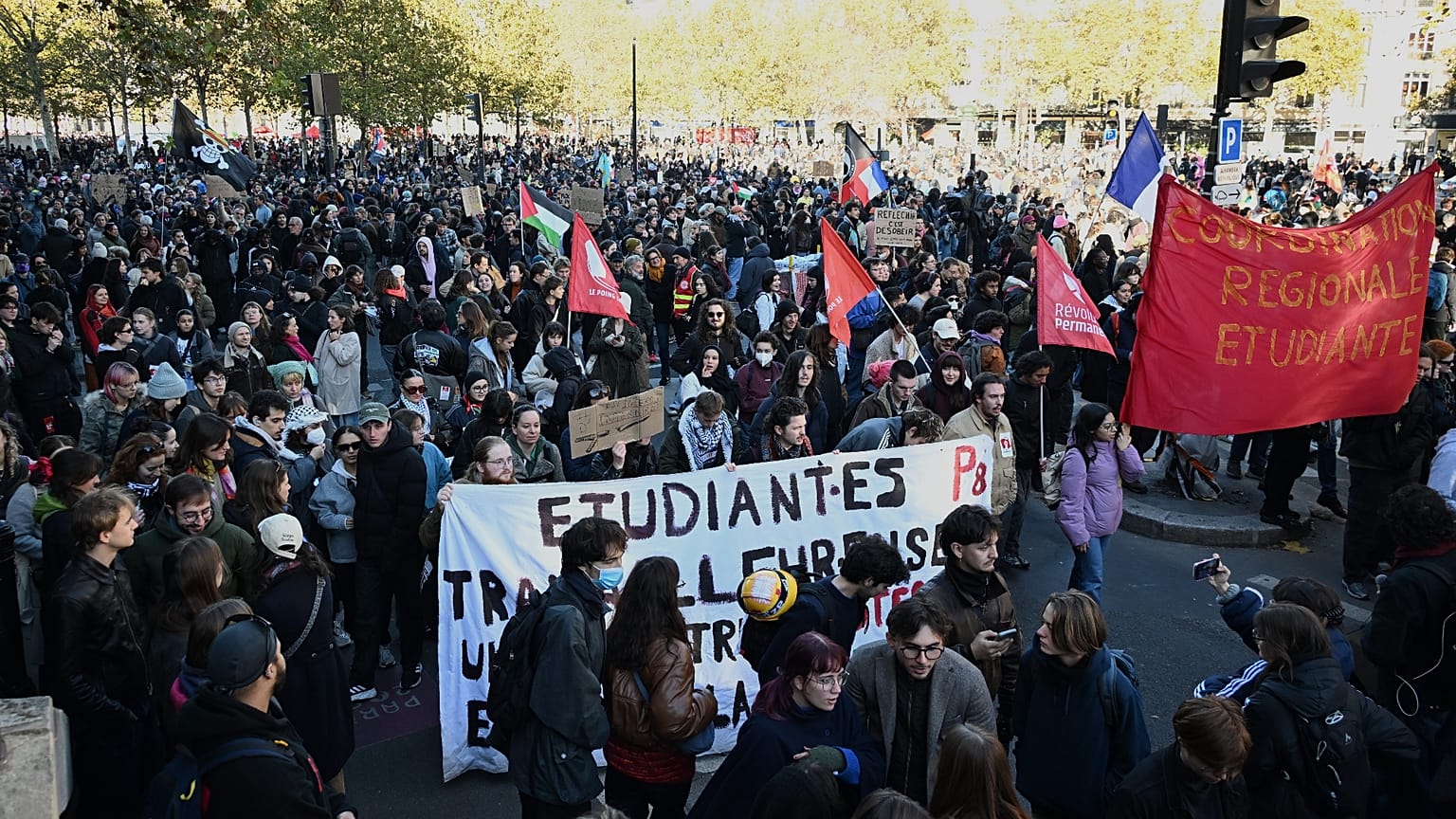














Yellow vests, students, and education unions took to the streets to voice a range of frustrations, from rising cost of living and calls for better funding for education to stronger protection for children and teenagers and a new police law.
Thousands of demonstrators took to the streets across France on Saturday, marking the fifth Saturday of nationwide protests in a row.
 ADVERTISEMENT
The Yellow Vest movement, students, and education unions took to the streets to voice a range of frustrations, from rising cost of living and calls for better funding for education, to stronger protection for children and teenagers and a new police bill.
In Paris, many gathered on the Place de la Republique, which has been a symbolic and common gathering ground for nationwide protests.
"We’re asking to have teachers when we go to class. We’re asking to not have ceilings collapsing on us when we eat in the canteen. We’re asking, when we get our A-levels, despite conditions getting worse every year, to be able to carry on our studies at university," Marius Mesnil, Co-Secretary-General of the Union Syndicale Lycéenne said.
France has been rocked by school blockades and protests for more than a month.
The interior ministry estimated around 106,000 people took to the streets nationwide on Saturday, including 24,000 in Paris. Organisers put this number at 200,000, including 100,000 in the capital.
The turnout of Saturday's protest was lower than usual. The largest protest in recent weeks took place on Thursday, during a union-led strike. More than half a million people took to the streets across the country.
The unions have called for another day of strike action next Tuesday, after rejecting the government's promise to raise the minimum wage by 0.6%, which they say is not enough.
"The government has only given us crumbs, and we want the whole bakery," Benjamin Ball, a member of the Yellow Vest movement said.
'License to kill' bill
Demonstrators also expressed opposition to a new police bill that would grant police officers and gendarmes additional protection when using firearms in line of duty.
Supporters of the bill—including Marine Le Pen's far-right party, currently the favourite in opinion polls in the presidential race—argue that the new law is needed to prevent law enforcement officers being automatically presumed guilty of using excessive force.
However, unions say the bill amounts to a "license to kill" for police, and would make it even more difficult to hold law enforcement officials accountable. In France, cases of alleged police brutality rare reach a criminal court.
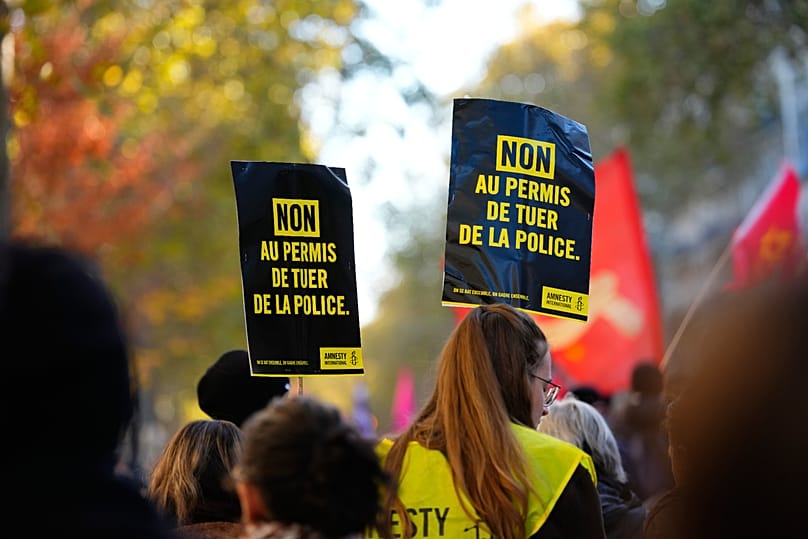
"What the so‑called 'licence to kill' law, which is being put to the vote next week, provides for is literally that a police officer who fires will first be presumed to have acted lawfully," Sabrine Kharbach, spokesperson for the Student Union said.
"Yet another layer of impunity for those who club us, gas us and maim us. Yet another layer of impunity for this police force that acts as the armed wing of the state," she added.
Kenza, 28, was among the thousands of demonstrators taking to the streets in the city of Toulouse, in southern France. "The repression of protesters is unacceptable, especially when children are involved".
Last week, lawyers representing at least 18 people injured during protests in France in recent weeks said they would sue the interior ministry over his responsibility for alleged police brutality, local media reported.
They condemned the use of force by police at the demonstrations, which they said had resulted in "mutilations," including injuries to protesters' hands, feet and eyes.