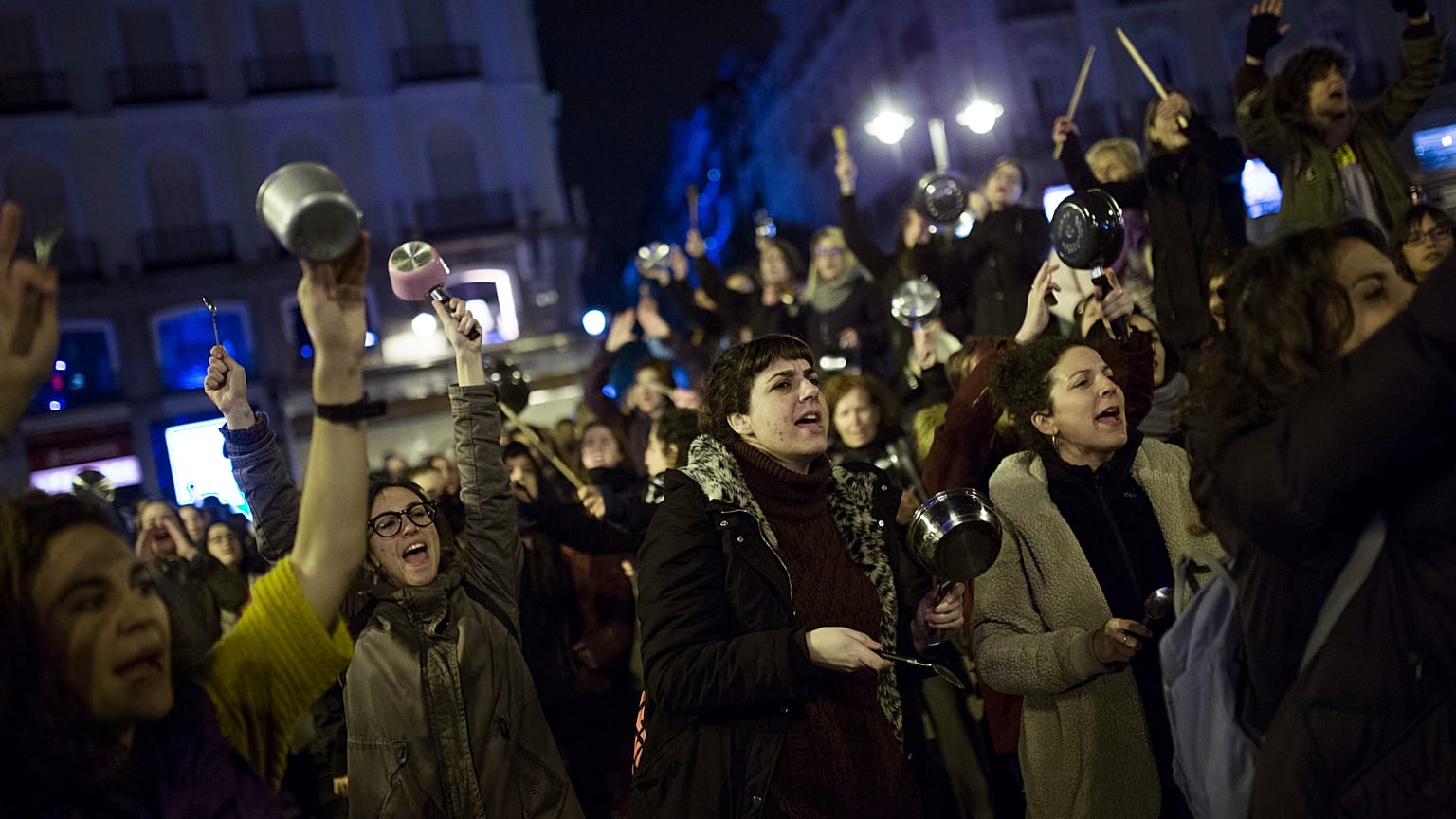














Demonstrations for the International Day for the Elimination of Violence against Women come just days before elections in which the far right could approach 20% of the vote.
Thousands of demonstrators gathered in cities including Valencia, Barcelona and Seville, as well as the capital Madrid, on 25 November to protest against gender-based violence against women.
 ADVERTISEMENT
The demonstrations came just days before Spain's general election, with the far-right Vox party polling at around 18%, according to the latest polling averages.
In Madrid, the main demonstration followed a route between Cibeles and Puerta del Sol, with Sunday's election featuring prominently in chants and placards.
The march organised by Comisión 8M, which advocates a trans-inclusive and intersectional form of feminism, drew the larger crowd, while another group opposed to that approach held a separate march towards Plaza de España.
Among those taking part in the first demonstration were Frente Amplio candidate Ada Colau and Podemos candidate Irene Montero. Begoña Gómez, the wife of Prime Minister Pedro Sánchez, also joined the march as part of the Socialist delegation.
This year's demonstrations also came a decade after the 2016 gang rape at the San Fermín festival in Pamplona, a case that became known as "La Manada" and sparked some of the largest feminist protests in Spain in recent years.
Since then, Spain's feminist movement has also experienced internal divisions, including over transgender rights, reflecting debates that have emerged in other countries such as the United Kingdom.
The PSOE's general campaign coordinator, Rebeca Torró, called on women to vote on Sunday in "self-defence", presenting her party as a defender of women's rights against political forces that reject the concept of gender-based violence.
However, Jaime de los Santos, an MP for Spain’s conservative People’s Party (PP), said his party was also committed to combating gender-based violence and accused the PSOE of trying to “frighten” women.