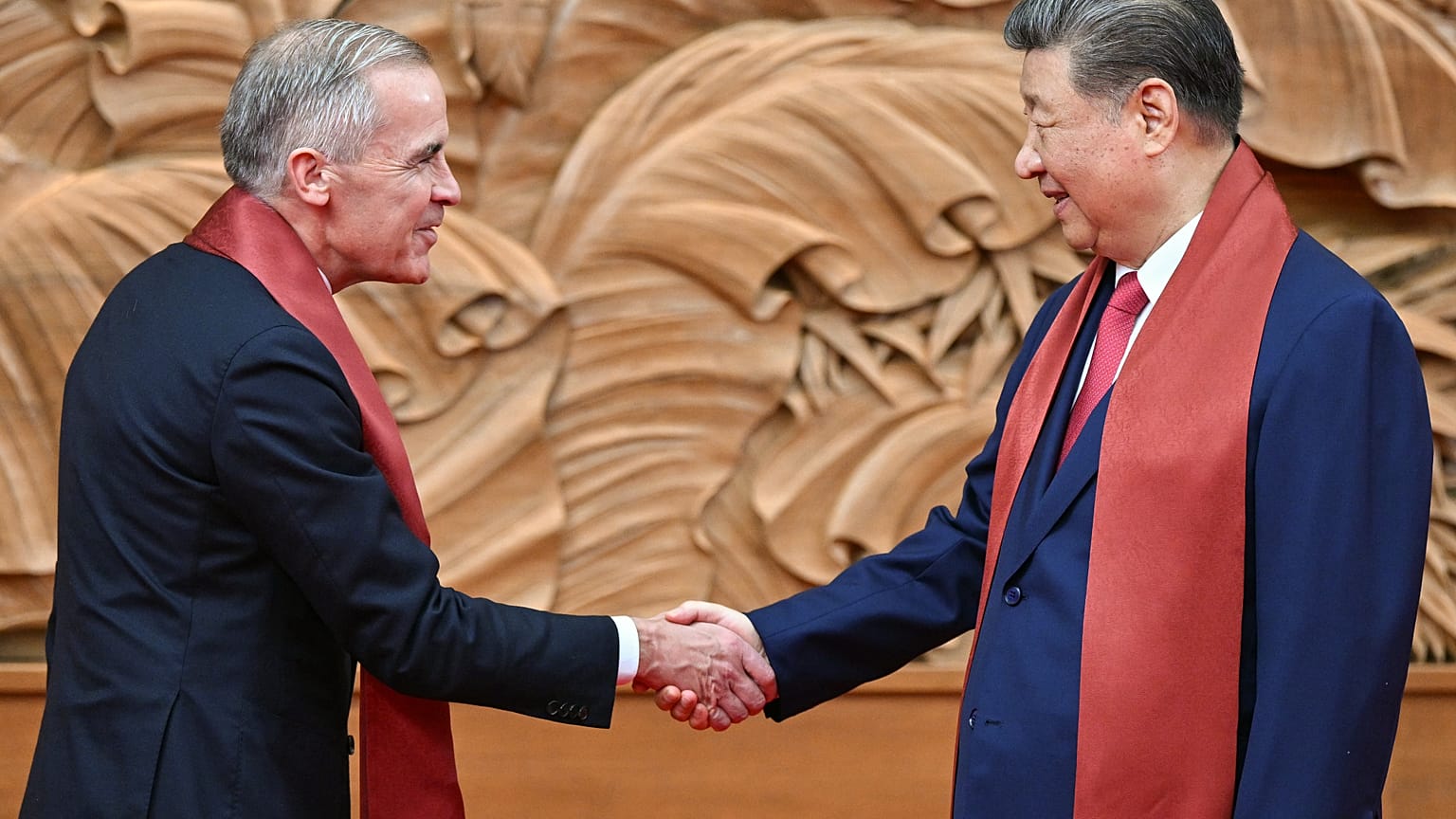













The warning came days after Carney met Chinese President Xi Jinping in Shenzhen, where the two sides agreed further tariff cuts as Canada looks for new markets as Trump's trade war continues.
Taiwan's deputy foreign minister has warned that Canadian Prime Minister Mark Carney could expose his country to the kind of economic coercion he has himself criticised by strengthening trade ties with China.
 ADVERTISEMENT
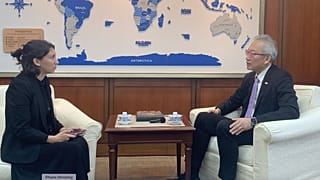
Speaking on Saturday at the Halifax International Security Forum, Chen Ming-chi said Taiwan knows from experience that relying on Beijing carries a price.
Asked about Carney's push to improve relations with China, he said simply: "We worry."
Chen welcomed the message of Carney's speech at the World Economic Forum in Davos but questioned the conclusion Canada has drawn from it.
"Who do you want to choose as your partners?" he asked, suggesting Ottawa should think twice about deepening ties with states that do not share its democratic values.
His warning came days after Carney met Chinese President Xi Jinping in Shenzhen, where the two sides agreed further tariff cuts. Canada is looking for new markets as US President Donald Trump's trade war continues.
Trump has threatened 50% tariffs on Canadian vehicles and auto parts from 1 January, and Carney has said Canada could turn to Chinese carmakers if talks with Washington fail to preserve a viable domestic auto industry.
Carney's diversification drive
Carney has argued that major powers are turning economic integration into a weapon, pointing to US tariffs and Chinese limits on critical minerals. He has urged middle powers to spread their trade relationships more widely to protect themselves.
Chen cautioned that Chinese electric vehicles could undercut Canadian manufacturers, saying their connected technology poses surveillance risks, even if the cars are built in Canada.
Carney has defended the approach, saying Canada's trade with China is different from the more tangled US–China relationship. Canada mainly sells Chinese farm goods, energy and other commodities rather than sensitive technology such as advanced semiconductors.
Chen also pointed to Canada's own history with Beijing. "You have two Michaels," he said, referring to former diplomat Michael Kovrig and businessman Michael Spavor.
The two Canadians were held in China for almost three years, which prompted accusations of hostage diplomacy.
They were arrested in 2018, shortly after Canada detained Huawei executive Meng Wanzhou on a US extradition request, and freed in September 2021, the day Meng returned to China. Beijing denied that their detention was politically motivated.
Chen said Taiwan has sharply cut its reliance on China after seeing Beijing use trade restrictions to press for political goals. "They are very good at weaponizing interdependence," he said.
According to Taiwanese government figures cited by Chen, the share of Taiwan's outbound investment going to China fell from more than 80% in 2010 to 3.8% last year.
Over a shorter period, exports to China and Hong Kong dropped from nearly 44% of the total in 2020 to about 27% last year.