












Israel's tech-powered economy is set to overtake Sweden and Ireland to become the world's 25th-largest in 2026, the IMF says, amid years of war. As European and Israeli policymakers gather in Jerusalem this week to discuss closer ties, what can Europe learn from its innovation model?
Israel is on course to become the world's 25th-largest economy by the end of the year, according to the International Monetary Fund (IMF). The IMF's October 2026 outlook projects nominal gross domestic product (GDP) of approximately $747 billion, which would see Israel overtake Sweden and Ireland in the global rankings.
 ADVERTISEMENT
The figures come as more than 700 participants, including over 200 European guests, gather for the ELNET Jerusalem Summit, taking place from 22 to 24 November, where closer cooperation between Israel and Europe on security, technology, research and trade tops the agenda.
Despite ongoing geopolitical challenges, the IMF forecasts economic growth of 4.5 per cent in 2026. The Bank of Israel is even more optimistic, predicting growth of 5.6 per cent this year and 7.5 per cent in 2027, although these higher forecasts include production abroad by Israeli companies. Excluding this activity, the central bank expects domestic growth of 3.4 per cent in 2026 and 5.1 per cent in 2027.
The figures nevertheless point to an economy with considerable potential for recovery and expansion despite a difficult security environment.
The engine behind Israel's economic success
One of the most important explanations for Israel's economic performance is its technology sector.
Over several decades, Israel has developed a highly connected innovation ecosystem, with particular strengths in cybersecurity, artificial intelligence, software, semiconductors, medical technology and defence-related innovation.
According to the Israel Innovation Authority's State of High-Tech 2026 report, the sector accounted for 18.3 per cent of Israeli GDP in 2025 and approximately 58 per cent of the country's exports.
These figures demonstrate how important technology has become to Israel's economy. High-tech companies not only generate economic activity directly but also attract international investment, create highly skilled employment and connect Israeli businesses with customers and partners around the world.
Research and development play a central role in this success.
According to the OECD's research and development statistics, Israel devoted approximately 6.8 per cent of GDP to research and development in 2024, one of the highest proportions internationally. By comparison, the European Union spent around 2.3 per cent of GDP on R&D in the same year, according to Eurostat.
The difference reflects the exceptional importance of research-intensive industries in Israel's economy. It also illustrates how sustained investment in innovation can become a defining feature of a country's economic development.
A different relationship between research, business and entrepreneurship
Israel's innovation model is characterised by close connections between universities, private companies, investors and the public sector.
An important part of this system is the Israel Innovation Authority, which supports technological research, early-stage businesses and industrial innovation. Its activities help companies develop new technologies and bring them closer to commercial use.
Israel also benefits from a business culture in which entrepreneurship and technological experimentation have become well established. Venture-capital investors play an important role in financing promising young companies, reflecting a strong willingness to take risks and invest in innovative ideas, even when commercial success is far from guaranteed.
Another defining characteristic is the international orientation of Israeli businesses.
With a relatively small domestic market, Israeli technology companies often have to look abroad from an early stage. International customers, investors and commercial partnerships are therefore central to their business strategies.
The United States has been a particularly important partner. The US–Israel Free Trade Agreement, which entered into force in 1985, helped establish a framework for closer commercial relations between the two countries.
War, defence expenditure and economic resilience
Israel's technological development has taken place against a difficult geopolitical background.
Military operations, the mobilisation of reservists, labour shortages and disruptions to business activity have all placed pressure on the economy. Higher defence expenditure has also increased demands on public finances.
Nevertheless, Israel's technology sector has continued to demonstrate considerable international reach.
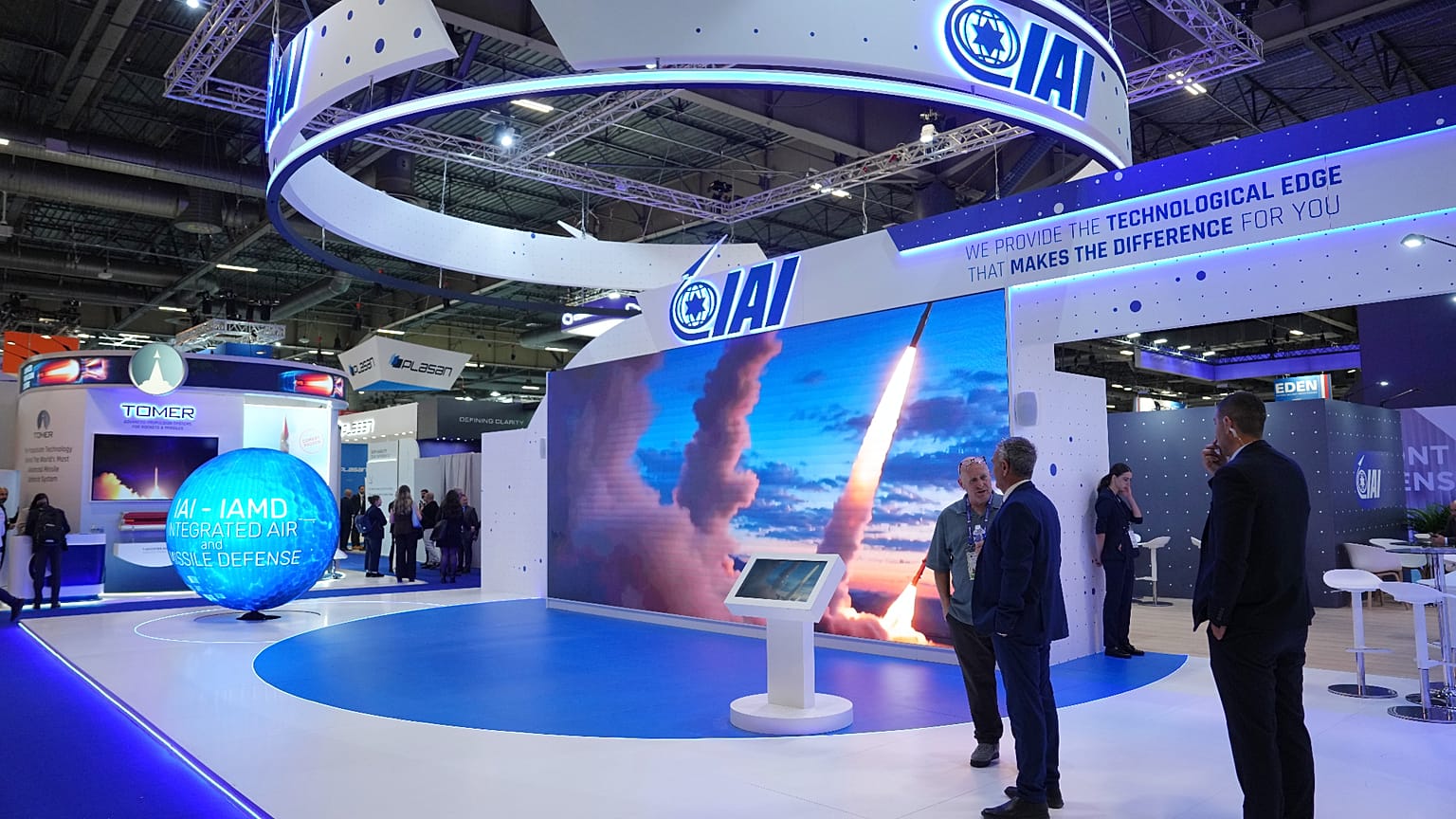
The country's defence industry forms part of this picture. Companies such as Elbit Systems, Rafael and Israel Aerospace Industries have developed advanced capabilities in areas including missile defence, radar, drones and military electronics.
Some of the expertise developed in defence-related research can also find applications in civilian industries, particularly cybersecurity, communications and advanced engineering.
However, military expenditure should not be confused with economic prosperity. Defence spending involves substantial costs and can reduce the resources available for education, transport, healthcare and other investments that support long-term growth.
The OECD's Economic Survey of Israel 2025 examines the economic challenges associated with the conflict and the need to safeguard investment in infrastructure, skills and productivity.
Economic challenges remain for Israel
Despite its strong technology sector, Israel continues to face significant economic challenges. In its July 2026 assessment, the IMF warned that inflation could rise temporarily due to higher energy prices and supply shortages, despite the strengthening of the shekel.
The economic consequences of ongoing conflicts, including high defence expenditure and labour shortages, are also expected to weigh on growth in the medium term.
According to the IMF, longstanding labour-market challenges, particularly relatively low employment rates among ultra-Orthodox Jewish men and Arab Israeli women, could constrain the country's economic growth in the medium term.
What could Europe learn from a smaller economy?
Still, Israel's experience offers several lessons for European policymakers, particularly as the European Union seeks to improve productivity, encourage innovation and compete more effectively in global technology markets.
Europe already possesses world-class universities, scientific institutions, advanced industries and a large consumer market. Its challenge is not simply to generate new ideas but to turn more of those ideas into successful businesses capable of expanding internationally.
Israel's experience suggests several areas in which Europe could strengthen its approach.
First, make innovation a long-term economic priority. Research and development require sustained commitment from businesses, investors and governments. Public support can encourage private investment, particularly in technologies where commercial returns may take years to materialise.
Second, strengthen cooperation between universities and businesses. Scientific discoveries create greater economic value when they are translated into useful products and services. Europe could build on its existing research partnerships, improve technology-transfer arrangements and make it easier for entrepreneurs to commercialise academic research.
Third, make it easier for start-ups to grow and encourage greater willingness to take risks. Europe has many innovative young businesses, but promising companies can struggle to obtain the financing needed for international expansion. Better access to venture capital, more integrated financial markets and a stronger willingness among investors to back ambitious ideas could help European businesses compete globally. Israel's entrepreneurial culture demonstrates the importance of accepting commercial risks as part of the innovation process.
Fourth, strengthen cooperation across strategic industries. Israel's experience shows how expertise in cybersecurity, artificial intelligence, electronics and advanced engineering can benefit different sectors of the economy. Europe could encourage closer cooperation between universities, civilian businesses and strategic research programmes, while maintaining appropriate safeguards.
Finally, encourage a stronger international business outlook. Israeli technology companies often target global markets from the outset. European businesses could make greater use of the EU's single market, which offers access to around 450 million consumers, as a foundation for international expansion. Although regulatory and national differences remain, a more integrated market could help companies grow across Europe and compete more effectively worldwide.
For Europe, the lesson is clear: economic competitiveness depends not only on the size of a country's market or industrial base, but also on its ability to turn knowledge into commercially successful ideas.
Europe already has much of the scientific expertise, industrial capacity and financial resources needed to achieve this. The challenge is to connect those strengths more effectively, support promising businesses as they grow and make innovation a more powerful driver of economic development.
The objective should therefore be to learn selectively from Israel's achievements while preserving the features that make European economies distinctive.

European–Israeli cooperation: political challenges
Among the announced European participants at the ELNET Jerusalem Summit are former French Prime Minister Manuel Valls, former Italian Foreign Minister and current EU Special Representative Luigi Di Maio, former Czech Foreign Minister Jan Lipavský, German Ambassador to Israel Alexander Graf Lambsdorff, and Michał Kamiński, Deputy Speaker of the Polish Senate.
Greece is represented by Deputy Minister of National Economy and Finance Dimitrios Markopoulos, while Lithuania's parliamentary Innovation Committee chair Jekaterina Rojaka is also listed among the speakers. Israeli President Isaac Herzog is scheduled to address the conference.
Supporters of closer ties see opportunities in combining Israeli expertise in cybersecurity, artificial intelligence and advanced technologies with Europe's industrial and scientific capabilities.
However, closer economic cooperation with Israel remains politically contentious in parts of Europe.
While some governments and business organisations favour stronger partnerships in technology and research, others support trade restrictions or sanctions in response to Israeli policies towards Palestinians.
These disagreements highlight the political challenges surrounding European–Israeli economic relations, even as opportunities for technological cooperation continue to develop.