

















The European Commission wants households to cover basic needs for at least 72 hours if a crisis disrupts essential services. Watch the video!
The guidelines, presented on 3 November, aim to keep pressure off emergency services so help reaches those who need it most.
 ADVERTISEMENT
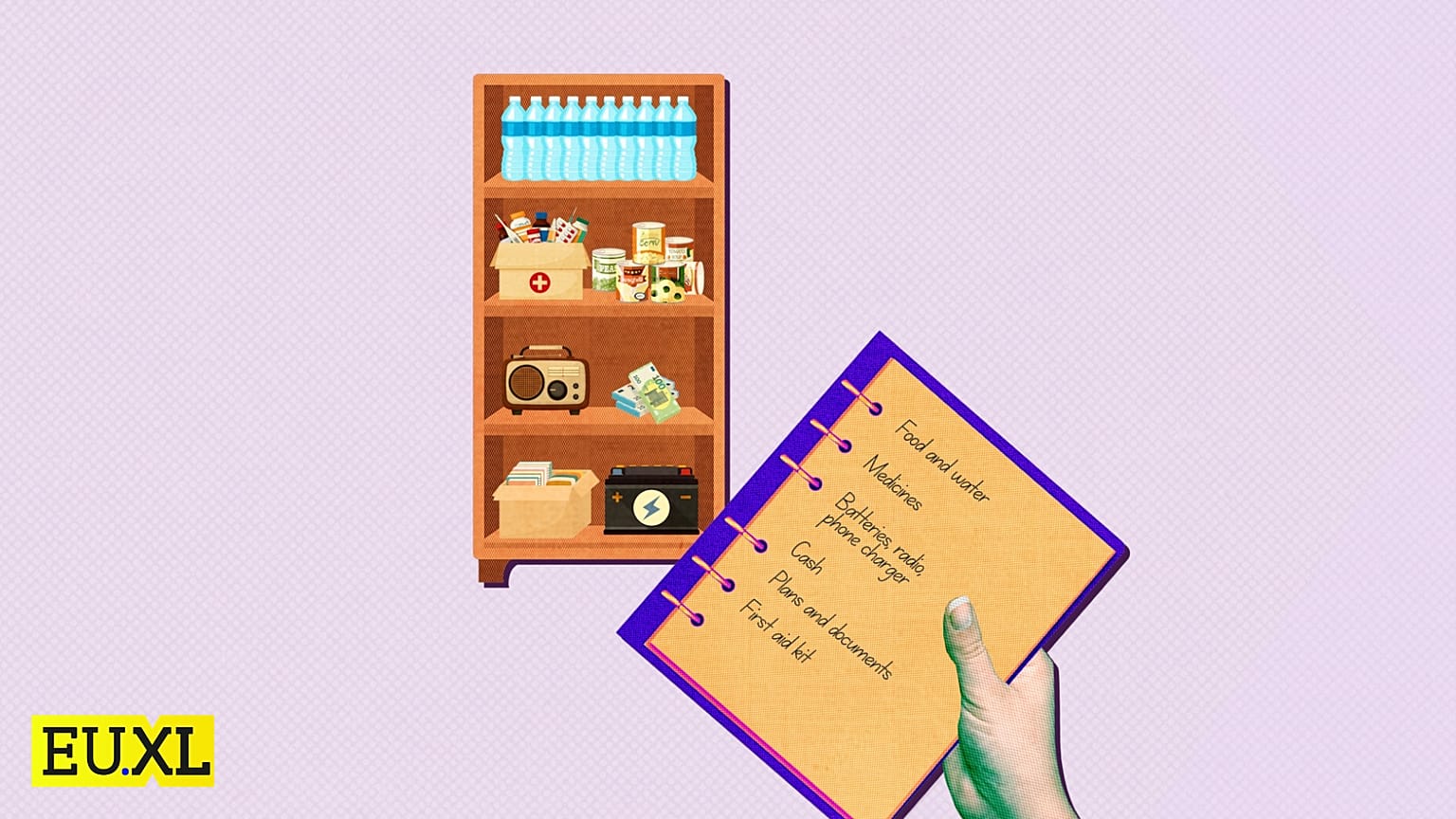
Brussels recommends storing food, water, medicines, a battery or wind-up radio, a phone charger, some cash, a household plan, and copies of key documents. Basic skills such as first aid are also encouraged.
The guidance is voluntary. Belgium and the Netherlands already advise at least 72 hours, Sweden a week and Germany ideally ten days.
The 72-hour goal was part of the EU’s Preparedness Union Strategy, but cyberattacks, climate-related disasters, and health crises have increased uncertainty over power, communications, and supplies.
In the latest Eurobarometer, 49% of Europeans said they feel well prepared and 48% said they do not, though that measures confidence rather than actual stockpiles. An earlier survey found almost four in ten lacked time or money to prepare.
The Commission urges “affordable and gradual” steps and covers older people and people with disabilities. However, there is no new dedicated funding or free EU-wide kit, and civil protection remains a national responsibility.
For the full story, read our in-depth explainer on Euronews.com.