




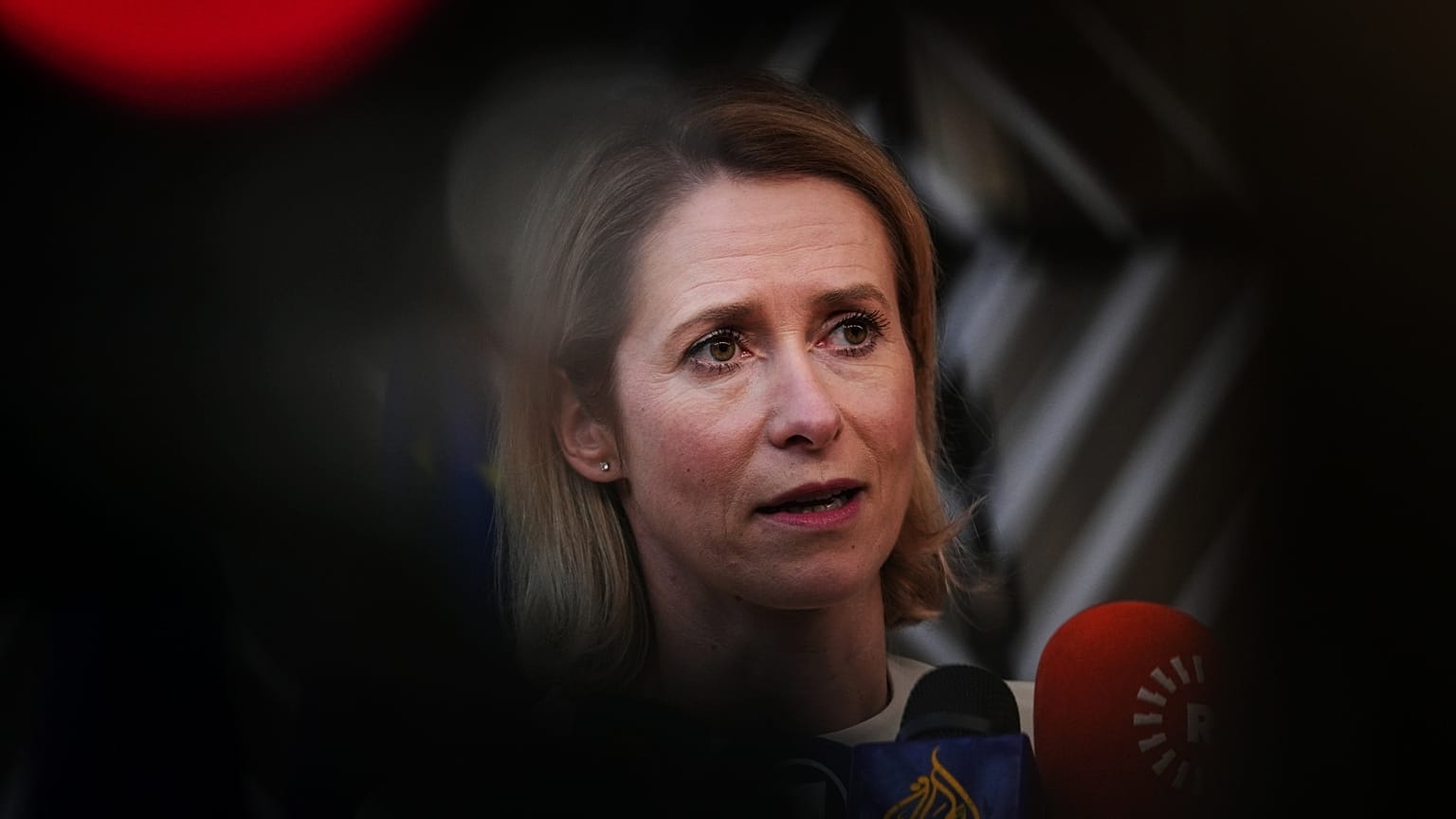













The glaring exclusion of High Representative Kaja Kallas from the Ukraine-Russia peace talks has raised uncomfortable questions about the relevance of her job. Defiant but isolated, Kallas stands by her words.
Since taking on the job as the European Union's foreign policy chief, Kaja Kallas has dealt with her fair share of setbacks, rebuffs and snubs.
 ADVERTISEMENT
But this one particularly stung.
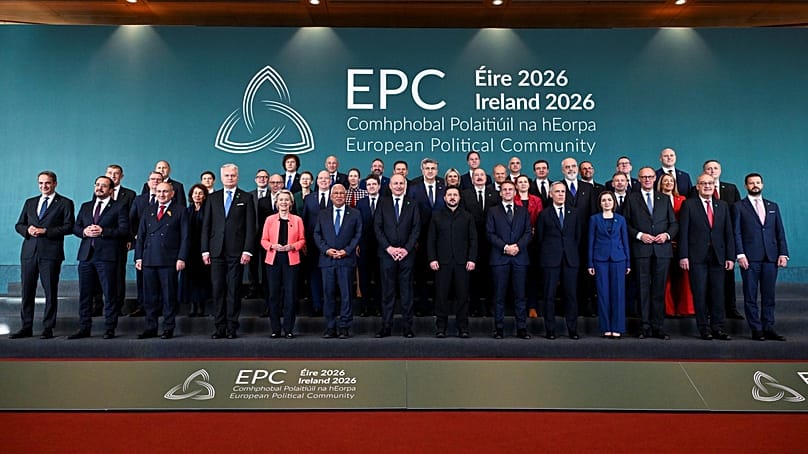
Last week, Kallas flew to Dublin to attend an informal summit of leaders and make a forceful pitch to become the special European envoy for the ongoing negotiations to end Russia's full-scale invasion of Ukraine.
She framed her argument to leaders as self-evident: you chose me for this.
"In June 2024, there was a decision by the leaders (on) who is representing (the EU) when it comes to security and foreign policy. And it was the discussion that in these five years there is going to be a negotiation with the Russians," she said, referring to the division of top jobs at the start of the legislature.
"If the leaders want to change that agreement, of course, they may, because it is the leaders' decision, but I think we should focus our energy actually on the substance."
But leaders were unmoved and dismissed her pitch outright. According to people familiar with the closed-door discussions, Italian Prime Minister Giorgia Meloni argued that Kallas lacked the institutional weight and discouraged her candidacy.
The summit concluded with an expanded joint European team for the negotiations with a grand total of seven representatives. None of them was Kallas.
Adding insult to injury, the EU seat is shared by the European Council and the European Commission, with senior officials from the cabinets of presidents António Costa and Ursula von der Leyen, respectively. The European External Action Service (EEAS), the institution that Kallas oversees, is out of the picture.
Asked about her absence, neither Costa nor von der Leyen spoke in her favour.
Snubbed and pushed aside, Kallas now stares down a political reality in which she, the High Representative, whom the treaties task with conducting the EU's common foreign and security policy, is excluded from the most consequential diplomatic process the continent has lived through since the end of the Cold War.
It is a contradiction so glaring and profound that it challenges the very essence of her job.
Some in Brussels believe what happened in Dublin is the natural consequence of the missteps and gaffes that have made Kallas an increasingly divisive – and increasingly isolated – figure in the big-power city.
Kallas has ruffled feathers by going off script on sensitive matters, such as China and Israel, and putting forward initiatives with little or no prior consultation with capitals, including a defence expert group whose launch was cancelled last minute in September after pushback from Italy, France and others.
The displeasure has fuelled calls to reform. Germany, for instance, has proposed to place Kallas under von der Leyen's supervision, mimicking the top-down hierarchy in national governments between a prime minister and a foreign minister.
A senior diplomat pointed out that Kallas spent this year opposing direct talks with Russia, only to then pitch herself as the special envoy to deal with Moscow.
"If she actually talked to people and consulted with them, she would have known where the dynamics would lead to," the diplomat said. "Now, events have overtaken her."
"On the merits she is not wrong," they admitted. "Nothing will come of these talks anyway. There's no way Russia will engage constructively."
A second diplomat was equally critical and said Kallas had been very "clumsy" in her intervention in Dublin, where she declared "Russians don't want me" as envoy.
This diplomat believes that Kallas still retains the way of working she had when she was Estonian prime minister. Back then, her outspoken, hawkish views made her a political star in Europe. In her current role, they can easily backfire.
"It was not the right approach. She put herself in a difficult position. She still has in mind the fact that she was prime minister, and forgets that her role is simply to coordinate the positions of the foreign affairs ministers," the diplomat said.
"Her job is to find the lowest common denominator among member states."
Doomed to fail
The High Representative's pitch was doomed to fail for reasons that go beyond personalities, management style and political background.
Russia's war on Ukraine has become the be-all, end-all subject on the political agenda. Defence, security, trade, energy, finance, technology, sanctions and accession are all at stake in Ukraine. Billions have been provided in budget, military and humanitarian aid. How the war ends is set to define Europe for generations to come.
This has compelled leaders to be extraordinarily involved in the conflict, with countless visits to Kyiv and high-profile meetings. The decision by the leaders of France and the UK to launch the Coalition of the Willing best encapsulates the personal commitment.
But their commitment has come to the detriment of their foreign ministers and eaten away at their portfolios. More often than not, foreign ministers find themselves bickering and haggling without making decisions, which are ultimately made by leaders.
In fact, for the peace talks, leaders have relied on their national security advisors, who are part of their tight-knit cabinet. Even US President Donald Trump has left the task on two hand-picked envoys, Steve Witkoff and Jared Kushner, rather than on Secretary of State Marco Rubio, who, compared to Witkoff and Kushner, is harder on Russia.
Kallas, whose title is equivalent to Rubio, has suffered a similar fate.
Earlier this year, Kallas promoted a list of maximalist demands that Europeans should press Russia to fulfil as part of the negotiations.
Though the document was confidential, the High Representative quoted it so many times, including in Dublin last week, that she effectively made it public. While foreign ministers debated the document at length, leaders never acknowledged it and proceeded with their deliberations unconcerned by its existence.
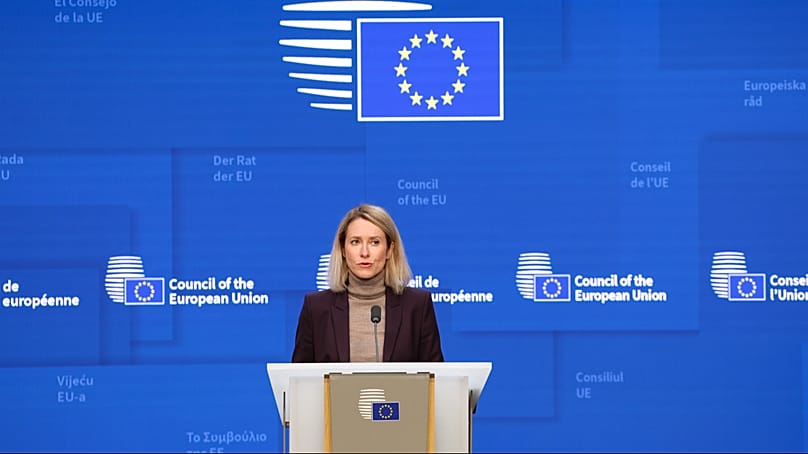
"The reality is that no foreign minister has an obvious leading role here. Not because foreign ministers are irrelevant, but because the decisions at stake go far beyond traditional foreign policy," a third diplomat said.
"This is, quite literally, a matter for heads of state and government. They are the ones who can ensure political coherence across different areas and ultimately take responsibility for the commitments involved."
A fourth diplomat put it more succinctly, saying Europe should focus its energy on establishing a "consistent, unified position" for the negotiations rather than getting caught up in "unproductive discussions" of names.
Admittedly, the demise of the High Representative is a story that has been written many times in the past and never proven correct – or at least not its entirety.
The prevailing opinion blames the byzantine architecture of the EU treaties, which envisions a high-ranking figure bound by the principle of unanimity and deprived of enforcement powers, as the root cause of the problem.
Still, most diplomats agree that the Estonian's way of working is an aggravating factor. The lack of backing from the Commission, where she serves as vice president, and member states, whose views she is meant to represent, leaves her vulnerable to attacks. When backlash erupts, she is left to fend for herself.
Outside Brussels, however, Kallas remains popular and her no-nonsense takes on Russia are frequently praised and go viral online. The fact that the Kremlin openly detests her is used by her defenders to argue she is doing a great job.
Asked by Euronews if she regretted pitching herself as special envoy so forcefully, Kallas remained defiant.
"I stand by my words and I'm ready to do this job," she said, calling on leaders to uphold the EU treaties the same way they uphold the rule of law.
But she added: "It's also some kind of relief that we don't take about who any more.'