




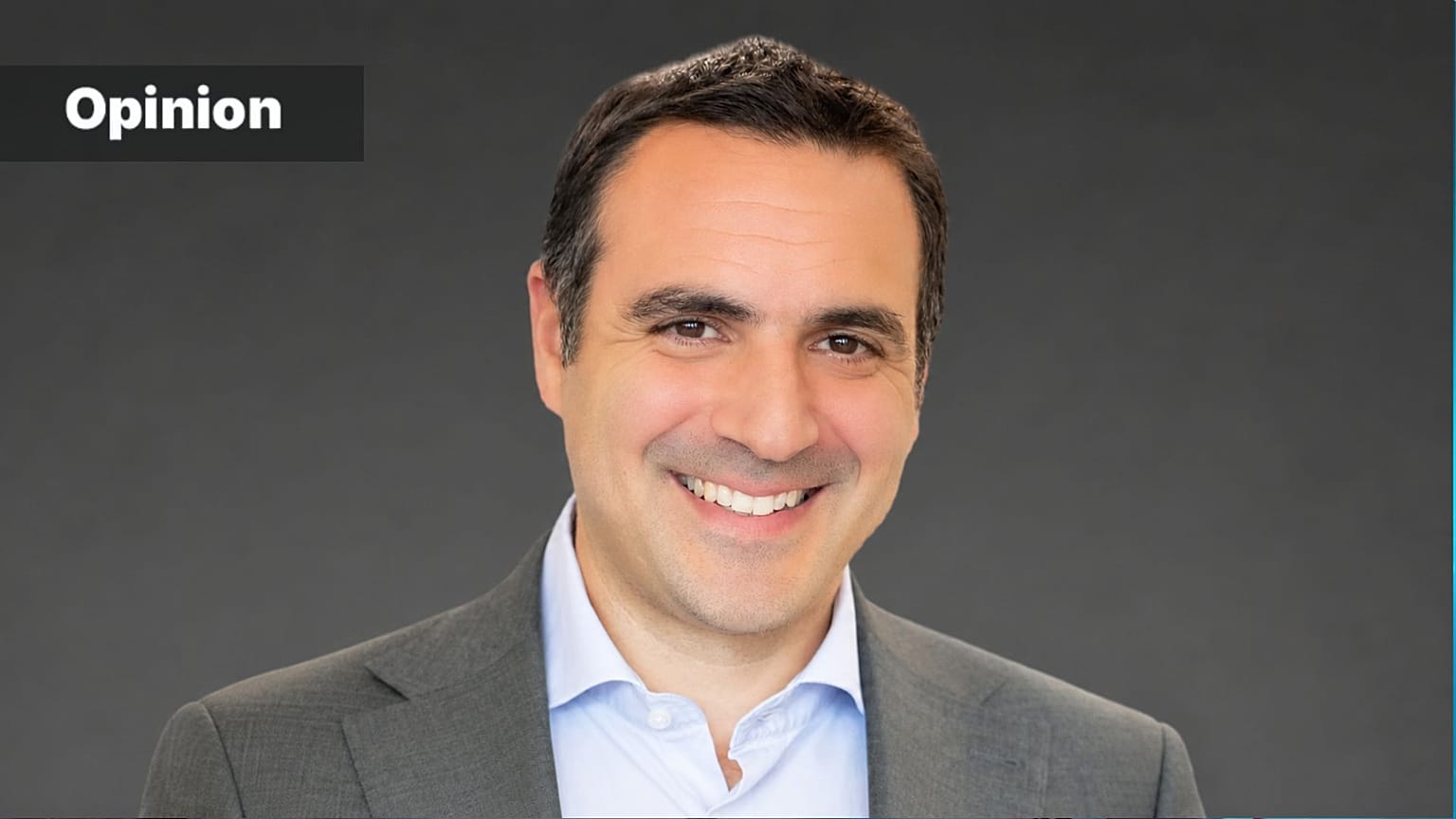













'The opportunities that decarbonization offers have never been greater', explains Noam Boussidan, Head of the First Movers Coalition, in an op-ed for Euronews. In stable conditions, fossil-based inputs may look cheaper, but that advantage is quickly lost when supply is disrupted or prices spike.
For years, the business case for industrial decarbonization centred on a simple calculation: how much more would a “cleaner” technology cost, and how much would it reduce emissions? Today, that “green premium” remains important, but it is no longer the only consideration. Commercial priorities, geopolitical pressures and government policies increasingly shape investment decisions and the shift towards lower-carbon alternatives.
 ADVERTISEMENT
A low-carbon product can cost more but still be the smarter business choice
As a result, a low-carbon product can cost more but still be the smarter business choice. Companies investing in clean technologies must therefore weigh a broader set of factors, including volatile energy and material costs, value chain resilience, market opportunities and risks, government policies affecting industrial competitiveness, and their positioning in the low-carbon economy. In short, we are moving “beyond the green premium”.
For heavy industry, decarbonization has evolved from a narrow focus on sustainability costs to a strategic decision about the products companies will make, the markets they will serve and the supply sources on which they can rely. This shift has emerged as a clear message from the First Movers Coalition’s work with hard-to-abate industries throughout 2026.
To understand this broader calculation, it is worth revisiting the “green premium”, a term coined by Bill Gates in 2020 to describe “the difference in cost between a product that involves emitting carbon and an alternative that doesn’t”. The concept made the economics of decarbonization visible, but it never told the whole story.
The cost of cutting emissions varies widely for technologies and projects
In all sectors, the cost of cutting emissions varies widely for technologies and projects. For example, in cement production, emissions reductions of up to 50% can be achieved at negligible or low cost through clinker substitution and other supplementary routes, but further reductions often command a significant premium. By contrast, sustainable aviation fuels can cost at least twice their fossil fuel equivalent, with an even higher premium for more advanced technologies. Treating these different situations as one common economic problem obscures more than it clarifies.
As companies look beyond the immediate price difference, three factors are reshaping how businesses assess the value of decarbonization: commercial realities, geopolitics and policy.
In terms of commercial priorities, the cost of decarbonization is being assessed alongside competitiveness and growth rather than as a standalone sustainability cost. The green economy is already valued at more than $5 trillion _(Editor's note: around €4.54 trillion)_a year, and is expected to grow another $2 trillion (Editor's note: around €1.82 trillion) by 2030. For companies, this points to growing demand, new markets and the possibility of gaining an advantage by moving early.
In stable conditions, fossil-based inputs may look cheaper
This does not mean that every low-carbon product will immediately compete on price. But focusing only on the green premium fails to ask who will be positioned to supply the market when demand grows, and who will have the capabilities and partnerships needed to respond.
Geopolitics, conflict, supply-chain disruption and energy price shocks have exposed the risks of relying on a small number of energy sources and materials. In stable conditions, fossil-based inputs may look cheaper, but, depending on the sector, that advantage is quickly lost when supply is disrupted or prices spike.
Jet fuel price spikes linked to conflict in the Middle East – topping $220/barrel in March (Editor's note: around 199 €) and $200/barrel (Editor's note: around 181 €) once more in September 2026 – illustrate how quickly the economics of sustainable aviation fuels (SAF) can change.
SAF remains more expensive, but the ongoing crisis has exposed what a simple price comparison leaves out: investment in SAF can reduce exposure to future energy shocks via diversified production. Early partnerships with producers can shorten and onshore supply chains, strengthening supply security and potentially lowering price volatility. For airlines, the question is not just what SAF costs, but what more resilient and diversified fuel supplies are worth.
Government policy is reshaping the industrial landscape
Finally, government policy is reshaping the industrial landscape. Regulations, standards, subsidies, permitting rules and trade measures influence investment decisions, determining which products qualify for public support, which projects can be developed quickly, and which supply chains retain access to major markets.
The EU’s proposed Industrial Accelerator Act (IAA) – which is currently being debated – illustrates this shift. Alongside industrial decarbonization, it explicitly seeks to reduce Europe’s reliance on external suppliers and increase the share of strategic manufacturing from 14.3% in 2024 to 20% by 2035. Meanwhile, the Net Zero Industry Act is already linking decarbonization strategies with streamlined permitting and faster environmental procedures.
The green premium remains a useful starting point, but investment decisions demand a broader calculation: will the savings from postponing decarbonization will survive the next energy shock, supply disruption, or policy change?
In this turbulent era, the cost of waiting – from lost market access and volatile input prices to weaker supply chains and missed investment opportunities – may ultimately be higher. As with any business case, there are risks, but the opportunities that decarbonization offers have never been greater.
Noam Boussidan is the Head of the First Movers Coalition. He has 15+ years’ experience at the crossroads of climate, energy and industry transformation, having held various positions across government, private sector and non-governmental work. The First Movers Coalition (FMC) is the World Economic Forum’s flagship industry decarbonization initiative. A global coalition of companies leveraging their purchasing power to decarbonize the world's heavy-emitting industrial sectors responsible for 25% of global emissions. The FMC has 100+ members from top global corporations who have come together to send a demand signal for emerging climate technologies.