












A key event combining luxury and charity, the Hospices de Beaune wine auction is this year constrained by the meagre harvest after the summer heatwaves.
After six months of near-drought, the harvest has been cut by around half on the 60 hectares of the Hospices de Beaune, owners of a highly prestigious wine estate. Across Burgundy as a whole, it is 26% less than the average of the past five years.
 ADVERTISEMENT
Only 432 barrels and two feuillettes (half-barrels) are being offered this year in Beaune. That is close to the 358.5 barrels in 2021, the lowest level in the modern history of the auctions launched in 1859, the second oldest charitable wine sale in the world.
The recent halt to surging prices should therefore be confirmed among the roughly 500 buyers who began raising their paddles shortly before 3 p.m. under the Beaune market hall, the "capital" of Burgundy wines.
The record of 29 million euros in total takings set in 2022, with 817 barrels, therefore looks unlikely to be beaten.
"Attention, climate sceptics: climate disruption is here", says Ludivine Griveau, vineyard manager at the Hospices. "It has already been going on for some time but now we can see it in all its intensity".
Live from New York
Meagre harvest or not, there is nevertheless "always demand for Burgundy wines", explains Jérôme Flous, technical director of Maison Faiveley.
The local saying is likely to be borne out: "In Burgundy, people look for wine to sell. In Bordeaux, they look for ways to sell it".
"There will always be money for Burgundy", confirms Domaine de Montille's cellar master, American Brian Sieve. Although limited in quantity, the 2026 vintage is "incredible" in terms of quality, he says between tastings in the Hospices vat room where buyers are sampling Pommard and other Meursaults that will go under the hammer.
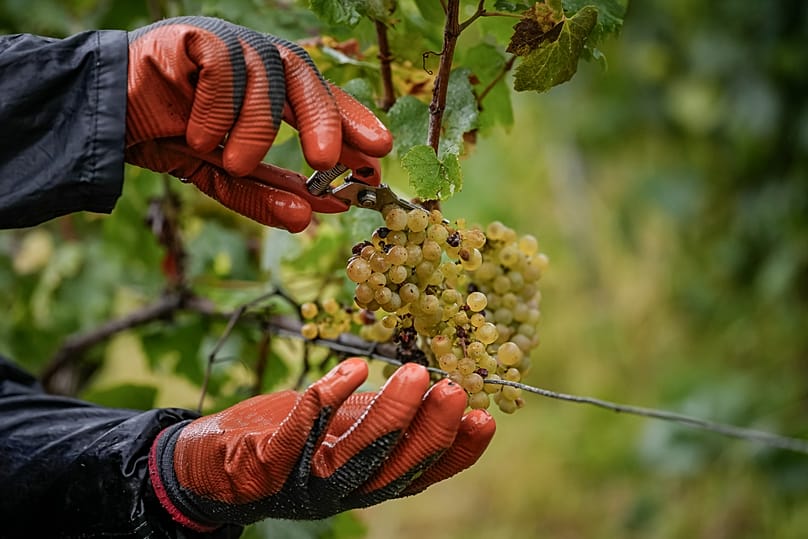
The heavy rains in the winter of 2025/2026 saved the vines during the extremely hot and dry summer of 2026.
Registrations from buyers are already "numerous and coming from a large number of countries", says Marie-Anne Ginoux, managing director of Sotheby's France, which is running the sale.
In the United States, despite Trump's customs duties, demand is such that an immersive room allowing people to follow the sale remotely has been set up at the New York headquarters of the auction house.
Market "globally tight"
While the record for total takings looks hard to beat, the record for the average price per barrel should "probably" fall, predicts Anne-Laure Rayne-Helfrich, marketing director of Maison François Martenot, the second largest buyer by volume at the Beaune auctions.
"French customers and clients around the world want to buy", she says, while acknowledging that the market is "globally tight". In China in particular, "the luxury sector is collapsing", explains one broker, speaking on condition of anonymity.
The Beaune sale, although it is a global showcase for luxury, is above all a charity event, since the proceeds fund structural investments for the hospital run by the Hospices, for which they receive no subsidies.
In addition to this main cause, the "charity barrel" "barrel" here meaning a 228-litre cask, is traditionally reserved for another charitable organisation. This year it will go to two associations fighting rare diseases, including Charcot disease.
The record sale was set in 2022 at 810,000 euros, more than 2,800 euros per bottle.