












The French president made the comments as the country draws up a charter to protect its citizens from threats posed by artificial intelligence.
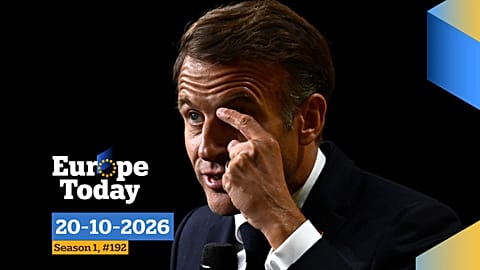
French President Emmanuel Macron said on Monday that artificial intelligence should be banned wherever it poses a risk to the mental health of children.
 ADVERTISEMENT
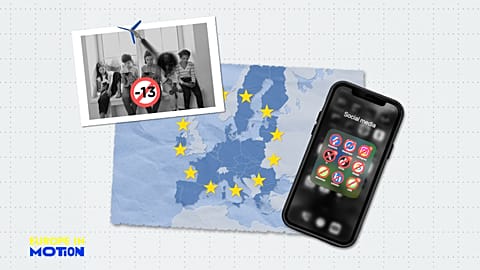
Macron, who is also pushing for a ban on certain social networks for under-15s in France, said, "If there is a risk for children with certain uses of AI, then it must be banned."
He made the comments in an interview with France's Les Echos daily newspaper on the eve of the adoption of a charter on the subject at the Paris Peace Forum.
"Just because it's AI doesn't mean it should be the Wild West," Macron said, adding that AI should be banned when it "threatened" children's "mental health or their brain".
A committee of experts is due to present him with recommendations on Tuesday on protection against AI, an area that is less explored than the impact of social networks.
Following this, research labs will commit, in the framework of a charter, to several measures such as independent evaluations of generative AI systems placed on the market as well as access to their models' data.
This charter, which is "intended to inform national and European legislative debates", will bring together, in particular, US giants OpenAI and Anthropic, Macron's office said.
Companies will accept "the principle of a pre-audit and pre-certification, with a prior review of the models before putting them in children’s hands", Macron said.
"We are going to advance European regulation and push for the Americans, the Canadians, and others to do as we do. We are in the process of creating the beginnings of frontier AI regulation," he added.
Macron said the aim was to create "a framework that takes into account the dangers, which fall into three categories: our children, democratic security, and major national security issues".
Macron also brought together around 50 heads of state and government, representatives of international organisations, companies, researchers, and laboratories to discuss the risks AI poses to collective security in a videoconference.
"The diagnosis is shared. We must act together," he concluded on X.
The British, Canadian, Norwegian, Dutch and Japanese prime ministers took part in the videoconference, as did the CEOs of OpenAI, Anthropic, Mistral and Microsoft.
The announcement comes at a time when regional approaches to regulating AI are diverging wildly, especially between the US, the EU and China.
The EU is holding its first summit of national AI ministers on Friday in Dublin under the Irish rotating EU presidency.
The EU hopes the meeting can help national governments agree a new path forward to regulate artificial intelligence and kickstart the bloc’s sluggish economic growth.
At the same time, leaders will review the guardrails put in place to protect society from the technology’s associated threats such as the AI Act.