




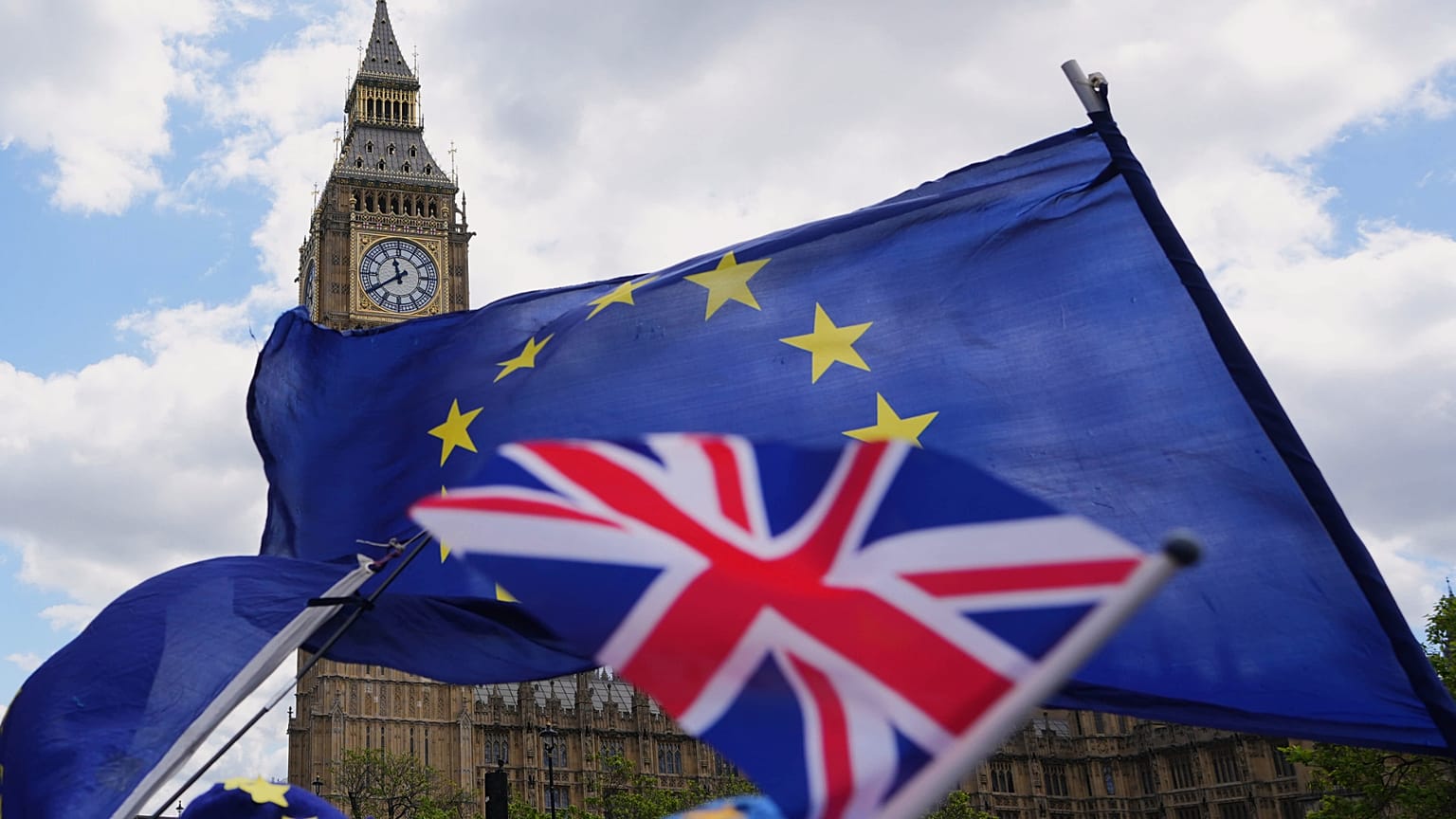













The agreement to link EU and UK carbon markets, expected to be announced at the 20 November summit, could spare manufacturers additional carbon border charges, but critics warn that closer alignment could drive up costs for British industry.
The European Union and the United Kingdom are preparing to reconnect their carbon markets, a move that could spare manufacturers on both sides of the Channel from additional carbon border charges, according to a draft document seen by Euronews.
 ADVERTISEMENT
The two sides are expected to announce the conclusion of negotiations to link their respective Emissions Trading Systems (ETS), allowing EU and British carbon allowances to be mutually recognised.
The agreement, set to be announced at the EU-UK summit in Brussels on 20 November, would also pave the way for goods originating in the EU and UK to be exempted from their respective Carbon Border Adjustment Mechanisms (CBAM).
"We welcome the conclusion of the negotiations on linking the EU’s and the UK's ETS agreement. This would allow mutual recognition of EU and UK allowances and exempt EU and UK goods from respective CBAM subject to respective laws and procedures that we plan to launch without delays," reads the draft document, which could still change until its publication.
The move would address a growing trade concern following the introduction of the EU's carbon border mechanism in January 2026 and Britain's plans to introduce its own system in January 2027.
Without a formal link between the two carbon markets, manufacturers could face additional carbon costs when exporting goods across the Channel, despite already operating under domestic emissions pricing systems.
Protecting industrial competitiveness?
Some EU and UK officials have argued that energy-intensive industries such as steel, aluminum, cement and fertilisers could avoid additional charges, which could help protect competitiveness and reduce the administrative burden of trading between the two markets.
But the proposed linkage has its critics.
British MP David Tufnell said the country's industry is at a "critical juncture," blaming high carbon costs for the industrial decline.
"Pursuing UK-EU ETS linkage threatens to push UK carbon prices up even further towards EU levels," Tufnell told Euronews.
Carbon markets are designed to encourage industries to invest in decarbonisation by putting a price on emissions. But the global energy crisis and high inflation have intensified concerns about the costs of the green transition for businesses and households.
Tufnell also argued that the UK gives its industries fewer free carbon allowances than the EU, potentially leaving British manufacturers facing higher emissions costs than their European competitors.
"This matters greatly for industrial communities like mine in Pembrokeshire and for British industrial competitiveness and national resilience more broadly. If carbon costs rise faster in the UK than in competing jurisdiction then production, investment and employment move overseas while global emissions remain unchanged,” Tufnell said.
The deal would represent a significant step in the post-Brexit rapprochement between London and Brussels, demonstrating how both sides are seeking to reduce economic barriers without reversing Britain's departure from the EU.
Analysts say that linking the systems would create a larger carbon market, potentially improving the availability of allowances and making it easier for companies to trade emissions permits.
But closer integration would also bring regulatory obligations, a politically sensitive issue in Britain, where Brexit was partly driven by the desire to escape EU rules.
The two carbon markets have different rules and sectoral coverage, including differences over the treatment of transport and buildings.
Carbon pricing for road transport and buildings
Moreover, the second EU ETS iteration, which will mandate oil and gas operators to pay for the emissions linked to heating in buildings and road transport fuels, is due to kick in in 2029. The new carbon tax will likely pass on to consumers' bills, which has led to greater social scrutiny of the ETS2.
If the EU and the UK link their carbon markets, Britain would be required to keep its carbon pricing sufficiently aligned with EU requirements.
EU officials are keen to extend the reach of its carbon-pricing system beyond the bloc's borders, while protecting the integrity of its market against carbon leakage.
The UK sees it as an opportunity to reduce trade costs and preserve access to the European market without formally rejoining the EU's regulatory structures.
According to the October Messina Group Megapoll, 49% of Britons backed rejoining the EU, with 28.5% against.