




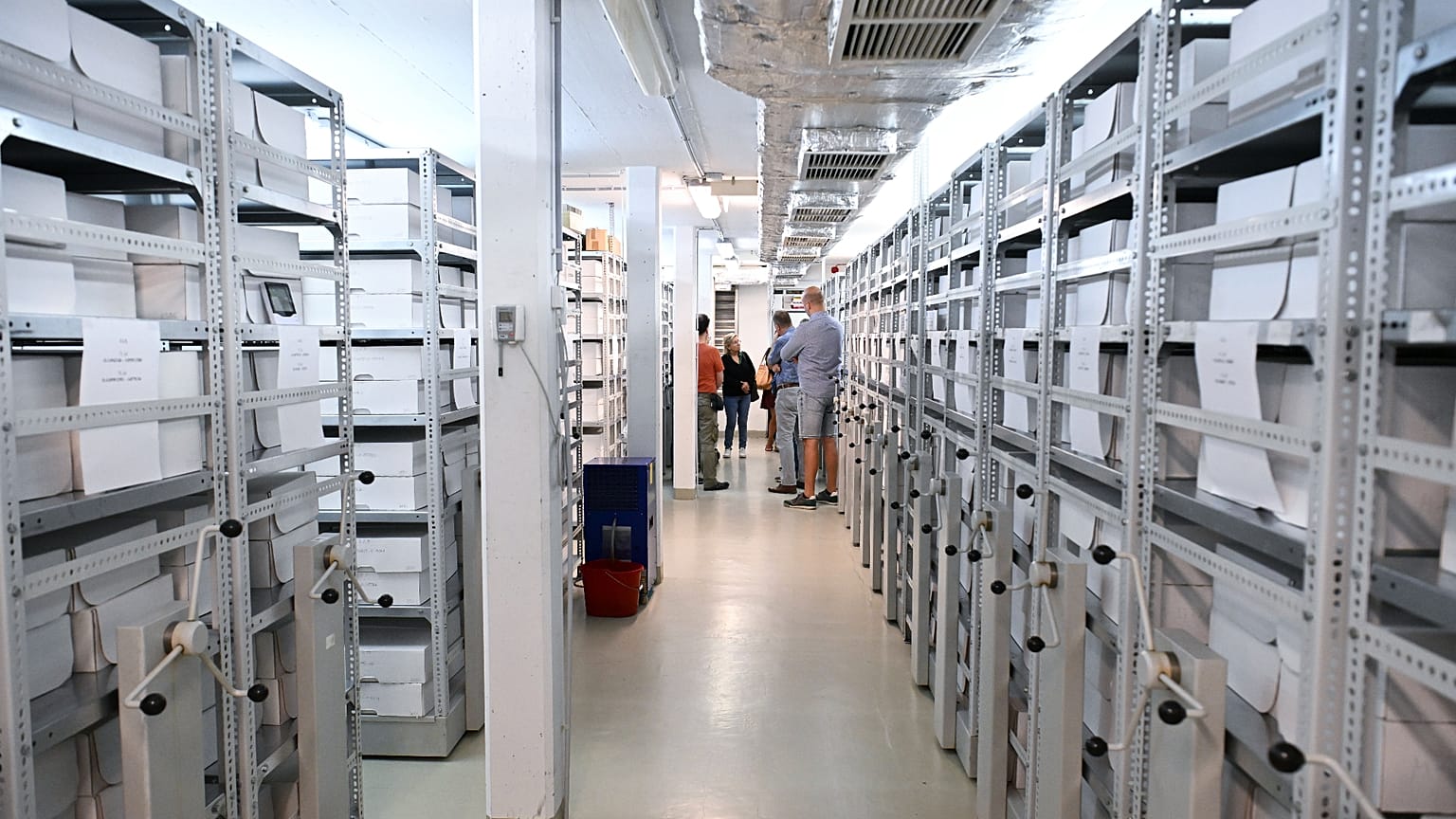













Hungary released communist-era secret police files Wednesday, identifying up to 60,000 informants, a path for Hungary in reckoning with its repressive past.
In spite of Hungary's democratic transition in 1990, efforts to disclose communist-era archives have repeatedly failed, with critics blaming successive governments' reluctance to implicate public figures across the political spectrum.
 ADVERTISEMENT
Hungary's Prime Minister Peter Magyar ended this stall with a bill in September to grant unrestricted access for the public to the records for the first time.
"After 36 years, we are finally fulfilling what was once one of the key promises of the 1990 regime change — a promise that was later denied and lied about," Magyar told a media briefing at the state security archives.
"For decades, restrictions on public access provided opportunities for political hysteria, blackmail, the exertion of pressure, and silencing," he said.
Public figures featured in registry
Politicians, clergy members and TV personalities' names appeared in the registries. But a "large proportion" of the informants were "people who did not make their mark on national public life," said Bendeguz Gergo Cseh, the head of the archive.
The government will set up hotlines offering emotional support and counselling for those affected by the revelations.
"Following today's disclosure, a great many families will be confronted with information that is difficult for them to bear," Magyar said, asking people to treat the disclosure with "dignity and humanity."
Various types of documents disclosed
Under the law on the full disclosure of the previous regime’s secret service activities, four types of state security records dating from before 1990 will be made freely accessible to anyone.
On Wednesday morning, the three of these became accessible on the nyitottaktak.hu (source in Hungarian) website.
The "6 card" is the registration sheet for a network member. It contains the agent’s identifying data, including name, place and date of birth, mother’s name and occupation, but also the main details of the agent’s activity. Among them, the circumstances and motivations that led to them becoming an agent and how long they remained a network member.
A register of recruitment between 1957 and 1962 and a database of former agents' personal data and code names were also released. In total, estimates suggest 50,000 to 60,000 agent names were made public over all this document disclosure.
The public has free access since Wednesday to this data via a search tool that can filter by birth data, by name, place and date of birth, as well as by code name, across all types of records that have been made public.
A second batch of files with further detail on about 9,000 informants will be released in February.
Around 150,000 agents during communist era
Hungary was under one-party communist rule between 1949 and 1989 that repressed dissent.
Much like in East Germany and other parts of the Soviet-led Eastern Bloc during the Cold War, authorities employed an extensive network of informants to monitor public sentiment.
Individuals, often recruited through coercion, were tasked with reporting on colleagues, friends and even relatives for signs of disloyalty towards the regime.
Estimates suggest that secret police employed around 150,000 agents in total over the four decades of the Mátyás Rákosi (1952-1953) and János Kádár (1956-1988) regimes.
But only about one-third of their names are known, and detailed, substantive information exists for only about 10% of them. Many records were lost in 1956 and during the anti-Soviet change of regime, and the remainder was kept until 1997 in the Ministry of Interior, until the creation of ÁBTL’s predecessor, the Historical Office.
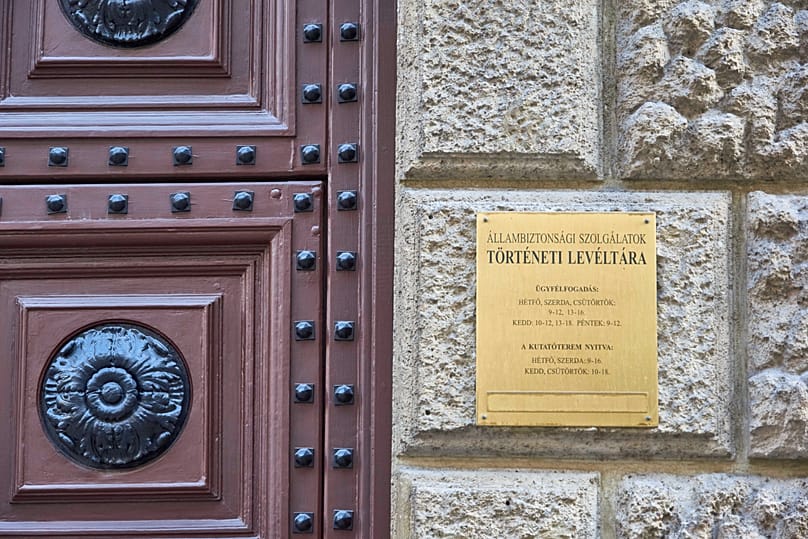
Cseh Gergő Bendegúz, director general of the Historical Archives of State Security Services (ÁBTL), told the Hungarian press agency MTI that there are about ten thousand files, comprising many hundreds of thousands of pages in total.
Responding to a question on how reliable and complete the documents are, Cseh Gergő Bendegúz underlined that the content of state security records is not necessarily true in every case and is certainly very incomplete.
'Better late than never'
Debates over opening the archives have dogged Hungarian politics since the fall of communism. In 2002, weeks after becoming prime minister, socialist politician Peter Medgyessy became embroiled in a scandal after it was revealed that he had worked as a communist-era secret agent.
The case prompted fresh calls for transparency, and parliament adopted a law in 2003 that allowed individuals who had been monitored to learn who had reported on them.
The release was "better late than never," said historian Laszlo Eorsi from the 1956 Institute Foundation.
"We are getting access to much more information than before about who the authorities have recruited and how the security apparatus worked back then," he said.
But historians have cautioned against judging anyone just because their names are on the list of informants.
"I know of quite a few examples when someone was recruited, but they did not make a report, but in fact took a huge risk by turning against the authorities. Some even could be considered proper heroes," Eorsi stressed.