




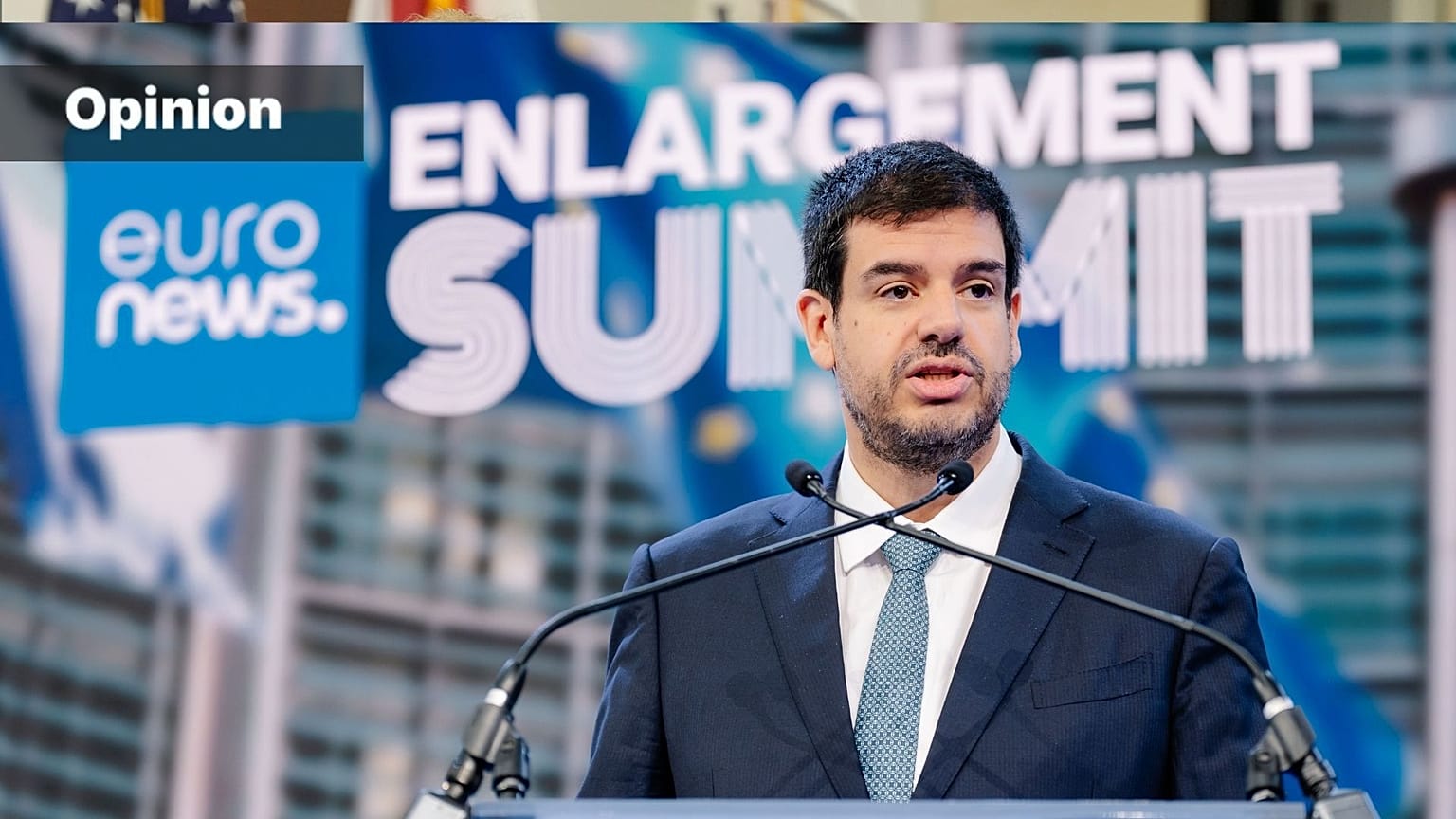













"Citizens of the candidate countries are Europeans, in their hearts but also in their minds. Let us complete and reunite the continent" said Pedro Vargas David, Chairman of Euronews, at the Euronews Enlargement Summit in Brussels, addressing high-profile guests, including numerous heads of state.
53% is the percentage of European Union citizens that support enlargement today. Going from 79% in Sweden to only 35% in France. But even more importantly, more than 2/3 of Europeans say they don’t know enough and want to be more informed.
 ADVERTISEMENT
These Europeans are ready to change their views, if they get the right information. And that is the responsibility of political leaders, but also the responsibility of media. The responsibility of Euronews.
Europe is at a historical crossroad
Europe is at a historical crossroad, more countries than ever have requested to join the EU, war has returned to the European continent, but on the other side, and especially in Western Europe, we see people take to the street, social protests are growing and dissatisfaction with the institutions is growing.
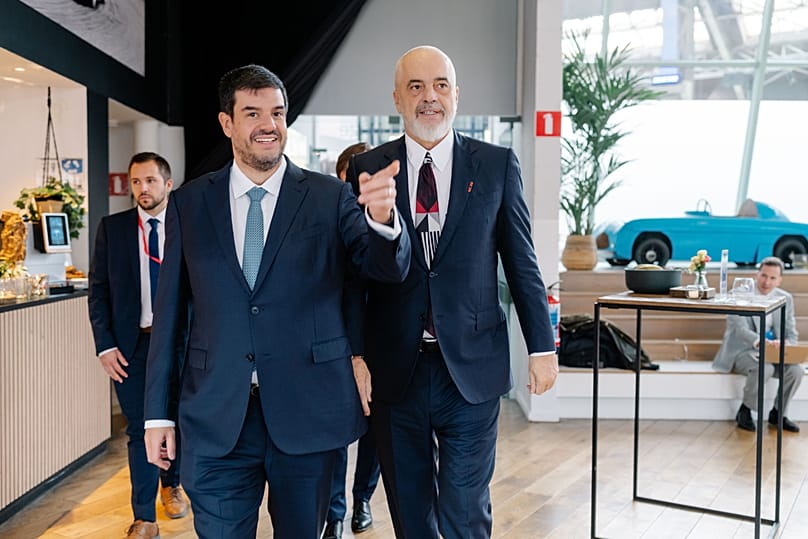
So, in that context, the question must be asked, is enlargement really a priority? Are we doing everything we can to make it happen? Are we being fair to our own societies, but also to those of the candidate countries? And are we winning and keeping the hearts of the people in the candidate countries with us? Let me start with this last question: In July, the European Commission published some very interesting figures about support for EU accession in the candidate countries.
Support for EU accession in the candidate countries
These figures show very different realities, Albania leads from the candidate countries with more than 92% support, second, surprisingly, or maybe not, is Georgia at 71%, followed by Ukraine, Montenegro, North Macedonia and Bosnia and Herzegovina all above 60%, with Moldova at 58% very close to them, and finally Türkiye at 46% and Serbia, in the report of the Commission at 31%. Two notes on the Serbian number, support from the people under 30 is at 63% and many local polls, put the number much closer to a 50% to 55% of support in case of a referendum.
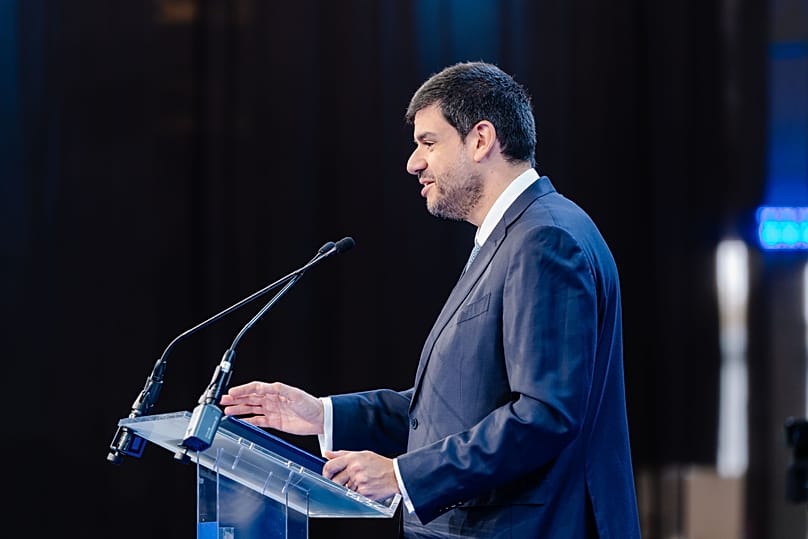
In certain cases, like Albania and Georgia, the case is clear, but in others, we must ask ourselves, aren’t these numbers too low? Are we doing all we can to counter the narratives of our opponents? Are we capable of showing that beyond the difficulties in the process, there is a huge benefit not just for the continent, not just for the candidate countries but to the individual citizens in these countries? Are our EU ambassadors in the candidate countries not too many times seen as the spokespeople of everything that is wrong and not the promoters of the good cases?
In general, are we capable of keeping that European dream alive? Where are the EU flags, when people take to the streets to ask for freedom or democracy? Shouldn’t that worry us? And are we letting our fate be dictated by others, who don’t want peace but thrive in chaos?
The candidates share our values, they share our traditions
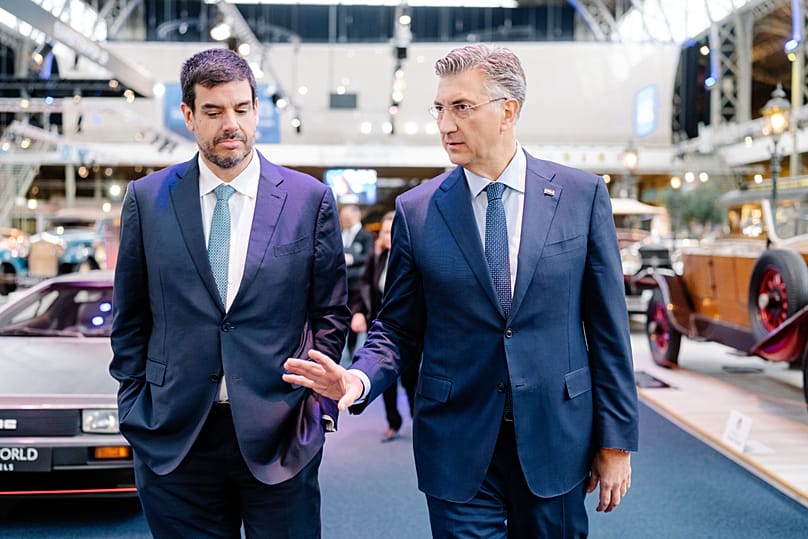
Second, let me also ask ourselves if we are doing enough to prepare our European societies for this process, to make sure we gather enough support here, in Western Europe. Of course, and having here the presence of Prime Minister Plenkovic who I thank for joining us today here, in particular in the Western Balkans, some issues from the past need to be healed, current members´ interests need to be discussed, and Croatia, has legitimate interests, that we hope can be finalized successfully soon.
But the wider question is, are we showing to our societies that these countries, these people are real Europeans, not by some determination, but by culture, by geography and by practice. They share our values, they share our traditions, they eat the same food, they in many cases even speak very similar languages, the people from the Western Balkans and the Eastern Partnership are Europeans. And their place is here, with us.
A Gibraltar model for a swift application of Schengen
We also owe it to ourselves a debate about the nature of the future enlargements and the institutional context and framework of those accessions. The debate needs to happen in particular in the Council and also in the Parliament about potential changes to the rights and obligations of future Members States, whether that is a limitation to veto and voting powers, access to certain programmes, all of those topics are up for discussion, and from the candidate countries we have received significant signs of flexibility.
The motto, one could say, is: “Let us in as fast as you can, we will show you once inside, we are worthy members of the EU”. But with this in mind, and since we have already opened the door to change the principle of all or nothing, should we not ask the Commission to study at large all the current programs that enlargement candidates could join, even before full accession?
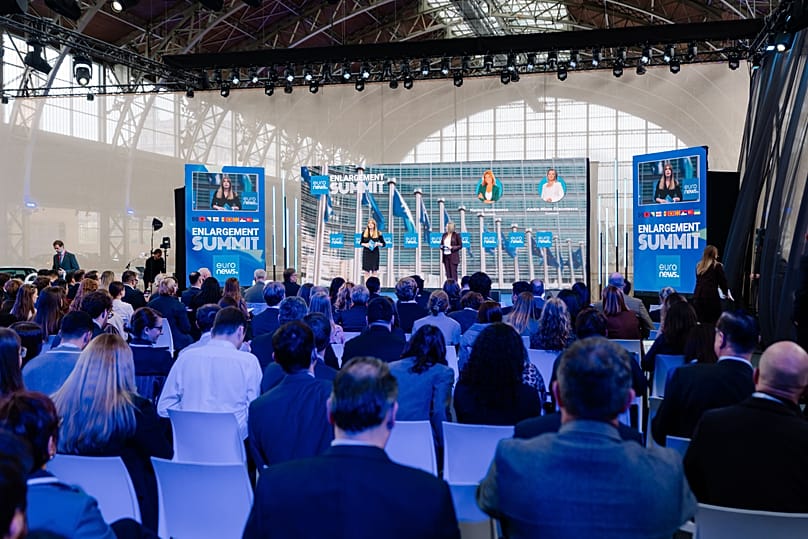
In this particular case, and I know it would pose a lot of questions to many here in the room, but could we not think of a Gibraltar model for a swift application of Schengen to the Western Balkans, whose land borders are already all with EU and Schengen members? Would that not be a symbol of our commitment to the people of these countries, a huge improvement to our collective security and migration control? In the current world, we need new ideas, not all will be perfect, but I would challenge the speakers today to come up with them and see how we can move to the united Europe we all dream of.
Those new ideas, can also be inspired by actions in some of the candidate countries. We have just witnessed two elections, in Bosnia and Herzegovina and Serbia. Democratic elections, perfect, surely not, but no one doubts that the result reflected the will of the people. Elections where people expressed their sovereign decision about their future, where incumbents accepted defeat and left power, with no violence. If there is a lesson from those two elections, it is that we should believe more in the power of the people, the power of the vote, in summary the absolute victory of democracy.
Europeans have a European window of opportunity
We, as Europeans, must now understand the message of the people of Bosnia and Herzegovina and Serbia, we have a European window of opportunity, we can either step up our game and move fast, or continue to be tangled in our old positions. We have a historical opportunity, but make no mistake, if we miss it, others will not. Our opponents will fill up the space and there is no united Europe, without a European Bosnia Herzegovina and a European Serbia.
Since last summit we witnessed the remarkable progress made by Montenegro and Albania. Would it be too much to ask that in next year’s edition we are already hosting them as almost members of the EU?
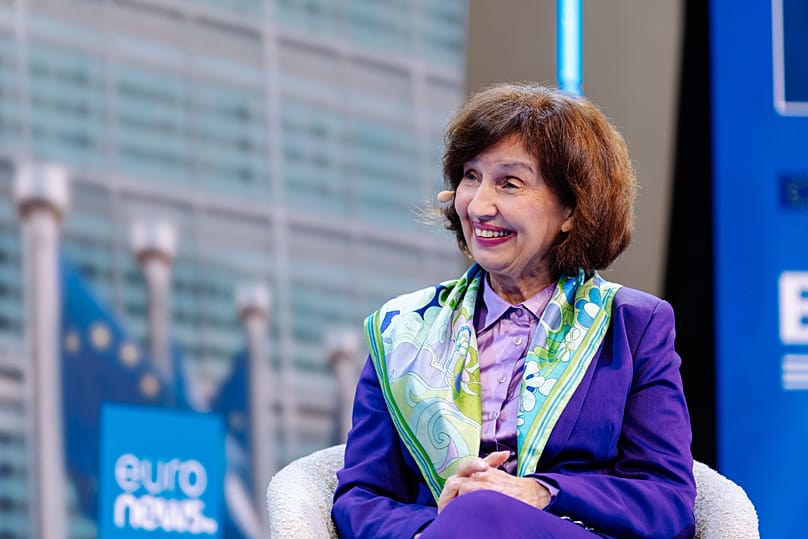
And can we imagine that North Macedonia, inspired by its two neighbours also moves at a much faster pace in that direction? We also continued to witness the heroic resistance of the people of Ukraine and Moldova, and yes, I do recognize that although the circumstance of the aggression of the Government of the Russian Federation are different in the two countries, we must recognize that they continue to fight a physical and hybrid invasion from a country that only seeks destruction and chaos.
For many in Kyiv and in other parts of Ukraine, that we will join very soon to speak with the Prime Minister, there is no other future for Ukraine than a European one. And that is also an important element on why they keep fighting.
Georgia and Armenia are European by culture and tradition
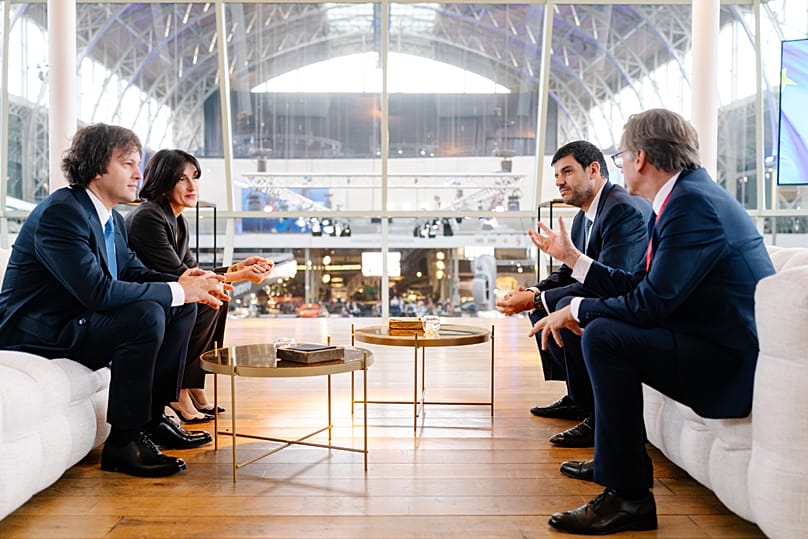
And finally, today, we receive two guests from the South Caucasus, the Prime Ministers of Georgia and Armenia. Two countries that have experienced amazing GDP growth in the last few years, countries whose populations are again European by culture and tradition.
We need to hear their voices, we need here in Brussels to understand their intentions, and we need to prepare our European response, that is why not talking is not an option. For our integrity, but also for our interests.
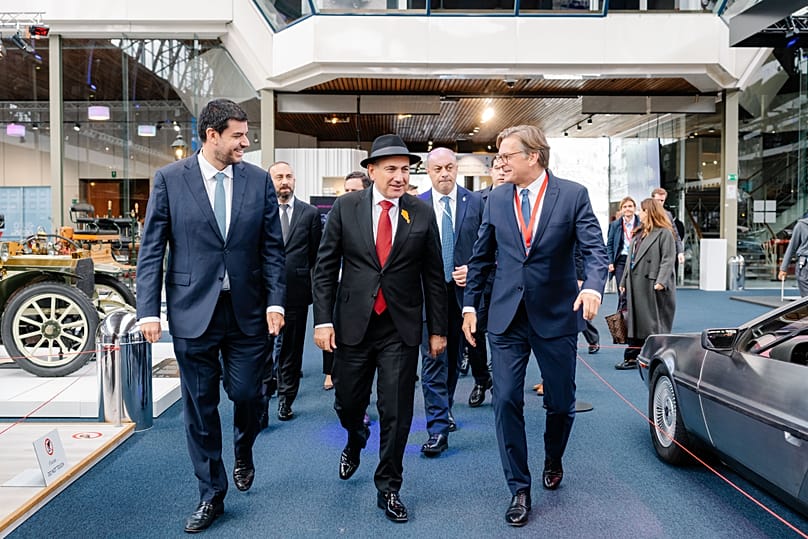
And finally, let me make a wish, a personal one, but one I also assumed in our recent defense summit, as a wish for Euronews. In next year’s summit, let’s make sure we have the United Kingdom back at the table. I said a month ago, if GB News was Brexit TV, let Euronews be the rejoin TV. Mistakes can always be made, but they can also be corrected, we as Europeans are poorer and weaker without the UK, and so is the UK without Europe.
More than 60% of British people want back in, let us also find the speed and the intelligence to not lose this window and bring that Union Jack back to Brussels ASAP. Maybe, since the birth of the European Union, have we not been so challenged, have we not looked at our future with worried eyes, have we not been so concerned about the future of the place we leave for our children.
Euronews will always be here to be that place of debate, I will finish as I did last year: “Europe must breathe with both its lungs” said Saint John Paul II, and for as long as Karol Wojtyła and Helmut Kohl´s reunification dreams are not complete, our family is poorer, our security at risk and our ambitions limited. Citizens of the candidate countries are Europeans, in their hearts but also in their minds. Let us complete and reunite the continent. Let’s enlarge Europe. Now.