












The WHO has developed an early warning system to spot looming pandemics. Tropical medicine expert Dr Carsten Köhler from Tübingen explains the background to Euronews.
The warning about fox tapeworm is something almost everyone in Germany has heard if they have ever wanted to pick berries or collect mushrooms in the forest. The concern is that the tapeworm eggs could be stuck to them - a parasite that attacks the liver and can cause a potentially life-threatening disease.
 ADVERTISEMENT
This disease is one of 21 illnesses that the World Health Organization WHO has placed on its list of NTDs. These so-called "Neglected Tropical Diseases (NTDs)", known in German as "vernachlässigte Tropenkrankheiten", are regarded as a global early-warning system.
"Wherever NTDs occur, they mark the weak points in the global health system, precisely because there is no system in place there," explains Dr. Dr. Carsten Köhler from the University of Tübingen in an interview with Euronews. He heads, among other things, the Institute of Tropical Medicine, Travel Medicine and Human Parasitology and is president of the German Society for Tropical Medicine, travel medicine and global health.
NTDs can therefore show where medical care, disease surveillance and reliable data are lacking. Precisely in such places, infectious diseases may remain undetected for a long time - with consequences that can reach far beyond the regions directly affected.
Fox tapeworm: Is it still a threat?
The parasite measures only two to six millimetres but can cause severe liver disease in humans. The medical term is alveolar echinococcosis. Adult tapeworms live in the small intestine of foxes and occasionally also in the intestines of dogs and cats.
These animals are then the so-called "definitive hosts" of the tapeworms.
To explain: in biology and medicine, a definitive host is the organism in which a parasite reaches sexual maturity and reproduces. Many parasites have a complex life cycle and change their host - their "home" - during their lifetime. Example: a mouse (intermediate host) ingests the tapeworm eggs. Larvae develop inside the mouse. A fox (definitive host) eats the mouse. In the fox's intestine, the larvae develop into adult tapeworms, which then mate and produce new eggs. The fox is therefore the definitive host.
According to the Bavarian State Office for Health and Food Safety (LGL), the most important definitive host in central Europe is the red fox. Infection in humans is very rare but, if it occurs, can be life-threatening.
In 2024, 52 infections were recorded at the Robert Koch Institute (RKI); in previous years the number in humans mostly lay between 40 and 45 cases. According to the German Liver Aid, the majority of cases come from the southern federal states of Baden-Württemberg and Bavaria. Depending on the region, between 33 and 50 percent of foxes are infected with the parasite.
Echinococcosis is one of the neglected tropical diseases that occur in Germany. But according to Köhler, leishmaniases are now also knocking at the door. This infectious disease can present in different ways and is transmitted by tiny sandflies.
"Many Germans like to travel to the Mediterranean region on holiday and can then bring it back with them," Köhler explains in the interview with Euronews. According to the health magazine of the AOK health insurer, the disease is often curable if it is detected and treated early. The WHO estimates that around 700,000 to one million people worldwide fall ill with leishmaniases every year.
However, most of the 21 neglected tropical diseases occur above all in parts of the world whose health systems are less developed than Germany's.
New neglected disease identified
For example, in 2026 the state of Gabon in Central Africa submitted an application to the World Health Organization WHO to have another disease added to the list of NTDs. "Only endemic countries are allowed to submit applications," Köhler explains. In this case it concerns Loa loa disease, a so-called eye worm. According to Köhler, the WHO will deliberate on the request.
The parasite is transmitted by horseflies. The worms can move through the subcutaneous tissue and sometimes become visible under the conjunctiva of the eye. Infection may be accompanied by itching, swelling and other complaints.
In Köhler's view, the WHO should consider the application. However, in October 2026 the responsible WHO advisory committee recommended a temporary pause in adding new diseases. First, the criteria and procedures for inclusion on the list are to be fundamentally reviewed.
"NTDs occur in regions where the health system does not exist or is only rudimentary," Köhler continues. The diseases themselves are not automatically a danger to the global population. What matters far more is what they reveal about the conditions under which infections can spread: lack of medical care, inadequate monitoring and gaps in the recording of disease cases. There is also a risk that illnesses with pandemic potential may emerge and spread there.
NTDs as an early-warning system for potential endemics
So-called community health workers operate in such regions. They go from community to community, inform the population and observe the local health situation. "A community health worker who is looking out for a worm infection that itself has no pandemic potential would still notice if, all of a sudden, an entire family had died and could report that immediately," says tropical medicine specialist Köhler.
They can recognise illnesses, refer people to medical facilities and report unusual developments to the responsible authorities. "That is why we say these structures can be used as an early-warning system if such basic services have already been set up for NTDs," he explains in his interview with Euronews at the World Health Summit.
The advantage is that helpers are already present in the communities. If NTD programmes are already running in these regions, diseases with pandemic potential are likely to be detected earlier.
Emergency structures do not have to be created from scratch when a new infectious disease appears. If staff are already supporting people with neglected tropical diseases, they can at the same time observe changes that point to other health threats. The work of health workers is also about collecting data as comprehensively as possible.
For this reason, in its strategy to combat neglected tropical diseases up to 2030 the WHO is also relying on integrated approaches: measures are to be more firmly embedded in existing health systems and linked with other areas of public health.
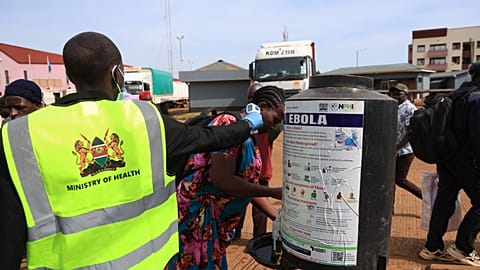
Ebola outbreak: data gap noticed too late
The Ebola outbreak in the Democratic Republic of Congo showed exactly how problematic missing data can be, says Köhler. "In fact we had expected an outbreak in other hotspots," explains the director of the Centre for Tropical Medicine. "Then we had to realise that the data for the Democratic Republic of Congo were out of date."
When up-to-date information from a region is lacking, health authorities may misjudge the risk. Contact tracing and the targeted deployment of medical staff and supplies also become more difficult.
Local health workers are therefore not only vital for the treatment of individual diseases; they also help to detect outbreaks earlier and to coordinate the response more effectively.
In some cases, the withdrawal of the USA from health promotion has also made data collection in affected areas more difficult. "Because funding from the USA has fallen so sharply, the community health worker structures that were built up over recent decades have collapsed dramatically," Köhler explains.
The missing funds meant, among other things, that former health workers had to give up their jobs. According to UNAIDS, as a result of US funding cuts, thousands of community health workers in Malawi were affected by contract terminations in 2025. The organisation also reported restrictions in the electronic recording of health data.
A study published in 2026 from Zambia likewise describes how cuts in international development aid undermined the work of health facilities. Staff reported lay-offs, a lack of diagnostic tests and difficulties in using electronic patient records. The result: less comprehensive health data.
The next pandemic: Disease X
A new pandemic triggered by Ebola is not considered likely, as the risk varies greatly from disease to disease. While in the case of coronavirus, for example, droplet infection was enough, Ebola mainly threatens people who come into contact with the body fluids of infected patients.
Neglected tropical diseases likewise do not automatically have pandemic potential. A high number of NTD cases is rather a possible indication that medical care and surveillance in a region need to be strengthened.
"We should prepare for the next pandemic, which the WHO calls Disease X, whatever it turns out to be," warns Köhler. It is assumed that Covid-19 will not have been the last pandemic; only the timing cannot be predicted.
Preparation therefore means not only developing vaccines and medicines. It also includes having laboratories, specialist staff, data infrastructures and international networks in place that can work together quickly in an emergency. Köhler points to the importance of European and international cooperation.
"That is why I very much hope that programmes such as the European Vaccine Hub for Pandemic Preparedness (EvH) or the European & Developing Countries Clinical Trials Partnership (EDCTP) continue to receive support," Köhler says in his Euronews interview. These programmes bring together research structures, laboratory capacity and experts.
"It is important to create a platform now that enables very rapid action and to have functioning cooperative structures in place when this Disease X arrives," Köhler stresses. "For that you need a network. Health has no borders, and neither do pathogens."