

Rising energy prices added to inflation concerns as European shares fell and Kering tumbled on weak Gucci sales. An AI sell-off drove investors towards US bonds, while France’s borrowing costs remained above 5%.
European shares edged lower at the open on Friday as oil prices remained near five-month highs and investors weighed a sharp sell-off in AI stocks on Wall Street. Kering fell more than 10% after another drop in Gucci sales cast doubt on the luxury group’s turnaround.
 ADVERTISEMENT
Oil prices continued to rise on worries about the war with Iran, with Brent crude trading at $114.73 per barrel on Friday morning, up 0.9% after a 4% jump in the previous session. US benchmark West Texas Intermediate crude rose 1.3% to $100.75 per barrel.
Oil rallied on Thursday as deadly attacks in Saudi Arabia fuelled concerns that a full-scale regional conflict could further choke off global energy supplies.
On top of the risk premium, soaring shipping costs are adding to the cost of delivering oil.
By mid-October, the cost of shipping crude from the Middle East Gulf to Asia on a large tanker had climbed to over $37 per barrel, more than five times its level before the war began, according to MarketWatch.
Gas prices jumped, too. November futures for the European benchmark, Dutch TTF, traded above €93 per megawatt-hour on Friday morning.
European shares slip as Kering tumbles
The pan-European Stoxx 600 edged down 0.4% in early trading. At around 09:45 CEST, London’s FTSE 100 was down 0.3%, while France’s CAC 40 fell 0.8% and the DAX in Frankfurt shed 0.5%.
Kering was among the biggest fallers, with its shares down by more than 11% at the same time, as investors were concerned about the lack of clear signs that sales at Gucci, the group’s largest brand, were stabilising. Gucci’s sales fell 6% year on year in the third quarter, after adjusting for currency movements and changes to the business. The decline was slightly worse than analysts expected.
On Thursday, in the US, the S&P 500 fell 1.2%, while the Nasdaq composite tumbled 2.6%. The weakness in tech stocks was so overwhelming that it masked strength elsewhere in the US market, where the majority of stocks actually rose. The Dow Jones Industrial Average added less than 0.1%.
AI-related stocks have been swinging on worries that their boom may be under threat because of how expensive it has become to borrow money to build data centres and buy more AI chips. Investors fear share prices shot too high during a years-long frenzy, even though companies in the industry continue to report growth.
Meta Platforms, which is pushing its Muse AI agent, lost 7% after reporting stronger revenue for the latest quarter than analysts expected, though its profit fell short. The company behind Facebook and Instagram also said it would introduce a new class of non-voting shares, giving it another way to fund AI investments and other expenses while preserving existing shareholders’ voting power.
Tesla fell 3.1% after reporting third-quarter profit above analysts’ expectations, though its revenue was weaker than forecast.
The global sell-off in AI stocks knocked Nvidia down 4.4%. Because the chip giant is the largest company on Wall Street by market value, movements in its stock carry more weight in the S&P 500 than those of any other company, and it was the single biggest drag on the index.
CoreWeave, which has borrowed money to buy Nvidia’s AI chips and rent out access to them through its cloud services, has been particularly shaky in recent weeks because of worries about its debt. It dropped 10.1%.
Technology stocks face fresh tests next week when Microsoft, Amazon and Alphabet report their earnings. The Federal Reserve’s next interest rate decision is also due next week, on Wednesday, 28 October.
Bond market worries
Worries about big government debt loads and strained budgets are hanging over many developed economies. Protests across France have raised pressure on the government to increase spending, which could add further to its debt.
France's 10-year government bond yield stood at around 5.07% on Friday morning, compared with Germany’s 3.33%, putting the gap at more than 170 basis points. Italy’s 10-year yield dipped below 4.6%.
Debt and inflation fears had helped drive a major global bond sell-off, pushing US Treasury yields to their highest levels in decades.
But US yields fell sharply on Thursday as investors bought US government bonds in search of something safer to own as AI stocks tumbled. The 10-year Treasury yield dropped 16 basis points to 4.97%, from 5.13% late Wednesday. It had traded above 5.30% earlier this month. The 16-basis-point daily fall was a sharp move for the benchmark yield.
Thursday’s drop in yields came even as another report suggested the US economy may be doing better than economists expected. New applications for unemployment benefits fell by 6,000 to 194,000 last week, their lowest level since July, suggesting layoffs remained low.
Investors will also watch Friday’s preliminary business activity surveys for the eurozone, the UK and the US for signs of how higher energy prices and borrowing costs are affecting growth.
In other dealings early Friday, the US dollar rose to 156.93 Japanese yen from 156.77 yen. The euro was slightly down at $1.1205. Sterling traded at $1.3381.
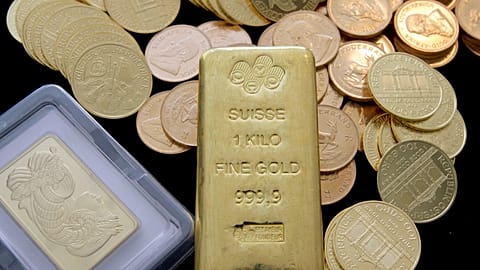
Gold futures fell 0.8% to $4,027.40 an ounce at around 10:00 CEST.