


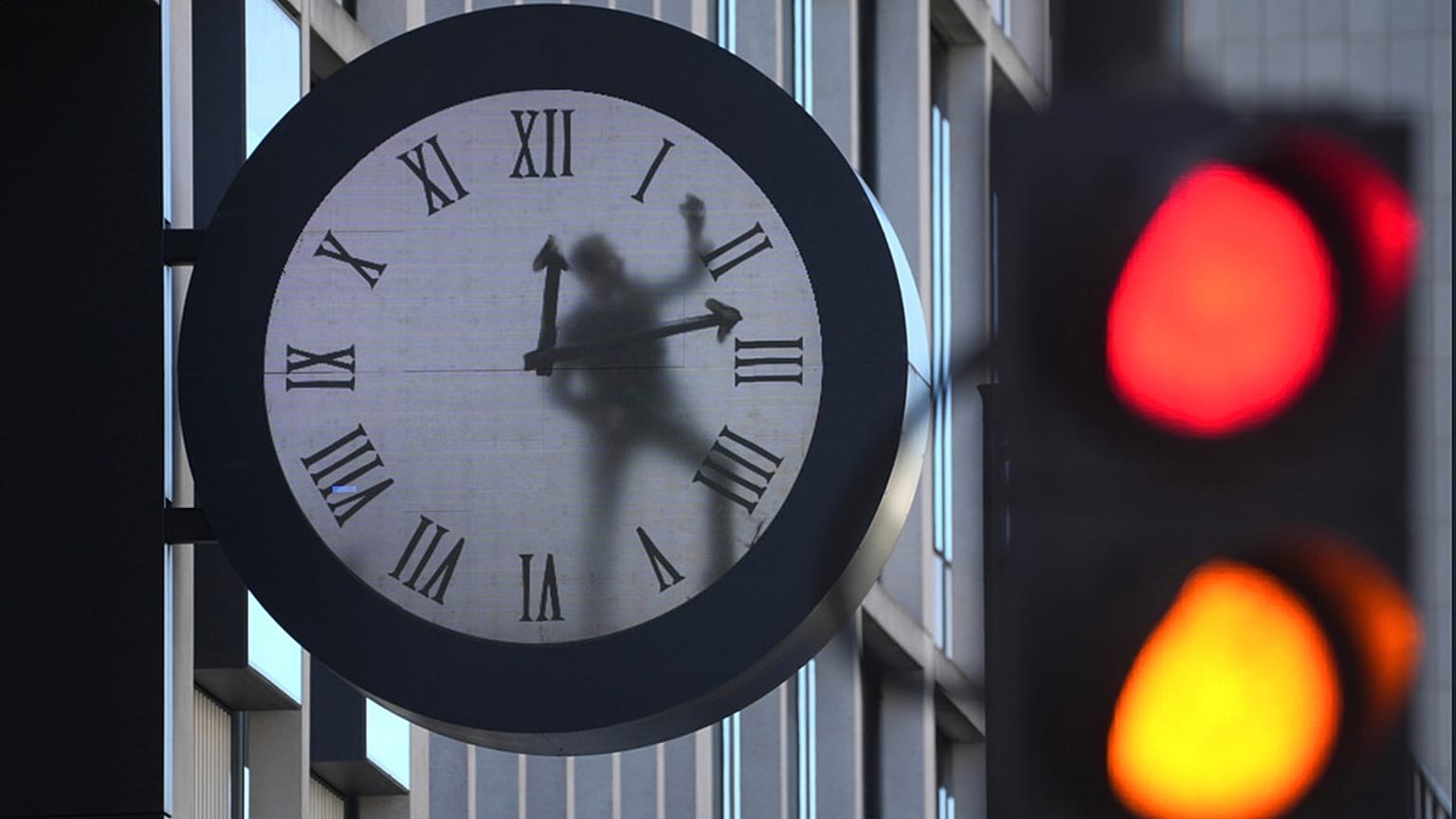


This Sunday the clocks will be turned back again, even though the EU Parliament set abolition in motion at the end of 2019. Why?
Changing the clocks twice a year has long been unpopular across Europe. In a 2018 EU-wide consultation, 84% of respondents supported ending the seasonal time change, reflecting widespread frustration with the practice.
 ADVERTISEMENT
The following year, the European Parliament overwhelmingly backed a European Commission proposal to abolish the twice-yearly clock change.
Yet years later, Europeans are still moving their clocks forward in spring and back in autumn. The proposal has remained stalled, with EU member states unable to agree on how to implement the change. The COVID-19 pandemic and Russia's full-scale invasion of Ukraine also pushed the issue down the political agenda.
On Sunday morning the time change takes place
Traditionally, the clocks go back in autumn on the last Sunday in October. In the night from 24 to 25 October 2026 the clocks will be set back from 3 a.m. to 2 a.m. This means that those who do not work at night can sleep for an extra hour. It will then get light earlier in the morning and dark earlier in the evening.
With the change at the end of October, Central European Summer Time (CEST) comes to an end and most of Europe returns to Central European Time (CET), commonly referred to as winter time. Portugal and the United Kingdom also change their clocks, but in both countries it is one hour earlier than in most of continental Europe.
In the United States, daylight saving time does not end until 1 November.
According to the travel portal Reisereporter, clocks are not changed in Morocco, Thailand, Japan, Argentina or South Africa.
West Germany and other EU states followed France’s lead in 1980 in order to harmonise the time. In 1976, the government in Paris had introduced summer time in response to the oil crisis, with the aim of saving energy. That justification is now widely seen as outdated. Most recently, even the leap second has already been scrapped.
EU Council blocks end of clock changes
In 2019 the European Parliament voted by 410 to 192 in favour of abolishing the clock change, which was originally meant to take effect from 2021. But a final law has been held up because the EU member states have not given their approval.
To this day, the countries have not been able to agree on whether summer time or winter time should apply permanently. Because different regimes could cause economic and organisational problems, implementation is still on hold pending a joint solution. It is therefore unlikely that the system will be scrapped in the near future.