




Volatile energy prices have pushed consumer price indices across major EU economies. Now, they nearly double the ECB’s inflation target of 2%.
The Euro area’s annual inflation was estimated at 3.8% for September 2026, up from 3.2% in August, according to the latest data published by Eurostat.
 ADVERTISEMENT
Spain is the most affected, as local energy cost spikes drove the number up to 5%. Belgium reached 4.69% (the highest level since 2023) and Italy reached 4.2%. Meanwhile, France stayed up at 3.4% but still lower than most of its neighbours, and Germany rose to 3.3%.
The estimates were largely driven by sharp increases in natural gas, electricity, and motor fuel prices. The strengthening of the US dollar in late summer added to these pressures, making dollar-denominated imports more expensive for EU buyers. The impact varied across sectors, placing additional financial strain on European households.
Supermarket shelves prices
The European Commission’s latest Consumer Conditions Scoreboard showed that 35% of citizens worry about putting food on the table.
Food and household goods inflation remains high, at 3% to 7% depending on the country. The war in the Middle East and resulting energy shocks have kept supermarket bills above pre-pandemic levels, as fuel and natural gas prices drive up production, transport and fertiliser costs.
Essentials like dairy have seen steep price rises: butter costs 50% more than before the pandemic, and milk 40% more. Coffee, tea, cocoa, sugar, chocolate and confectionery have been particularly affected by extreme weather and poor harvests.
Meat is also becoming less affordable as energy shocks drive up animal feed costs. Beef, poultry and pork prices remain 30% above 2019 levels.
Potato prices briefly eased earlier this year, but record summer heatwaves and droughts in European farming regions pushed fresh fruit and vegetable prices higher. Greens now cost 25% to 30% more.
Meanwhile, packaged goods and essentials like baby food have been hit by “shrinkflation”: manufacturers quietly reduce package sizes (such as shrinking a formula tub from 800g to 750g or reducing detergent volumes) while keeping prices unchanged.
To help with this issue, the EU has introduced unit pricing rules requiring retailers to display prices per kilogram, making it easier for consumers to identify price increases and compare products.
Meanwhile, the European Central Bank (ECB) has used interest rate increases to tackle general inflation, although these cannot directly address supply-side challenges such as crop shortages.
And to support farmers facing these challenges, the EU has introduced initiatives including the European Food Security Crisis Preparedness and Response Mechanism (EFSCM), Common Agricultural Policy (CAP) emergency tools such as subsidised farm insurance, mutual funds and income stabilisation schemes, and Horizon Europe funding for climate-smart agricultural innovation.
Energy bills and gas and oil prices
Energy bills also pressure at least 35 million Europeans who, Eurostat shows, are experiencing energy poverty. Eurozone energy inflation has surged to 18.8%, straining other sectors and consumer bills.
Nearly 40 million Europeans cannot keep their homes adequately warm, while 15% of households have fallen behind on utility bills. In Bulgaria (16.1%), Greece (18.1%), and Portugal, roughly 30% of the population is rationing winter heating to avoid financial collapse.
The main trigger is the US- Iran war with 20% of global oil passing through the Strait of Hormuz. Its closure removed an average of 14 million barrels per day from the market. Daily ship transits fell from 129 to just 3 to 5 after the escalation. Crude oil and 20% of global liquefied natural gas (LNG) supply remain trapped there.
Earlier this month, US President Donald Trump bypassed Western sanctions and struck an “energy ceasefire” with Putin, agreeing to import cheap Russian diesel ahead of the US midterm elections. This leaves the EU alone in dealing with the Strait’s closure and dependent on reduced energy supplies. It must outbid Asian buyers for alternatives and use longer import routes, further raising costs.
To help countries and citizens cope, the EU is seeking to accelerate a co-ordinated response plan to protect citizens from energy price spikes, manage strategic oil reserves and provide emergency relief.
A new energy demand taskforce and the EU Energy and Raw Materials Platform (formerly AggregateEU) aim to strengthen co-operation and improve the security and affordability of energy supplies. At the national level, measures such as bans on energy disconnections, emergency tariff protections and targeted energy vouchers can help shield vulnerable households from rising costs.
The EU is also exploring greater flexibility in strategic energy storage requirements, including potential reductions of up to 80% for certain countries, to help manage supply pressures and market volatility.
Europe's housing crisis
Rising housing costs are a major driver of the cost-of-living protests that have spread across Europe in recent weeks, including in Spain, France, Portugal, Greece, and Italy.
Compared with the 2025 annual average, house prices rose more than rents in 19 EU countries, led by Portugal (+10.3%), Bulgaria (+9.4%) and Slovakia (+9.1%). Rents rose everywhere except Slovenia (-0.9%) and Finland, where they remained unchanged. Among the rest, increases were largest in Croatia (+21.9%), Bulgaria (+6.4%) and Greece (+5.0%), according to Eurostat.
Urbanisation, population growth, and migration have pushed housing demand beyond supply. The EU Commission estimates Europe will need over 2 million new homes annually by 2035, while Eurostat found construction costs rose 56% from 2010 to 2024.
High costs restrict labour mobility and misallocate skilled workers. Over the past decade, workers missed out on about one million job-related relocations within the EU because they couldn't afford to move closer to work, the International Monetary Fund reports. Businesses struggle to attract talent, limiting growth and innovation and forcing them to relocate and expand elsewhere, away from high-cost regions.
This September, the European Commission proposed the Affordable Housing Act, the EU’s latest measure to tackle the crisis. It defines an “area under housing stress” as one where the average home costs at least eight years’ worth of disposable income. If areas reach this threshold, authorities can step in to protect housing affordability and availability, for example, by limiting short-term rentals and second-home use, or reserving affordable homes for first-time buyers or lower- and middle-income households.
The Act builds on the 2025 Affordable Housing Plan and the European Housing Action Plan to expand supply and reduce construction and permitting costs. As of September 2026, cohesion policy has added €4.7 billion to the €10.4 billion already allocated for energy-efficient housing and social housing for vulnerable people. The National and Regional Partnership Plans (NRPs) will take these investments further under the EU’s 2028-2034 Multiannual Financial Framework (MFF).
Education costs spark student-led protests EU-wide
The EU’s “Investing in Education” report (2026) found that education investment remained stable at 9.7% of total public expenditure in 2024, but still below 0.3% of its pre-pandemic level. Debt pressure is pushing national governments to cut education spending. Shifting geopolitical and economic priorities are redirecting public funds towards more urgent sectors, including defence and energy.
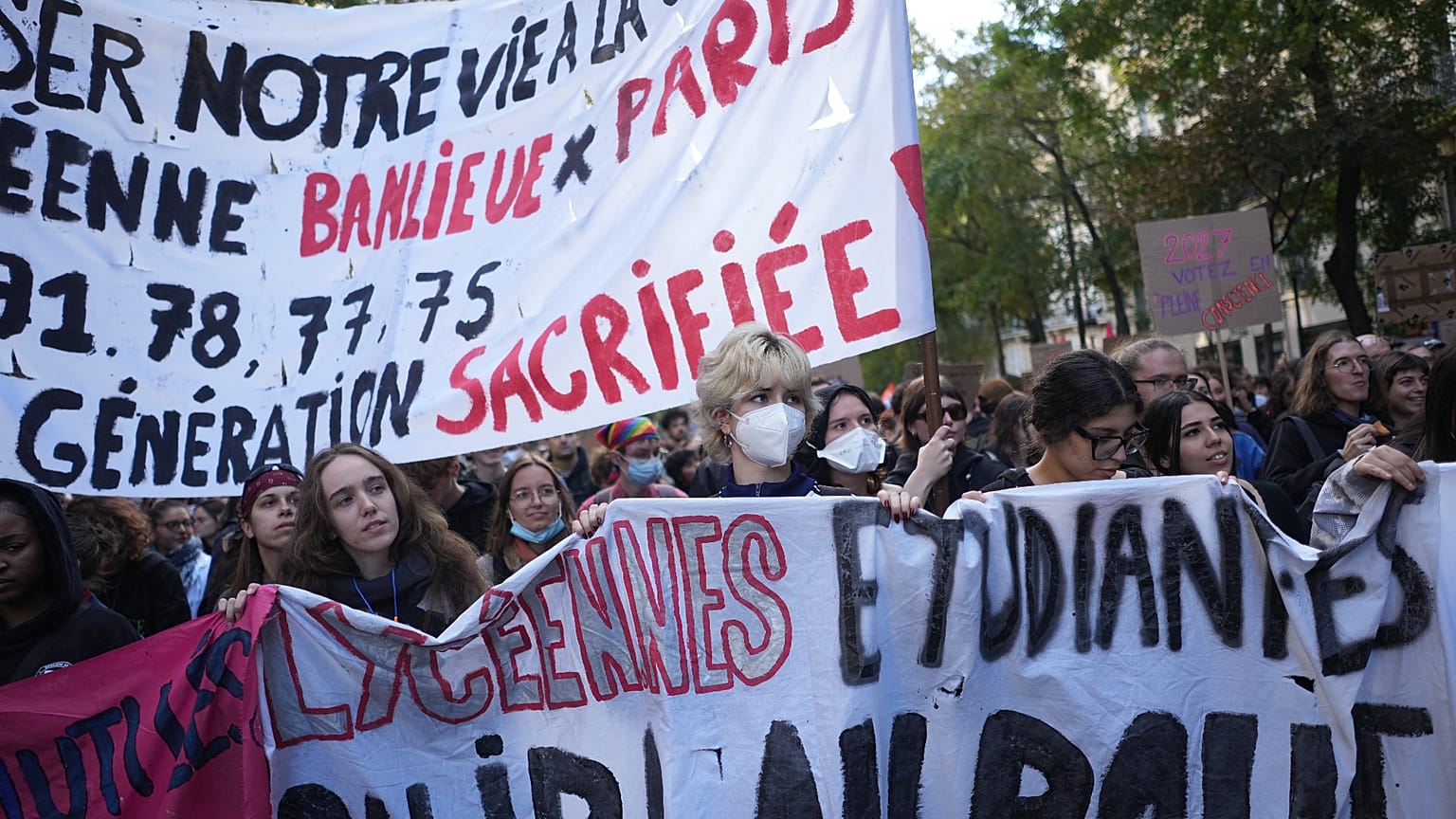
This sparked protests in mid-September, as French students took to the streets over teacher shortages, overcrowded classrooms, and poor infrastructure. Demonstrations have since spread to Ireland, Portugal, Greece and Belgium, with students demanding lower fees, more funding, and improved economic policies to ease the cost-of-living crisis. Protests in France and Italy turned violent over the past weekend, with clashes with police and hundreds of arrests following weeks of school occupation and vandalism.
Europe’s younger generation demands stable future prospects through better education systems, as rising education costs squeeze household budgets and make access to education less of a right and more dependent on family background.
University accommodation costs rose by 11% in 2024, according to the ICEF Monitor, while the Erasmus Student Network's latest report found that grants are insufficient to cover higher living costs for 35.63% of students.
While education remains member states’ priority, the EU supports national investments. The main instruments under the current 2021-2027 budget include Erasmus+ (€26 billion), the European Solidarity Corps (€1.01 billion), Horizon Europe research and innovation programme (€93.5 billion), the European Social Fund+ (€95 billion), and Creative Europe (€2.53 billion).
Looking ahead, the Commission proposed €40.8 billion for Erasmus+ in its 2028-2034 long-term budget, including housing support for students to facilitate and increase access to mobility, volunteering, and learning. The European Parliament pushes to increase funding to €47.39 billion and to introduce financial support mechanisms that account for differences in living and housing costs between member states.
The new AgoraEU program is a major development in education. Under the new MFF, it will support culture, media and civil society by building on existing programs, including Creative Europe and the Citizens, Equality, Rights and Values (CERV) program.