





























Pressure mounts on Moscow to explain the suspected plague case in Siberia, which has put health authorities on edge. Brussels is calling on Moscow to come clean with precise details "as soon as possible".
The European Commission has stepped up pressure on Russia to provide full details of a suspected plague case in Siberia, echoing calls for transparency from the United States and the World Health Organisation (WHO).
 ADVERTISEMENT
ADVERTISEMENT
ADVERTISEMENT
Moscow has pushed back,insisting there is no risk of an epidemic.
"Let me say, for the third time this week in the press room: Russia should make information about the plague available as soon as possible," Eva Hrncirova, the Commission's health spokesperson, said on Thursday.
"We don't have enough information to assess the epidemiological situation, to assess the risks for other countries and to take appropriate measures, if necessary."
The comments came a day after the Commission convened the EU's Health Security Committee, bringing together representatives of the 27 member states, along with the European Centre for Disease Prevention and Control (ECDC) and the WHO.
The committee coordinates the EU's response to serious cross-border health threats, allowing national authorities to share information, assess risks and discuss possible measures.
However, Wednesday's meeting ended without any specific decisions because of the lack of reliable information from Russia.
The Commission said it was ready to reconvene the committee at short notice if new information emerged or the situation deteriorated.
"We need information from Russia," Hrncirova said. "It's linked to the Russian membership in the WHO Europe: sharing timely, precise, exact information so that the experts can assess the situation because the situation can have cross-border implications."
The EU delegation in Moscow reached out to the WHO's office in Russia to convey its concerns, the spokesperson said, citing the lack of direct diplomatic contact between Brussels and Moscow since Russia's full-scale invasion of Ukraine.
"Basically the whole world is waiting for the information from Russia," she added.
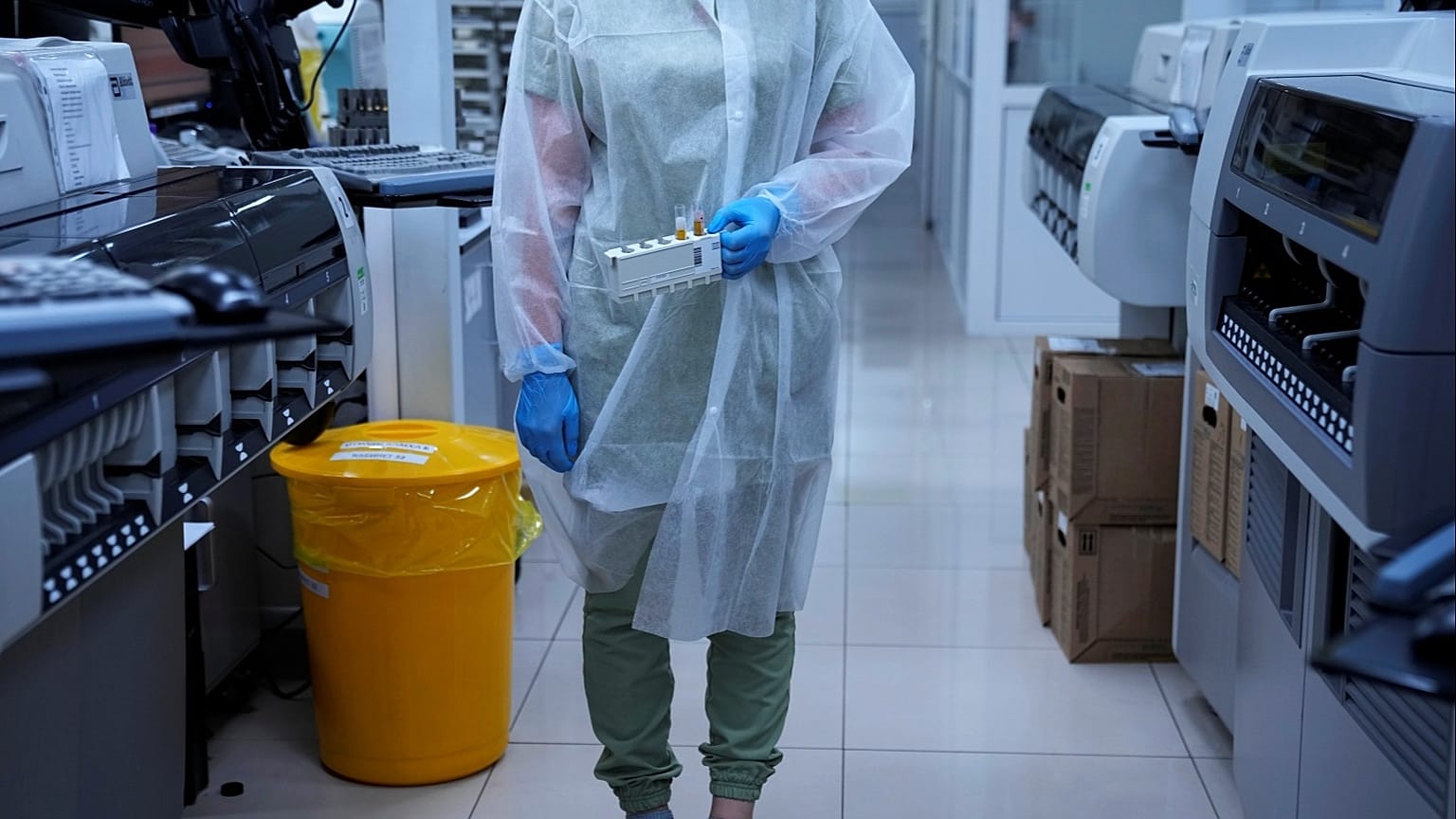
The case revolves around a female lab worker at the Irkutsk Research Anti-Plague Institute, in south-eastern Siberia, who died on 2 October in uncertain circumstances.
Her death was initially attributed to a "pneumonia of unknown aetiology", sparking global alarm and intense scrutiny.
Rospotrebnadzor, Russia's public health watchdog, says the lab worker was "vaccinated and had immunity to the dangerous infections she was working with", and that nearly 5,000 laboratory tests had detected no dangerous pathogens.
More than 90% of those who had contact with her have completed medical monitoring after being placed under strict observation, it said.
WHO has requested details to clarify the lab worker's death, the pathogen that triggered the quarantine measures, and a reported second case, which Moscow called "false".
The US has also urged Russia to provide accurate and timely information. President Donald Trump said he had scheduled a call with his Russian counterpart, Vladimir Putin, to discuss the suspected outbreak.
"We have officially requested additional information from the Russian government. We are also in official communication with other countries around the world to share information," a US State Department spokesperson said.
Pneumonic plague occurs when the bacteria responsible for plague infect the lungs. It is the most serious form of the disease and can spread from person to person. Without treatment, its case-fatality ratio ranges from 30% to 100%.