






























The EU is cracking down on migration two months after launching the Migration and Asylum Pact. Migrants with no right to stay must leave and may be transferred to “return hubs”. A new European Return Order will include key elements of return decisions. But is the EU prepared?
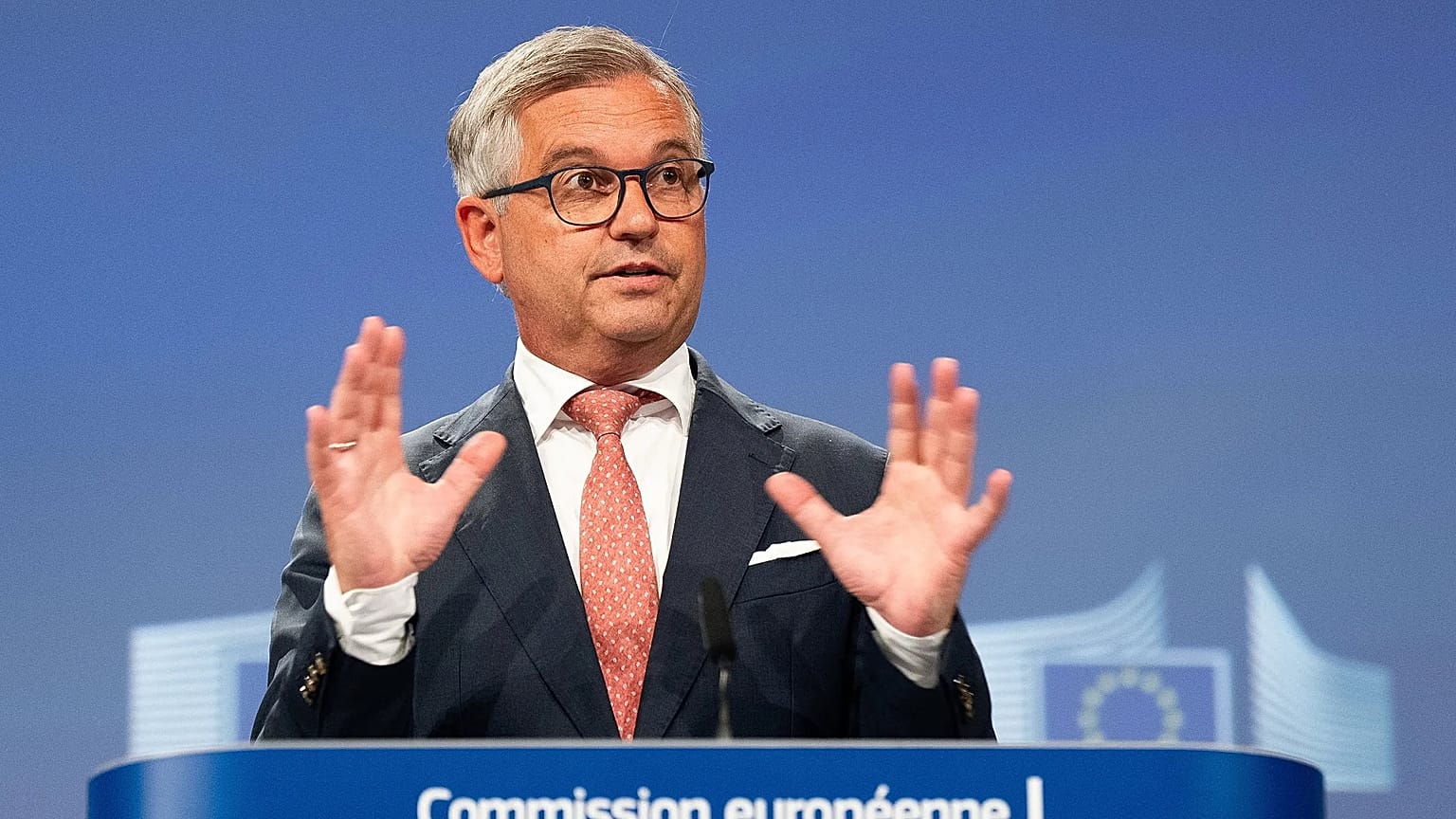
On 1 October, EU interior ministers and Commissioner for Justice and Home Affairs Magnus Brunner approved faster returns at the Justice and Home Affairs Council, a few days after meeting at the Munich Migration Conference on 26 September.
 ADVERTISEMENT
ADVERTISEMENT
ADVERTISEMENT
Member states agreed to transfer migrants to detention facilities and include all details of return decisions in a European Return Order to accelerate procedures and facilitate cross-border cooperation. A stronger European Border and Coast Guard Agency (Frontex) will take part in return processes, while a European Emergency Response Framework will strengthen the bloc's readiness for mass influxes.
Human rights groups and NGOs are sceptical of the new measure, as Frontex reports that detections of irregular border crossings at the EU’s external borders fell by almost 40% in the first half of 2026, compared with the same period in 2025.
It's "difficult to justify these measures as a proportionate response to current migratory pressure and raises the question of whether they are instead being pursued for other political reasons”, said Marta Welander, EU advocacy director at the International Rescue Committee (IRC).
The EU’s migration status today
The International Organization for Migration (IOM) reports that, as of mid-September 2026, illegal arrivals by sea have fallen to 60,000, down from 98,040 in 2025.
The central Mediterranean route to Italy recorded the steepest drop, with arrivals down by 55%, from 48,231 in 2025 to 21,393 in 2026. Arrivals on the Atlantic and Western Mediterranean routes reached 16,794 from 22,855 in 2025. Fatalities rose from 284 in 2025 to at least 2,292 in 2026. From January to mid-September, the Libyan Coast Guard tracked 17,067 migrants and returned them to Libya.
First-time asylum applications are at their lowest level since 2022, according to Eurobarometer. In June 2026, 37,075 people requested for international protection, compared with 53,025 in January 2022 and nearly 115,000 in October 2023, when requests peaked. Italy (9,660), France (9,165), Germany (4,265) and Greece (3,955) received the most applications, accounting for 73% of all first-time applicants. The number of unaccompanied minors decreased too, from 1,775 in 2025 to 1,105 in 2026.
The EU also issued fewer positive asylum decisions this year. In the second quarter of 2026, positive decisions totalled 74,780, down from 89,850 in the third quarter of 2025 and 90,535 in the third quarter of 2024.
Yet returns are not catching up. Compared with the second quarter of 2025, orders for non-EU citizens to leave fell 12.0% in the second quarter of 2026. Returns to third countries rose 9.7%, but of 110,335 orders issued, only 36,825 were carried out this year so far.
What has the EU done so far?
In the last decade, the EU had to tighten how it handles migrants who enter without authorisation. Since 12 June 2026, the New Pact on Migration and Asylum requires countries to follow a common system for registering arrivals, checking identities and quickly deciding what happens next.
Border authorities must carry out security, health and vulnerability checks, while governments must decide whether a person should enter the asylum system, face a faster border procedure or return.
The new rules place much of this process at the external borders. People who arrive irregularly must undergo mandatory screenings before they formally enter the normal asylum procedure. The system also expands the use of Eurodac, the EU database that records information on asylum seekers and irregular migrants.
The Pact changes how EU governments divide responsibility, since countries like Italy, Greece, Spain and Cyprus have long argued that their geography gives them a disproportionate share of arrivals.
The new system creates a permanent solidarity mechanism under which other member states must contribute. They can help in three ways, first in relocations, physically transferring asylum seekers into their own territories. Second, by paying €20,000 per non-relocated person into a centralised EU fund, to finance border infrastructure or migration management. And the third, by deploying staff, equipment, or other infrastructure elements to frontline states.
This system is now in force, but implementation remains uneven. In its first assessment after the Pact took effect, the Commission saw progress in Spain, Cyprus, Greece and Italy, especially in preparing authorities to handle responsibility transfers. It also said that some countries still needed to take further practical steps.
The EU is also trying to reduce irregular migration before people reach its borders by working with countries in North Africa, the Middle East and elsewhere on border management, migrant smuggling, returns and readmission.
Faster returns
The new rules mainly tighten the Return Regulation, included in the June pact, to make returns faster and simpler.
Migrants without the right to remain must leave the member state where they are located. They must always cooperate with national authorities, or they can face sanctions, including reduced benefits and allowances or even criminal sanctions.
Member states can send migrants to so-called “return hubs”, detention facilities outside the EU to await deportation, modelled on Italy’s detention centres in Albania. Front-runners, including Denmark, Germany, Greece, Austria, and the Netherlands, which make up the “Group of Five”, are pushing to establish the first hubs in 2027. Uzbekistan, Rwanda, and Uganda are potential locations. Migrants who pose security threats can be banned indefinitely from entering the EU or detained for longer than 24 months.
The IRC warns that return hubs are "counterproductive” as they "risk compounding the dangers people face", Welander explained. "Those sent to a third country with no durable legal status or protection could be pushed to attempt re-entry through irregular and more dangerous routes or fall back into the hands of smugglers and traffickers”, she added.
National authorities must include details of return decisions in a new standardised form, the European Return Order. It facilitates cross-border cooperation by providing national authorities with information on return decisions issued by other member states. For now, mutual recognition of these decisions remains voluntary, though it may be reassessed three years after the new rules take effect.
The proposals are a “sticking plaster, not a sustainable solution”, Welander said.
“Outsourcing migration management responsibility puts the EU in a position of dependency on third countries, which gain leverage to use migration cooperation as a bargaining chip […] this is not simply a technical fix for slow deportations, it reflects a political choice to place migration management outside the reach of EU law and courts”.
What happens to migrants' rights?
From the start, return hubs have been the most contentious issue in the reform crunch. NGOs and human rights advocates across Europe call them “deportation facilities” and warn of rights violations, despite the EU’s guarantee to build these facilities in safe third countries and to carry out returns under international law.
“The notion of "safe" third country doesn't mean a lot. A country could be considered safe by the EU and still be unsafe for certain people, depending on their individual circumstances […] Amnesty International has specifically documented rights violations both in Uganda and Rwanda, including arbitrary detention and other repressive measures”, warned Chiara Catelli, advocacy officer at the Platform for International Cooperation on Undocumented Migrants.
Detention facilities can’t be built in a human rights-compliant manner, she added. “No safeguard can make deportation centres a legitimate tool to manage migration. The very fact of sending people to places they don't even know, far from the life they were trying to build, goes against the right to private and family life”.
Catelli also warned of the inhumane living conditions migrants might face and the lack of safeguards to respect migrants’ rights. “Already in Europe, people in immigration detention face appalling conditions […] - how will this be different in places where civil society or other independent bodies' oversight will be even more difficult or outright impossible?”, she said.
Stronger border controls and response capacity
The new rules also include a stronger protection of the EU's external border. Member states proposed boosting Frontex's mandate and transform it from a protection agency into a repatriation agency with an own task force.
For Welander, “handing Frontex a bigger operational role in returns, including potentially in third countries and at ‘return hubs’”, does not solve underlying diplomatic and legal bottlenecks. “It does, however, raise important accountability questions. Frontex is already under scrutiny over its involvement in pushbacks and fundamental rights violations, including an ongoing investigation into Greece”, she added.
The EU plans to add €130 million to the €250 million Drone Action Plan to develop new technologies for border security and to deepen “migration diplomacy” with third countries to halt migration flows at their source.
Ministers also discussed the European Emergency Response Framework, proposed by the EU Commission in September, to strengthen the EU’s emergency response to sudden large-scale arrivals or "engineered and weaponised" migration, as President von der Leyen called it.