
















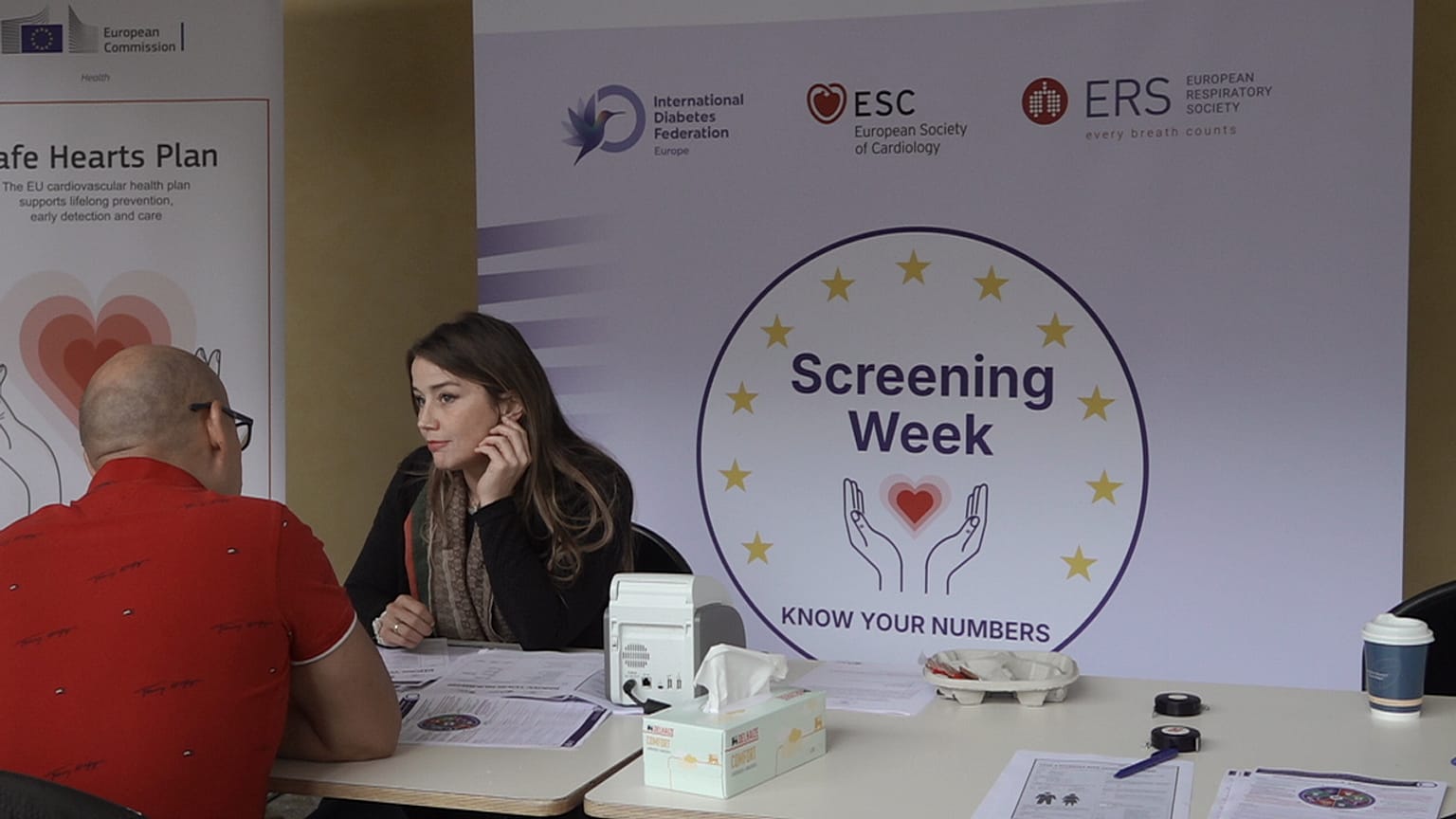














The European Commission is urging EU countries to step up cardiovascular health checks, as it launches the bloc’s first EU Screening Week.
The Commission on Monday proposed a Council recommendation encouraging regular checks of blood pressure, cholesterol and blood sugar, with a particular focus on people at higher risk.
 ADVERTISEMENT
ADVERTISEMENT
ADVERTISEMENT
Cardiovascular disease is the EU’s biggest killer, claiming around 1.7 million lives a year and costing the economy more than €282 billion. The Commission says up to 80% of cases can be prevented by tackling risk factors including hypertension, obesity and high cholesterol.
“A very large majority of premature cardiovascular diseases could be avoided if we identify risks earlier and if we act earlier,” Health Commissioner Olivér Várhelyi said during the press briefing on Monday.
Screening is key to catching diseases in time.
Fewer than half of EU countries currently have cardiovascular health-check programmes, according to the Commission, with significant differences in how they operate.
The proposal is part of the Commission's Safe Hearts Plan, presented in December 2025, which aims to cut premature cardiovascular deaths by 25% by 2035. It calls for broader access to screening, targeted measures for vulnerable groups and greater use of digital and AI tools, subject to human oversight.
As part of the EU Screening Week, health organisations have established checks across Europe, free of charge and accessible to everyone.
“This initiative can hopefully lead to reducing inequalities,” Sophie Millar, EU Policy Advocacy Manager at the European Society of Cardiology, told Euronews Health.
She added that while in Brussels, around the Commission, people may be more likely to know their numbers, there are activities targeting harder-to-reach communities. These include “the more vulnerable groups who actually have the biggest need to know their numbers and to get their tests done.”
Blood sugar is one of the three numbers being checked, as diabetes is often missed. The International Diabetes Federation (IDF) estimates that, in Europe, one in four people living with diabetes remain undiagnosed.
Diabetes is not only a disease in itself, but also a risk factor for many others and taking the necessary measures in time is essential.
“Diabetes is one of the main root causes of many other non-communicable diseases such as cardiovascular disease, cancer and kidney disease,” Maxence Prizzi, EU Policy and Advocacy Coordinator at the International Diabetes Federation Europe (IDF) said.
“Primary prevention starts with simple health checks … it all starts with knowing your health data and health numbers and that can save lives,” Prizzi added.
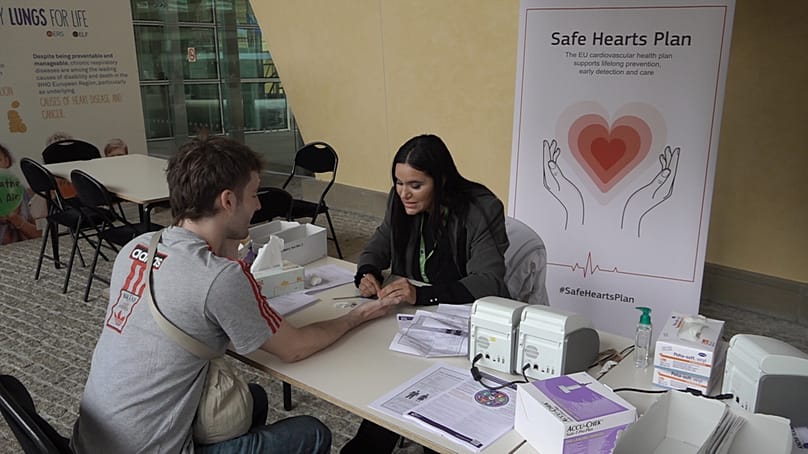
The importance of regular checks
Regular checks are also important among healthy people even if nothing signals a problem.
“At a certain age, everyone needs to know their glycaemic, lipid and cholesterol levels to know if they are in the norm or not,” Grace Bayams, one of the nurses who tested people in Brussels, said.
Depending on the results, she added, doctors can recommend different regimes and treatments to keep patients at normal levels.
Angelos was among those who stopped by. Getting the checks done was a response to not having visited the doctor as often as he would like.
“This was maybe an opportunity to get a little bit more pragmatic and start going on a regular basis,” he said, adding he was looking for advice about his blood glucose.
Others stopped simply out of curiosity, among them Jack Smith, who was visiting Brussels and came across the stand by chance.
“I saw this going on and I thought it would be fun because I think I'm healthy but I've not been to the doctors to check how good my health is, so that's why I'm here,” he told Euronews Health.
Smith works as a doctor for the National Health Service in England and highlighted the need to focus on prevention to tackle long-term conditions.
“I think it's really important to raise awareness so that people know that there are things that they can do to help stop diseases happening and that they can live healthier and happier lives,” he added.