















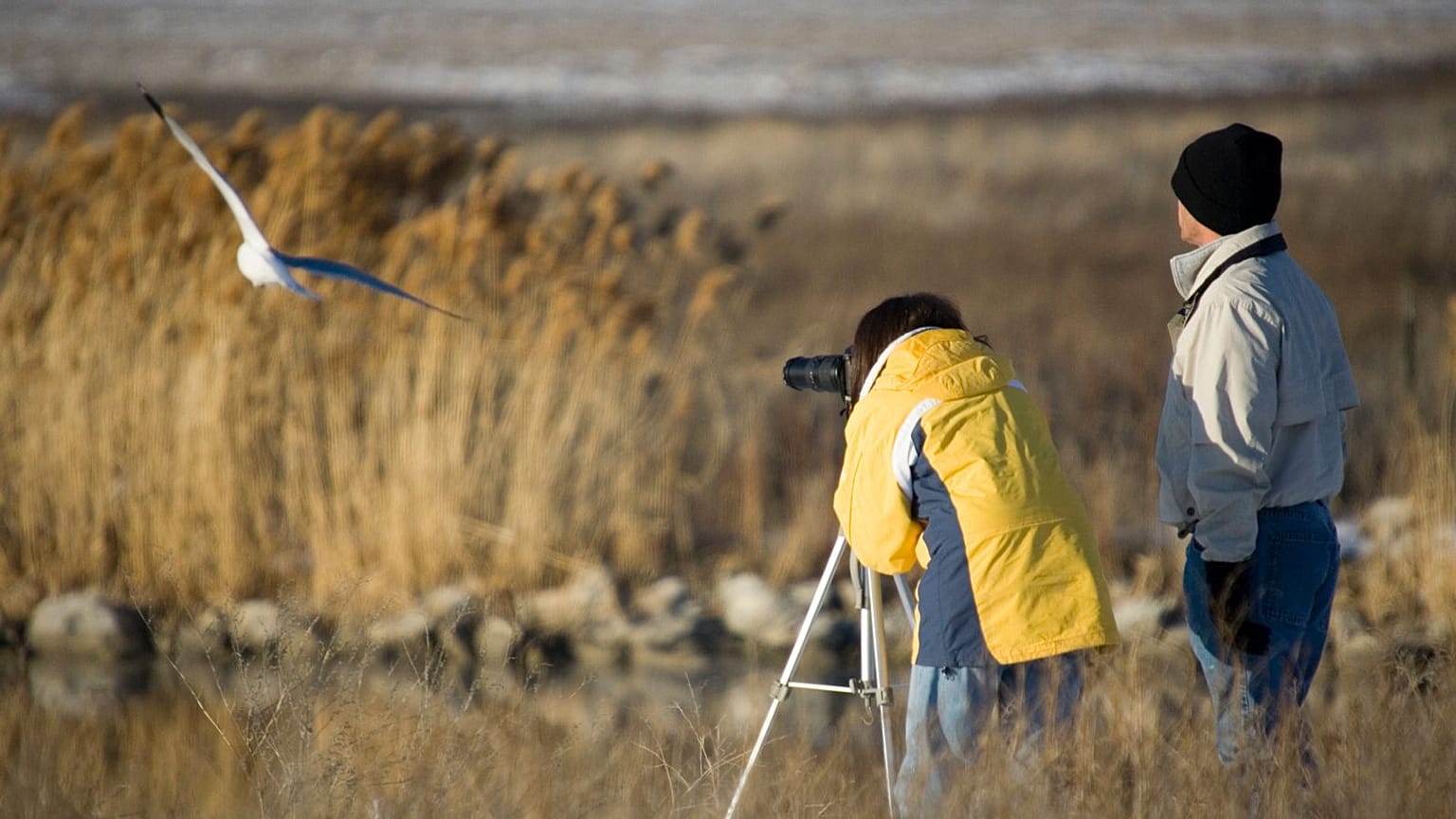













Watching birds has become a meaningful part of stroke recovery at the University of Montana, offering a natural, low-pressure way to practise communication, researchers say.
In Montana, in the United States, a surprising animal has become part of stroke patients’ recovery journey.
 ADVERTISEMENT
ADVERTISEMENT
ADVERTISEMENT
Cooper's hawks, a bird native to North America, may offer stroke survivors a chance to connect, talk, and build community around birdwatching, helping them regain communication skills often lost after a stroke.
One of the most common consequences of a stroke is impaired ability to speak, understand speech, read, and write, known as aphasia. It affects approximately one-third of stroke survivors — an estimated 11,000 people acquire it every day.
“Aphasia is an identity theft,” said Catherine Off, a researcher at the University of Montana. “People with aphasia do not have intellectual challenges. They are themselves inside their own head. The challenge is that their language function has changed.”
She co-directs the Intensive Comprehensive Aphasia Program (ICAP) at the University of Montana, aiming to counter these effects.
Participants usually attend four days a week for four weeks, providing roughly 80 hours of rehabilitation. Each stroke survivor is paired with a trained communication partner, typically a graduate student in speech-language pathology, who supports communication during the activities while avian ecologists lead on content.
“Communication function doesn’t improve until you want to communicate about something,” Off said. “We’re out of the therapy room now. We’re saying: Enjoy being with people, enjoy being outside and let the communication come.”
For stroke survivors living with aphasia, maintaining typical conversations can be difficult and that’s where birdwatching comes in, moving interactions from the purely linguistic towards broader communication, such as pointing, drawing or looking through photographs.
This allows survivors to remain socially engaged even when verbal output is limited, researchers say in a new paper published in the journal Frontiers in Bird Science.
While early results are encouraging, the researchers note that the program is still in its conceptual stage, and they are currently working to gather the formal clinical evidence needed to prove its long-term effectiveness.
Need to improve stroke survivors' quality of life
The incidence and prevalence of stroke are expected to continue rising over the next 25 years. It is currently the third leading cause of adult death and disability worldwide, and the lifetime risk of having a stroke has risen by more than 50% over the past 17 years.
At the same time, the number of people who survive a stroke is increasing, highlighting the need to maintain their quality of life as they age.
The Montana researchers warned that unequal access to high-quality prevention, acute care and rehabilitation services further complicates recovery. Birdwatching, they argue, could also improve accessibility.
“Birds are one of those rare things where your entry point can be anywhere – from sitting and staring out a window to mapping out a trail to see a unique species,” said Victoria Dreitz, an avian ecologist in the university’s Wildlife Biology Program.
“You can start where you’re at. What do you have in your backyard? That’s what it's about,” Dreitz said.