





























Almost two months after the mass arrival of tens of thousands of migrants in Ceuta, the situation in the autonomous city remains unresolved.
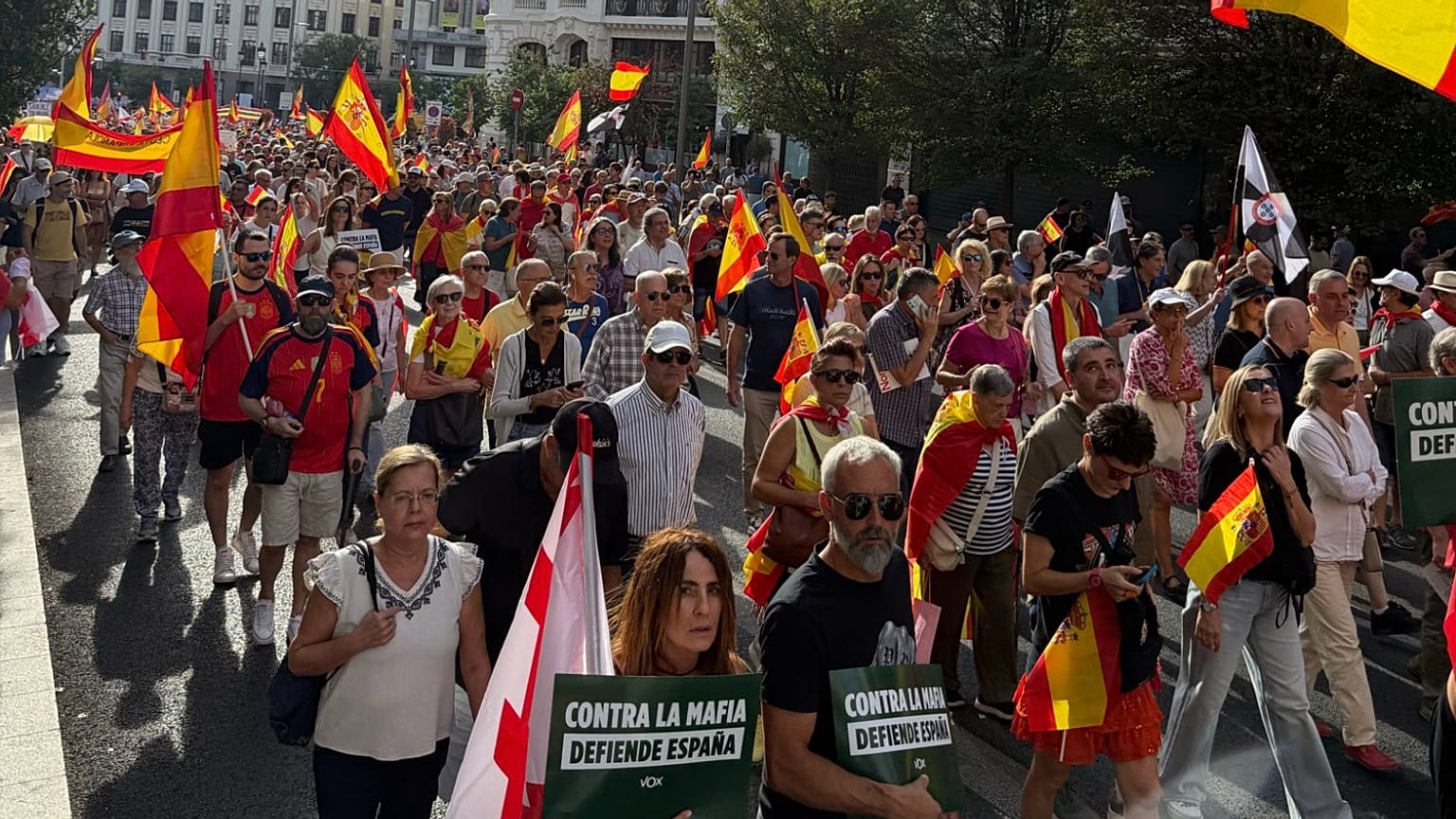
Thousands of people are taking part in Madrid's second "March for Dignity" on Saturday, with protesters calling for a general election and voicing their support for Ceuta amid the autonomous city's ongoing migrant crisis.
 ADVERTISEMENT
ADVERTISEMENT
ADVERTISEMENT
The demonstration, organised by the Sociedad Civil Española with the support of the People's Party (PP) and Vox, set off shortly after 10 am from the Plaza de Cibeles and headed towards the Arco del Triunfo in Moncloa, where it is expected to end at around 13:30 pm local time.
Among those taking part was Vox leader Santiago Abascal, who insisted that migrants who arrived in Ceuta must be returned to their country of origin and launched a scathing attack on the government's handling of the crisis - which began in late July when tens of thousands of people crossed into the Spanish North African territory from Morocco.
"Ceuta remains invaded because Sánchez continues to be Morocco's servant; the migrant invasion is being encouraged," he said, referring to Spanish Prime Minister Pedro Sánchez.
A separate "March for Dignity," held before the mass entry of migrants at the end of July, saw tens of thousands of people come together to demand Sánchez resign and for snap elections to be held.
According to the Government Delegation, that demonstration drew around 40,000 people, while organisers put the figure as high as 120,000.
On 2 September, Ceuta's official day, thousands of people also took to the streets in cities across Spain in a demonstration organised by the Spanish Federation of Municipalities and Provinces.
The crisis continues
Almost two months after the mass influx of migrants, the situation in Ceuta remains unresolved.
Around 8,300 migrants are being housed in facilities set up in the city, with more than 4,000 people estimated to still be living on the streets.
Morocco has accused Spain of obstructing the return of migrants who remain in Ceuta.
Spanish Foreign Minister José Manuel Albares recently met with his Moroccan counterpart Nasser Bourita in New York to address the issue.
During their talks, Bourita referred to "obstacles" and "controversies" that he believes are being fuelled in part by the Spanish political class and are preventing the situation from being resolved.
In the meantime, authorities are continuing to carry out surveillance and provide assistance across the city.
On Friday, the National Police arrested three Moroccan nationals who were living in a makeshift camp on Trampolín beach for their alleged involvement in the detention of two migrant minors. The two minors were taken to Ceuta University Hospital for treatment.
That same day, 63 women who were either alone or with young children were moved to a facility set up at the Hípica, as part of an ongoing effort to relocate people still living on the streets.
Firefighters have also discovered a makeshift settlement in underground tunnels in recent days, where around 30 to 50 migrants are thought to have been staying.
On Friday, a young Moroccan man died in a camp situated on the site of a former factory near Trampolín beach. The cause of death has not yet been established.