















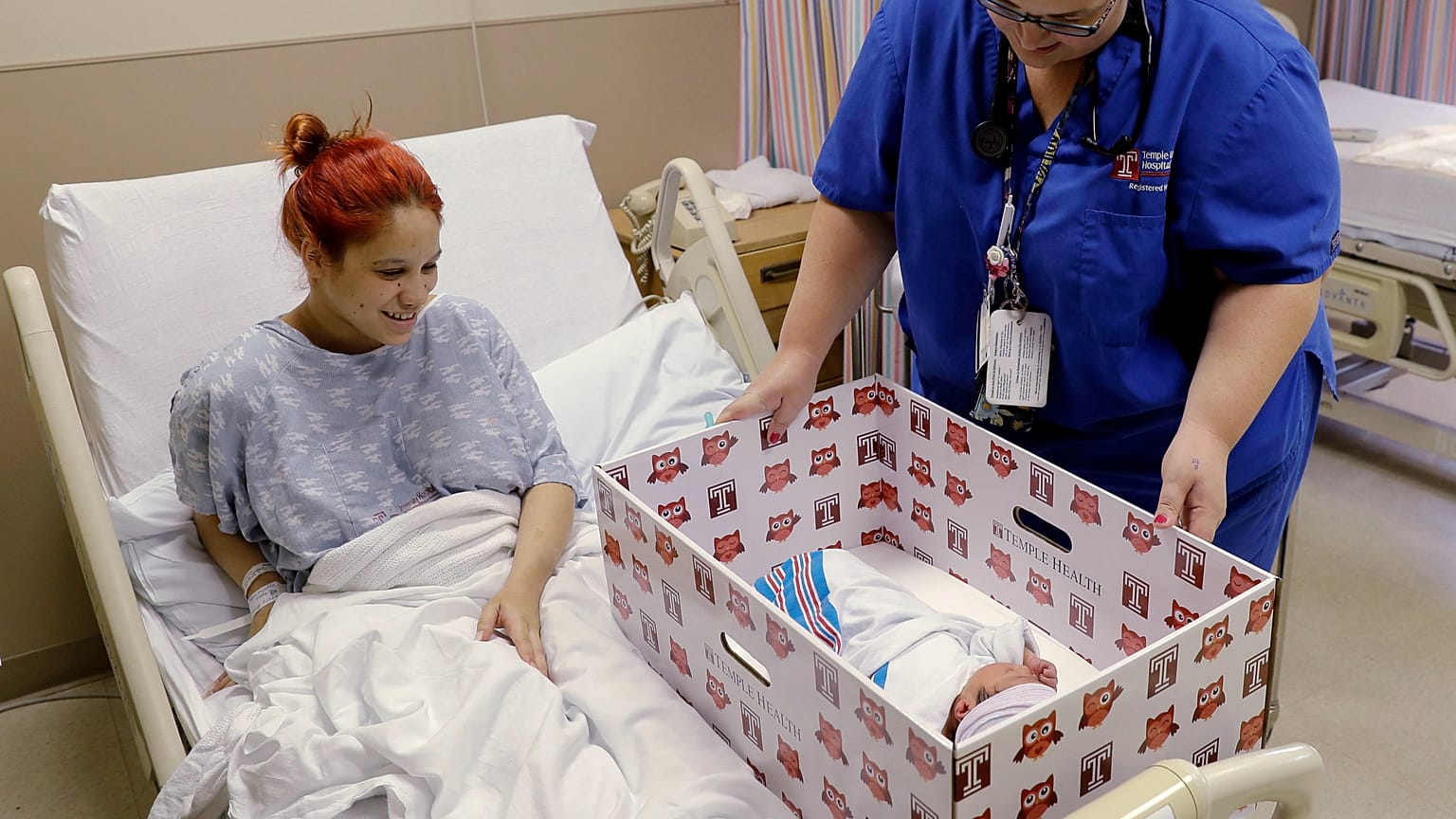













Baby essentials can cost significantly more in some European countries than others. And when measured against average wages, the cost of nappies, feeding and clothing can place a heavy financial burden on parents.
Most parents describe welcoming a baby as one of the happiest moments in life, but it also comes with a cost. From nappies and feeding to pushchairs and clothes, there is a long shopping list of baby essentials. The bill can be higher than many parents expect.
 ADVERTISEMENT
ADVERTISEMENT
ADVERTISEMENT
The cost of baby essentials varies significantly across Europe. But how much do parents actually spend? Which countries are the most expensive for baby essentials, and where are they most affordable relative to average wages?
Remitly calculated the annual cost of baby essentials during the first year of a baby’s life, based on prices as of July 2026. It includes 14 staple items across six categories:
- Nappy changes (nappies, wet wipes, rash cream),
- Bottles (bottle with caps),
- Baby formula
- Sleep (crib, carrycot, or moses basket, crib mattress, fitted sheets, blankets),
- Transport (infant car seat, stroller),
- Clothing (bodysuits or onesies, babygrow or pants, socks).
Across 38 European countries, the estimated cost of baby essentials in the first year ranges from €2,813 in the UK to €6,294 in Spain, with a European average of €4,727.
In addition to Spain, first-year baby essentials cost more than €6,000 in the Netherlands (€6,140), Finland (€6,066), Sweden (€6,025) and Switzerland (€6,018).
Costs fall between €5,000 and €6,000 in Luxembourg (€5,665), Italy (€5,609), Lithuania (€5,563), Albania (€5,532), Serbia (€5,509), Montenegro (€5,500), Portugal (€5,337), Slovakia (€5,221), Norway (€5,079) and Iceland (€5,004).
Among the five largest economies, Spain has the highest costs, while the UK has the lowest, at €2,813. Germany (€4,701) and France (€4,393) fall closer to the European average.
Parents in Czechia (€3,211), Romania (€3,385), Latvia (€3,392), Croatia (€3,661), Bulgaria (€3,804) and Bosnia and Herzegovina (€3,844) face some of the lowest baby costs in nominal terms, with all six below €4,000.
Turkey (€4,023), Belgium (€4,084), Malta (€4,118) and Greece (€4,158) are also close to the €4,000 mark, but slightly above it.
Highest spending on clothing, baby formula and nappies
The distribution of costs across the six categories varies widely across Europe. On average, clothing (30.3%), baby formula (25.7%) and nappies (24.5%) account for the largest shares, making up 81% of total first-year costs.
Across the 38 countries, parents spend an average of €1,465 on clothing, €1,187 on baby formula and €1,152 on nappies, bringing the combined cost to €3,804.
The breakdown varies significantly from country to country. Clothing accounts for just 16% of costs in Denmark, compared with 52.5% in Sweden. Its share is also above 45% in the Netherlands, Finland and Ireland.
Baby formula makes up 10.8% of costs in Sweden but 41.3% in Latvia. Its share is also high in Turkey, Denmark and Hungary, where it exceeds 35%.
Nappies account for 12.4% of costs in Turkey, compared with more than 36% in Switzerland and Belgium.
The chart below breaks down how much parents spend on each category during their baby’s first year.
Baby costs as a share of the average wage
Of course, income levels matter when comparing countries, given the wide differences in wages across Europe. So, how much of the average annual wage is spent on baby essentials during the first year?
Remitly’s research compared the cost of baby essentials with average wages in each country. It used the International Labour Organization’s average monthly earnings of employees, adjusted for inflation.
Affordability can also depend on whether both parents work, as well as taxes and family benefits. These can make a big difference as the Euronews article shows.
Across the 36 countries, baby essentials account for an average of 20.9% of annual wages. The share ranges from 5.4% in Belgium to 88.8% in Moldova.
Parents in Albania (66%), Turkey (45.1%), Montenegro (45%), Serbia (41.4%), Bosnia and Herzegovina (36.1%), Portugal (35.7%) and Hungary (34.7%) spend at least one-third of the average annual wage on baby essentials, according to this calculation.
Baby essentials account for less than 10% of the average annual wage in Luxembourg (6%), Denmark (6.7%), the UK (7.5%), Norway (7.6%), Ireland (8%), Switzerland (8%), Germany (8.1%), Austria (8.2%), France (8.5%), Malta (8.9%) and the Netherlands (9.4%).
What about nursery and creche?
This research does not cover nursery and crèche costs, which can be a significant additional burden for parents across Europe.
For example, in 2023, gross childcare fees for two children reached €64,211 in Switzerland, while the Netherlands had the highest figure in the EU, at €39,229, according to the OECD. In Germany, the figure was just €552.
The figures cover centre-based care, meaning childcare provided outside the home in licensed facilities. This includes nurseries, day-care centres, crèches, playschools and parent-run groups, either full or part time.
When net childcare costs for two children are considered, the figure is €10,200 for a single-earner family in Switzerland and €27,551 for a two-earner couple. However, government support can significantly reduce costs for families in some countries, with net costs falling below €5,000, as this Euronews article shows.