














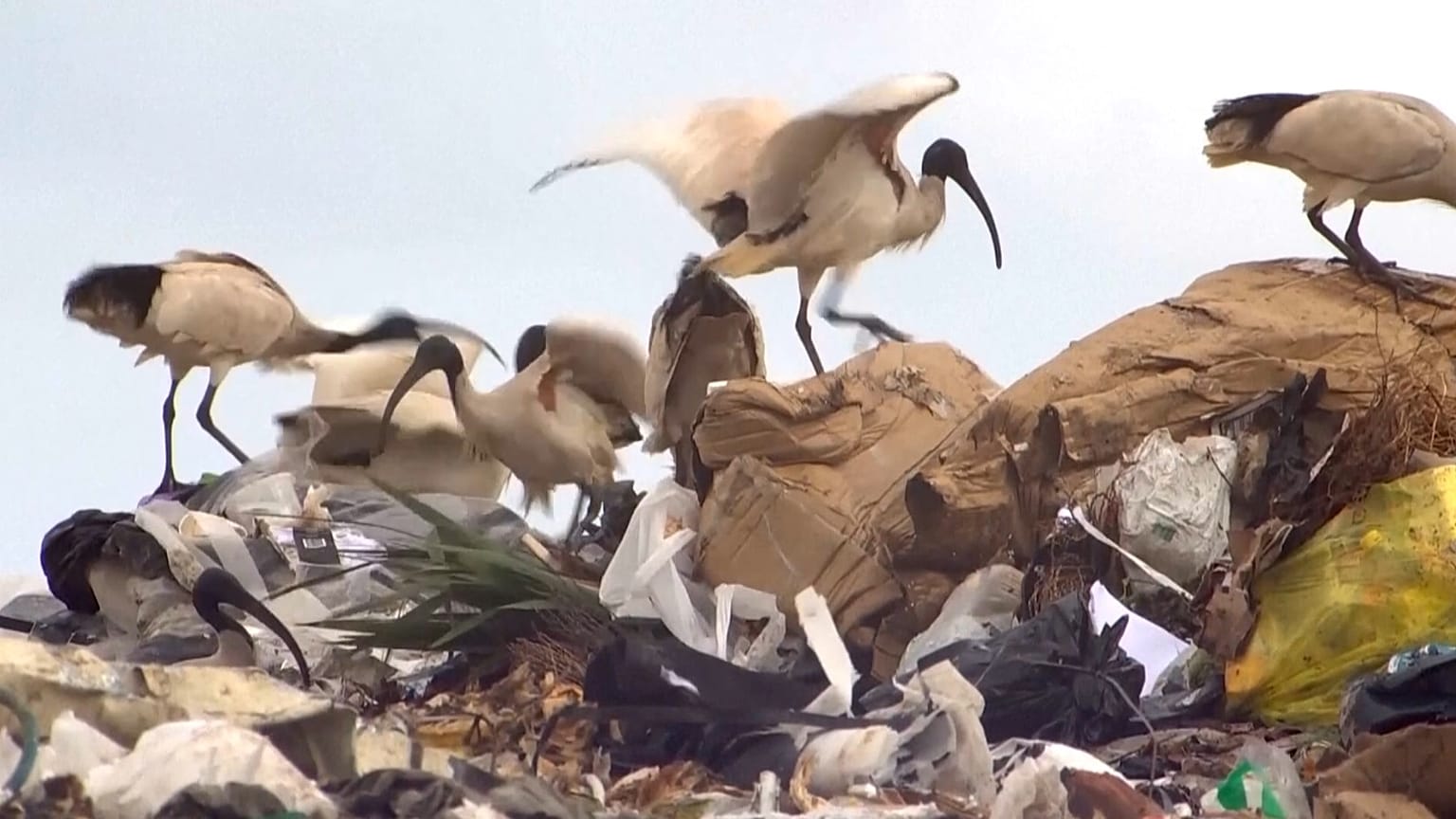














Thermal conversion technology is being used to turn rubbish into products including vinegar, biochar and oil.
Ten years ago, academic Lynne Loo was a scientist researching how waste could be repurposed in Australia.
 ADVERTISEMENT
ADVERTISEMENT
ADVERTISEMENT
She began looking at waste from the abalone industry and now she's using her expertise to enable startup businesses with new ideas on how to repurpose waste.
What started as a research project soon led to a much bigger idea, finding value in the things we throw away.
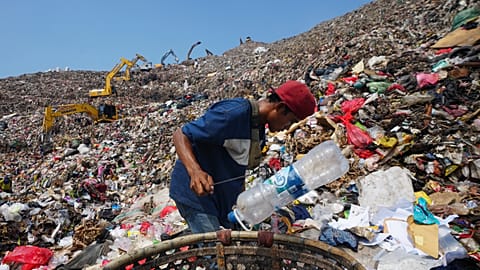
According to the Australian government's Department of Climate Change, Energy, the Environment and Water, the country produces 76 million tonnes of waste each year.
That’s 2.9 million tonnes per person. And a significant portion of it heads straight to landfill.
But there are innovative and sometimes unexpected ways to give waste a second life.
Transforming cellulose from food waste into paper and leather
Matt Barber is using his home made laboratory to get cellulose from food waste.
“So, what I get is pure cellulose that comes out and then from there, I process that into other paper, leather or wood products. But it could be turned into a bioplastic. It can be turned into any uses. So you can, instead of growing a tree, which takes 75 years, you can grow this in a week,” explains Barber.
For Barber, the project fits around his day job, and having Loo assist as a reliable waste broker is key to making the system work.
“You have a start up and you don't know what to do with it and she [Loo] helps you find a market for it,” says Barber.
Turning rubbish into vinegar and biochar
At a waste facility in Collie, Western Australia, Renergi is taking that idea even further.
Using thermal conversion technology, the company is turning rubbish into products including vinegar, biochar and oil.
“We can process just under about 30,000 tonnes of biomass waste per year and 4,000 tonnes per annum of the town’s municipal solar waste,” says Deejay Parker of Renergi.
More than 70 per cent of the material is recovered and transformed into something new.
The biochar is already being put to work on fruit farms and at a winery across Southern Western Australia.
The project has received funding from the Australian Renewable Energy Agency, as part of efforts to expand renewable technologies into regional areas.
And when it reaches full production, it's expected to become one of the country's largest producers.
“I think it's important for people to see that it's possible because there are so many naysayers,” says Loo.
A waste warrior on a mission to recycle, reuse and reimagine what we throw away.