















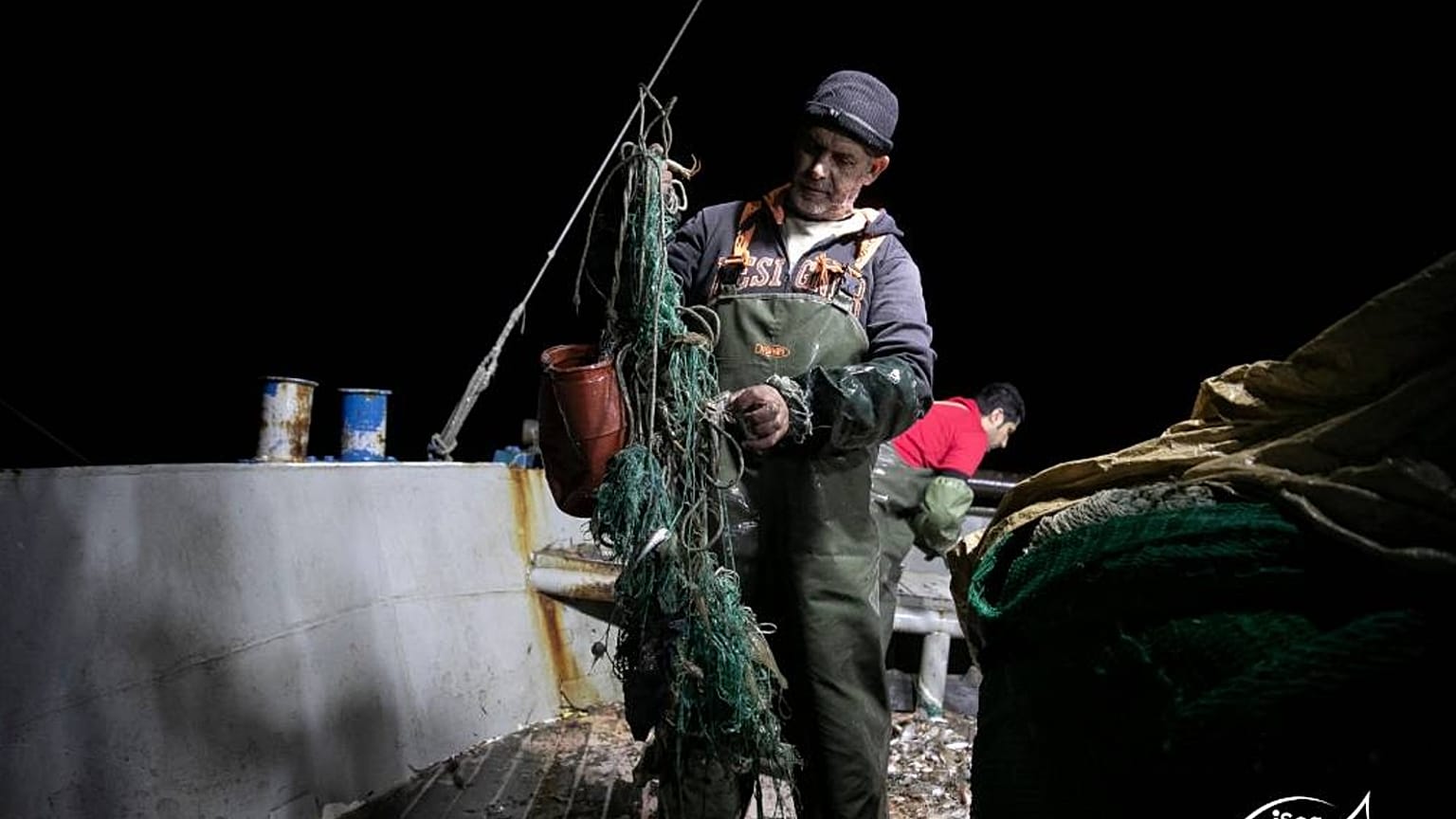













Reducing them is the goal of the 'Fishing For Litter' programme, which has recovered more than 6,000 concrete blocks from the seabed since 2019.
More than 6,000 concrete blocks and thousands of synthetic ropes, which are used illegally by traditional Mediterranean fishing vessels and then abandoned at sea, have been recovered from Greek waters in recent years.
 ADVERTISEMENT
ADVERTISEMENT
ADVERTISEMENT
Abandoned fishing gear makes up a significant share of the waste that ends up on the seabed. Its removal is at the heart of the Fishing For Litter programme, run by the Athanasios C. Laskaridis Public Benefit Foundation, in partnership with the environmental organisation iSea.
According to iSea's Communications Manager, Anastasia Charitou, since 2019, when the programme began, 6,278 concrete blocks and around 11,700 ropes linked to fishing boat activity have been recovered and recorded.
"The biggest problem is found in the Euboean Gulf, followed by the Thracian Sea and the Thermaic Gulf," says Charitou.
Since 2019, fishers taking part in the programme have removed more than 360 tonnes of waste from deep waters. Over 83 per cent of it is plastic, while 34 per cent consists of abandoned fishing gear.
The programme is continuing this year across Greece, with the participation of 67 fishing vessels and an expanded geographical reach.
How do concrete blocks end up on the seabed?
The problem is linked, among other things, to a practice used during night-time fishing with gri-gri, traditional Mediterranean fishing boats.
After the fish have been located, fish-aggregating light devices known as 'robots' are deployed. These are small floating boats equipped with lamps, which are lowered into the water near the fishing vessel in order to attract and concentrate the shoals.
As iSea notes in its report titled 'The silent waste of fishing – How synthetic ropes and concrete blocks pollute the seas', the fish are attracted by the light source, which simulates moonlight.
To keep the light devices stable, they need to be anchored. The General Port Regulations stipulate that 'robots' must be deployed with appropriate anchors and lifted out of the water once the fishing activity is finished.
In theory, special small anchors are connected to the devices by chains. At the end of the process, the 'lampsman', the crew member who monitors the fish around the lights, gradually hauls in the equipment, steering the shoal towards the main vessel at the same time.
However, according to iSea, because the prescribed procedure is more time-consuming, in some cases it is replaced by an improvised and illegal practice.
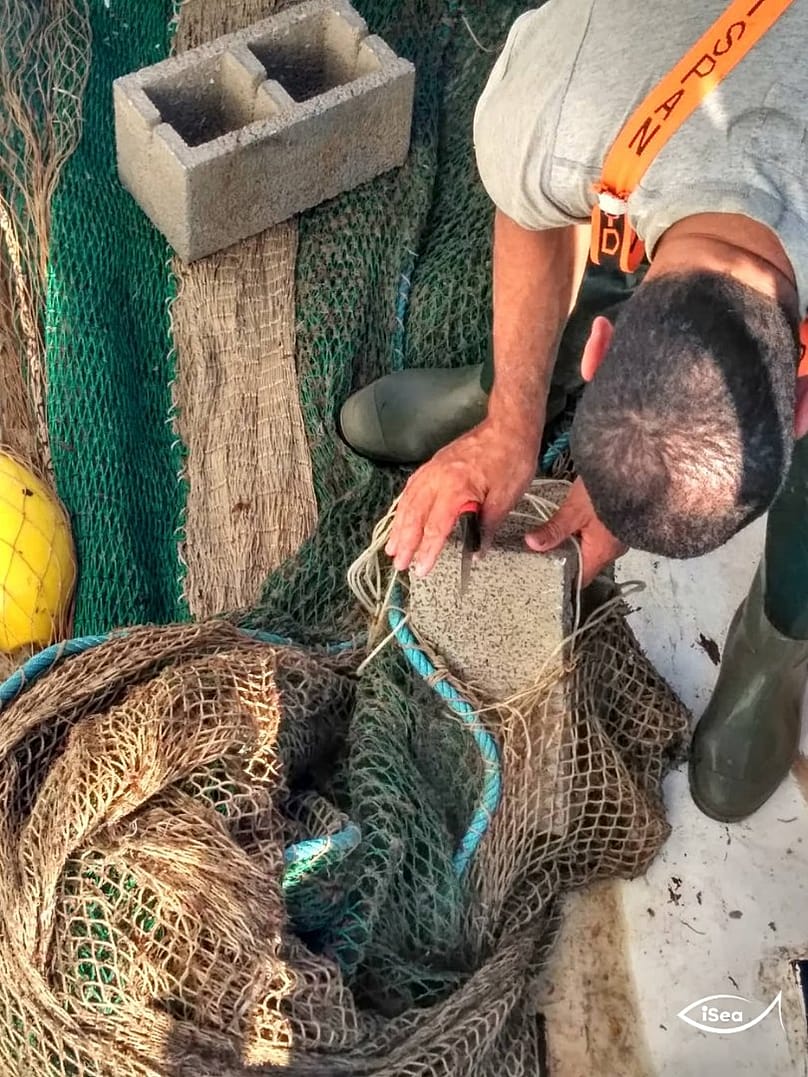
Instead of anchors, concrete blocks are used, usually two for each light device, which are attached with polypropylene ropes, the so-called 'gri-gri ropes'.
When the time comes to recover the light devices, the ropes are cut. The 'robots' quickly return to the vessel, but the concrete blocks and severed ropes remain on the seabed.
In this way, a practice that saves time for the crew turns into a permanent source of waste on the sea floor.
Thousands of kilos of solid waste on the seabed
"The concrete blocks are passively fished by the fishers. They get tangled in their nets and are thus removed from great depths. Those that are recovered and recorded in the programme weigh around four to five kilos each," Charitou explains.
On the basis of the 6,278 concrete blocks recorded to date alone, this amounts to dozens of tonnes of solid material that had been abandoned at sea.
The problem, however, is not limited to the volume of waste.
Synthetic ropes and concrete blocks accumulate on the seabed and put pressure on benthic ecosystems, affecting organisms and habitats that are in direct contact with the sea floor.
At the same time, polypropylene ropes, because of their low weight, can hang in the water column and wrap around the propellers of other vessels, causing mechanical damage, as well as entangling marine life and breaking down into toxic microplastics that fish ingest.
Similarly, when concrete blocks get caught in fishing nets, they can damage the equipment and destroy part of the catch.
Impacts on biodiversity and fishing
For iSea, this practice is not simply a matter of marine pollution. Leaving these materials on the seabed harms ecosystems, creates risks for other vessels and adds yet another stress factor in marine areas that are already under pressure from overfishing and the accumulation of waste.
The organisation stresses that tackling the phenomenon requires stricter and more systematic inspections to ensure the existing legislation is applied, as well as the imposition of the penalties provided for.
Among the measures proposed are beefing up on-the-spot checks at sea, and inspections when fishing vessels leave and return to port.
At the same time, according to iSea, a clearer description of the gri-gri fishing gear in legislation is needed, especially with regard to the auxiliary fish-aggregating light devices and their anchoring equipment.
The aim is to fully clarify what constitutes the correct and lawful way of using them, so that a practice which today leaves thousands of "silent waste" items on the seabed can be effectively curbed.