



























Ten years on from the UK's historic Brexit referendum, the nation's decision to leave the European Union appears as divisive as ever.
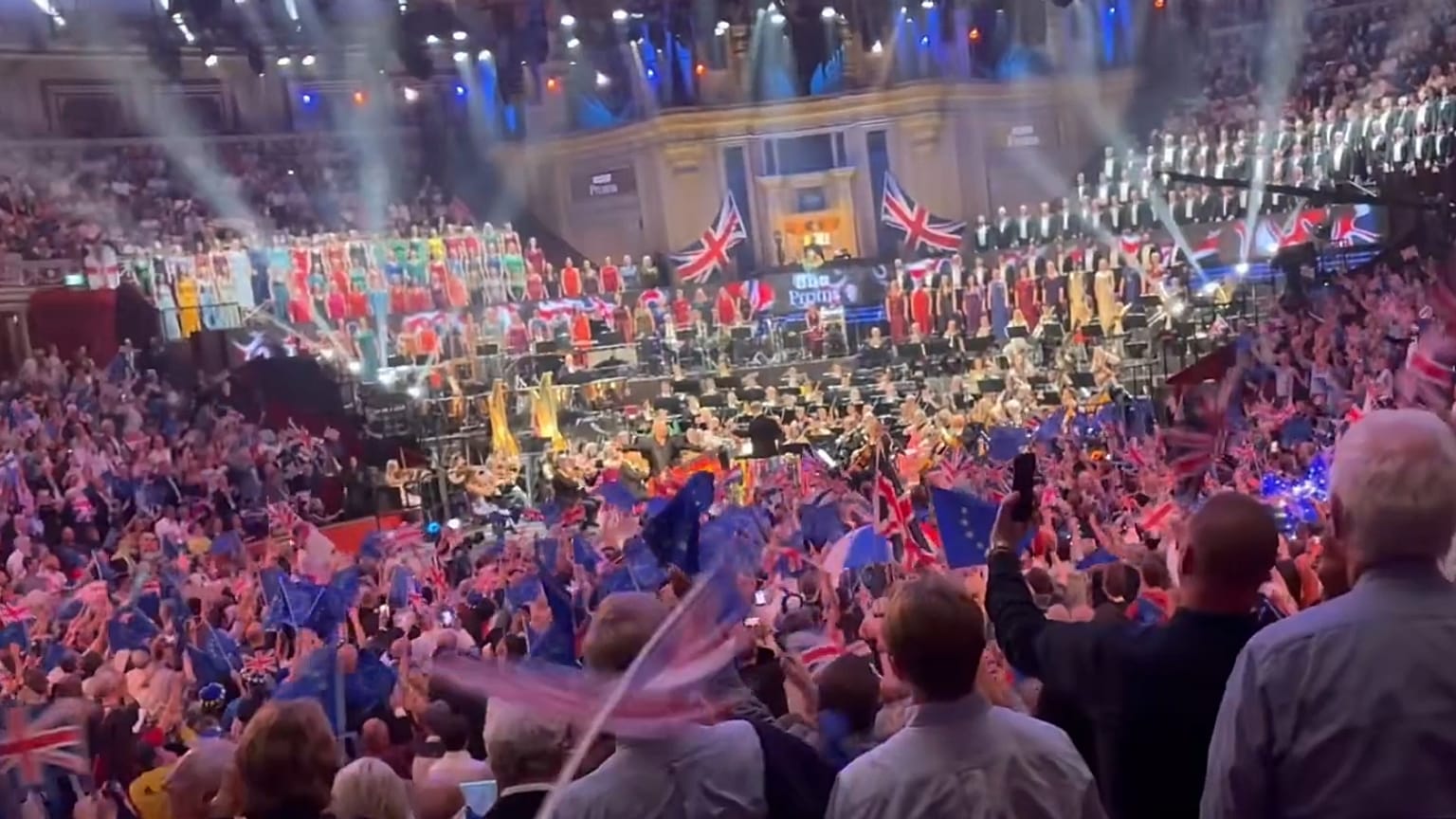
A sea of EU flags seemingly outnumbered Union Jacks during sections of the BBC's Last Night of the Proms show on Saturday night, as the UK's relationship with Brussels once again finds itself in the spotlight.
 ADVERTISEMENT
ADVERTISEMENT
ADVERTISEMENT
Footage of the event, which is part of a classical music festival held each summer in London, shows a swathe of swirling blue and gold flags across the crowd at the city's Royal Albert Hall.
The 12 gold stars of the European banner appeared particularly prominent during renditions of songs such as "Land of Hope and Glory," while images from the venue also show the EU flag hanging from the balconies of the building.
The images have drawn the ire of some on Britain's right.
Andrew Rosindell, a member of Parliament for the hard-right, anti-immigration Reform UK party, said it was a "wonderful evening, spoilt by selfish pro-EU fanatics" while calling on the BBC to introduce a "flag policy" for the event in the future.
Former Conservative MP Jane Stevenson also accused the show of being "taken over by Remain propaganda pushers."
The Royal Albert Hall's official website states that "flags are permitted at the Proms but are traditionally part of the Last Night celebrations provided they do not interfere with the smooth running of the concert."
Brexit turns 10
Ten years on from the UK's historic Brexit referendum, the nation's decision to leave the European Union appears as divisive as ever.
The vote has received renewed attention over the last two years as the ruling Labour party embarked on a campaign to rebuild relations with the EU under former Prime Minister Keir Starmer, who pledged to "put Britain at the heart of Europe."
Starmer had agreed a Brexit "reset" with Brussels in 2025 that he said would slash "red tape and bureaucracy" as part of a drive to tackle the cost-of-living crisis and create new jobs.
However, progress has been slow as key differences remain on both sides, with a proposed youth mobility scheme proving to be a particular sticking point.
Talks had been due to continue on the reset in July, but a planned summit was postponed following Starmer's resignation.
However, Starmer's successor in Downing Street, Andy Burnham, said in August that Britain must be "bolder" in seeking to rebuild relations with the bloc, according to his office.
Burnham made the comments during a meeting with European Council President António Costa as the pair travelled to Kyiv for a series of events to mark Ukraine's Independence Day.
"The UK had to be bolder in terms of getting closer to the bloc," Burnham told Costa during the trip, a Downing Street spokeswoman said.
"That included building on the close defence and security ties already forged between the UK and European Allies to drive greater cooperation across all areas of the relationship," he added.