


















The two governments also broadened cooperation on critical minerals, defence, digital payments and transport. A new foreign minister-level mechanism will oversee implementation, alongside expanded education and regional links.
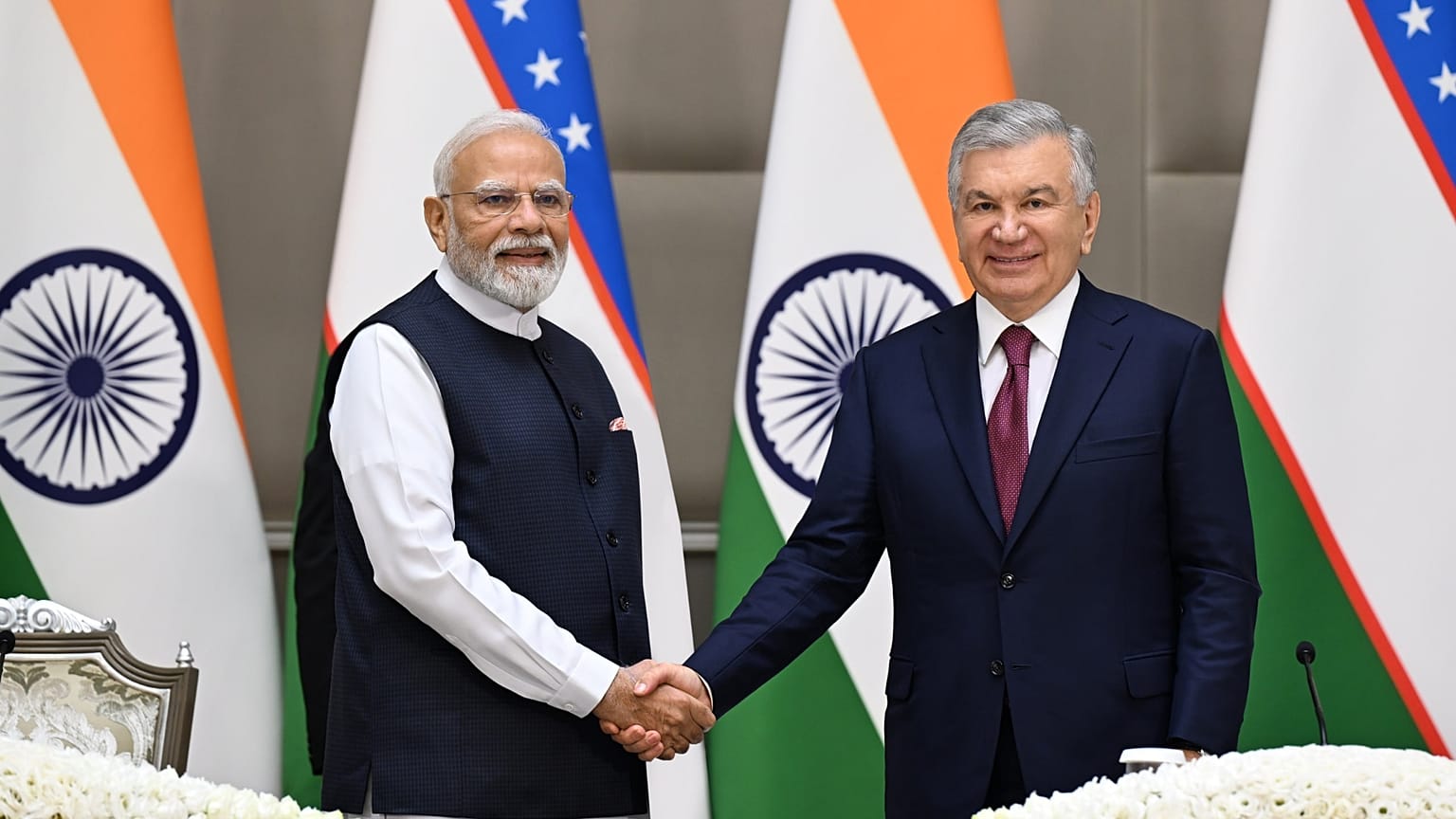
India and Uzbekistan have upgraded relations to a Comprehensive Strategic Partnership and set a $5bn (€4.29bn) trade target for 2030 during Prime Minister Narendra Modi’s state visit to Tashkent. New Delhi also says the two sides are close to signing a new long-term uranium supply agreement.
 ADVERTISEMENT
ADVERTISEMENT
ADVERTISEMENT
The talks produced agreements and commitments across trade, energy and security, expanding cooperation in critical minerals, defence and digital infrastructure.
India’s Ministry of External Affairs said there had been “positive discussions” and that an agreement could be signed “very shortly”. The ministry also said a memorandum on mining and geological resources signed during the visit would support cooperation on critical minerals, including uranium.
India already imports uranium from Uzbekistan under a 2019 contract covering 1,100 metric tonnes of natural uranium concentrate for delivery through 2026. A parliamentary answer published in March 2025 said India had received 600 metric tonnes under the agreement by then.
India uses imported uranium in civilian nuclear power reactors placed under International Atomic Energy Agency safeguards. New Delhi plans to expand nuclear generating capacity to 100 GW by 2047.
Trade and digital payments
President Mirziyoyev said bilateral trade rose by 33% last year to $1.3bn (€1.12bn). The two leaders now want that figure to reach $5bn (€4.29bn) by 2030.
The joint statement calls for steps to remove non-tariff barriers, improve market access and strengthen manufacturing and supply-chain links. The two governments will establish a working group to address trade and investment barriers and examine the next steps after completing a feasibility study on a possible Uzbekistan-India Preferential Trade Agreement.
Digital payments also emerged as a specific outcome. A commercial agreement between India’s NPCI International Payments Limited and Uzbekistan’s National Interbank Processing Centre would allow Indian travellers to use UPI-enabled payment apps in Uzbekistan once implemented. Indian officials expect the rollout within about a year.
The two sides also backed greater use of multimodal transport routes aimed at lowering freight costs between India and landlocked Uzbekistan.
Other agreements covered education, environmental cooperation and closer links between Indian and Uzbek regions.
Defence and regional cooperation
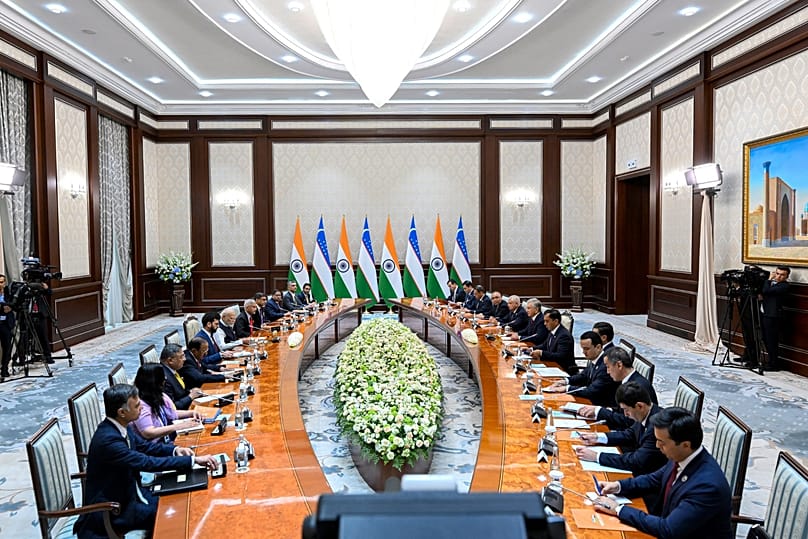
A new foreign minister-level mechanism will oversee the expanded partnership, while the existing Intergovernmental Commission will be upgraded to ministerial level.
The two countries also agreed to expand defence and security cooperation. The joint statement identifies new opportunities for cooperation between their defence industries, while India and Uzbekistan already hold the Dustlik joint military exercise.
Both sides reaffirmed a zero-tolerance approach to terrorism and called for greater cooperation in intelligence-sharing, law enforcement and counter-terrorism.
On multilateral affairs, Uzbekistan reaffirmed its support for India’s bid for permanent membership of a reformed UN Security Council.
The two leaders also pledged closer coordination within the Shanghai Cooperation Organisation and on Global South issues.
Education, culture and people-to-people ties
Tourism is also set to expand. The Uzbek presidency highlighted a 30-day visa-free regime and 14 weekly flights between the two countries, while the governments adopted a tourism cooperation programme for 2026–2028.
Four Indian universities operate in Uzbekistan and around 16,000 Indian students, many studying medicine, are enrolled in the country. India also announced 100 scholarships for Uzbek students studying Hindi.
Modi also attended a session organised by the Yoga Federation of Uzbekistan.
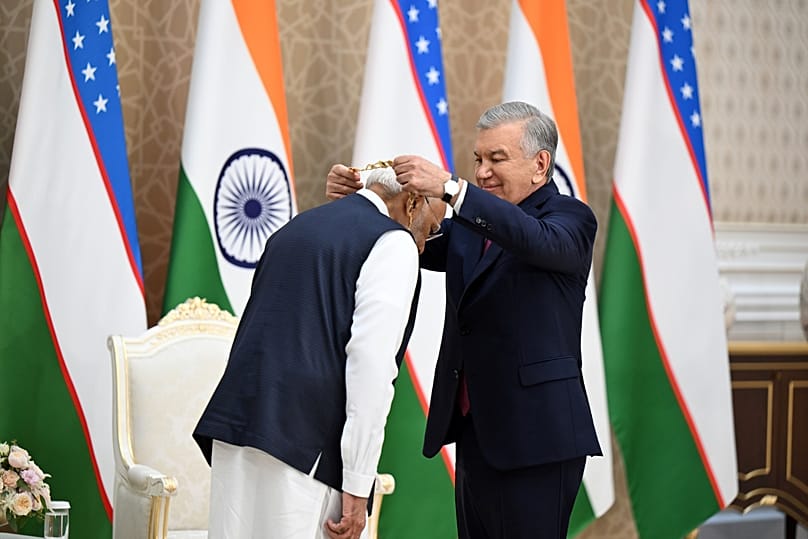
Modi was also awarded the Oliy Darajali Do‘stlik Order, which the Indian government describes as Uzbekistan’s highest honour for foreign leaders. It was his fourth visit to Uzbekistan, as the two countries marked 15 years of strategic partnership.
“A stronger India-Uzbekistan partnership will be a powerful force for peace, progress and prosperity in Central Asia,” Modi said after the talks.