














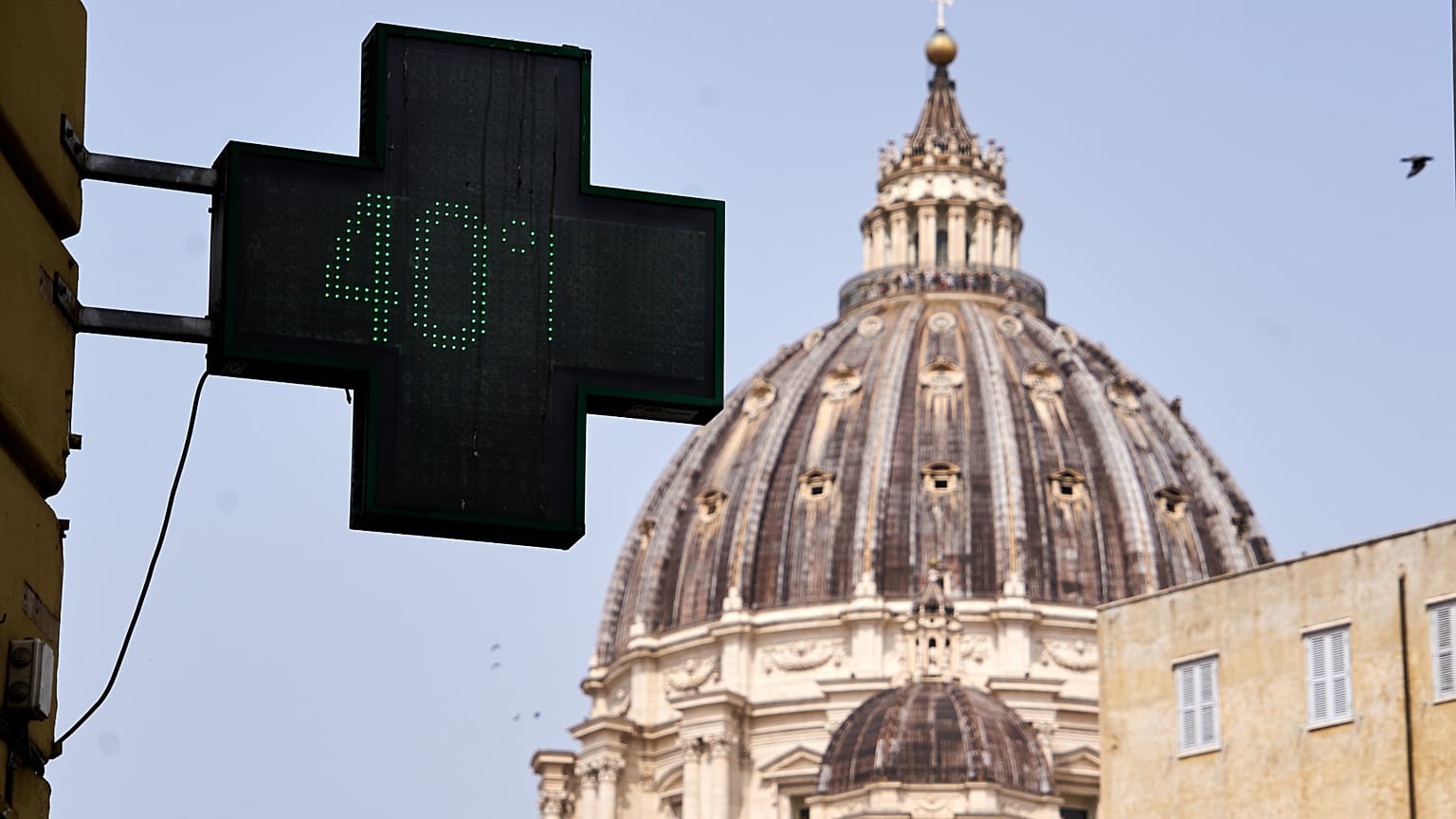













Italy's stifling summer heatwave continues with temperatures above 44C in the south and islands; the fifth heatwave will peak on Friday and forecasters say the muggy weather may last into September.
The fifth heatwave reached its peak on Friday, splitting Italy in two, with temperatures in the centre and south and on the islands rising above 40°C, a full ten degrees above average, and severe thunderstorms expected in the north in the coming hours.
 ADVERTISEMENT
ADVERTISEMENT
ADVERTISEMENT
Making matters worse is the humidity, which pushes the perceived temperature at least five degrees above the actual reading, as well as scorching nights, dubbed "tropical", with temperatures in many cases close to 30°C.
Despite a slight improvement forecast for the coming days, meteorologists have warned that temperatures will remain well above seasonal norms in September.
Nine cities are on red alert for the heat emergency, where health risks linked to extreme heat and humidity are significant even for people not considered vulnerable. These are Bari, Cagliari, Campobasso, Catania, Latina, Messina, Palermo, Reggio Calabria and Rome.
Heat emergency in the south and on the islands, slight easing from Saturday
In these urban centres, temperatures have hovered between 39°C and 40°C, but the most critical situation has been recorded in Calabria, with peaks of 44.6°C in Torano Scalo in the province of Cosenza. The Cosenza area is currently among the hardest hit, with 42.5°C in Cosenza and 41.7°C in San Cosmo Albanese. Conditions are no better in the other Calabrian provinces, where temperatures have generally stood at around 40°C or higher.
The situation is also critical in Sicily and Sardinia, with peaks of 43°C and very high feels-like temperatures compared with the readings on the thermometer.
Dust from the Sahara Desert carried by air currents from North Africa is also on its way to the centre-south and the islands.
According to the Health Ministry’s heatwave bulletin, a slight improvement is expected over the weekend, with six cities on red alert (Bari, Catania, Messina, Palermo, Reggio Calabria and Rome), dropping to four on Sunday (Catania, Messina, Palermo and Reggio Calabria).
Also on Friday, extreme temperatures and hot winds helped trigger a fresh emergency on Mount Morrone in Abruzzo. Here, the fire that for 15 days had been the main cause of concern in the region, and was considered almost extinguished as of Thursday, flared up again, making it necessary to deploy more than one hundred personnel on the ground, including firefighters and Civil Protection and army volunteers, according to the news agency Ansa.
Northern Italy hit by heavy downpours
The north, by contrast, was struck by several downpours in the morning, again as a consequence of the extreme heat, with heavy rain and hailstorms over the lower plains of Lombardy, particularly in the provinces of Bergamo and Brescia, before moving towards Veneto and Trentino.
Towards evening, thunderstorms are expected to reach Piedmont, the Aosta Valley and northern Lombardy, with rainfall intensifying from early afternoon.
WWF sounds the alarm: hottest summer ever recorded in Western Europe
"The data from this summer are unequivocal. According to Copernicus, June and July together were the hottest ever recorded in Western Europe, a full 2.79°C above the 1991–2020 average and almost 0.9°C above the previous record set in 2022. This has affected ecosystems and the lives of millions of people. The melting of Alpine glaciers is transforming high-altitude ecosystems and increasing the vulnerability of mountain areas," WWF said in a statement.
In Italy, the organisation recalled that "more than 90,000 hectares of forest have been burned, a 92% increase compared with the average for the last twenty years over this period (49,000 hectares), with almost one third of the fires occurring in protected areas. Record temperatures, drought, water scarcity and wildfires are also putting wildlife under severe stress: for this reason, WWF has called on regional authorities to suspend hunting in September".
"Seas and oceans have also recorded record temperatures. According to data provided by the Copernicus Marine Service (CMEMS), the European Union’s Earth observation programme, for the Mediterranean, June 2026 was the hottest June ever recorded. Local anomalies reached extreme peaks of up to 8°C above average. In July, water temperatures in some areas exceeded 30°C." (To be continued)