

















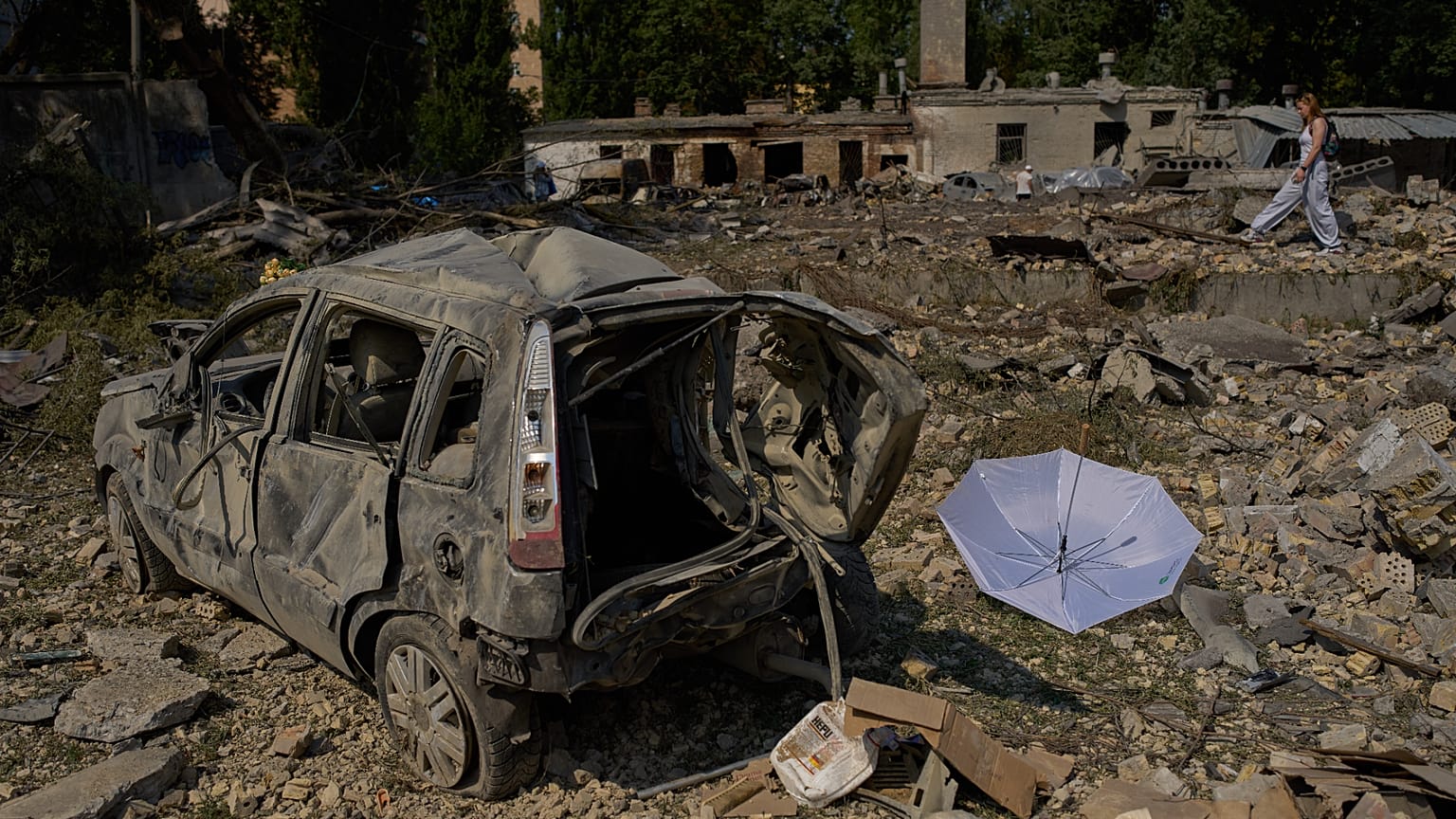














Kyiv residents describe how repeated Russian missile attacks have transformed daily life as the war reaches far beyond the front lines.
Russia’s intensifying missile attacks on Kyiv are forcing residents to adapt to nights spent in shelters as the Ukrainian capital suffers repeated strikes on residential areas.
 ADVERTISEMENT
ADVERTISEMENT
ADVERTISEMENT
One of the deadliest came overnight on 2 July, when 30 people were killed and 99 injured, according to Kyiv authorities, with damage reported at 40 locations across the city.
A 36-year-old resident who was at home with her husband and eight-year-old child described windows being shattered and a fire breaking out after the attack.
“My husband opened our apartment door and people managed to escape through our apartment, through the broken window,” she said. “Since then, every night, we sleep in shelters.”
Kyiv's health authorities say emergency medical teams attended 1,687 locations following Russian attacks between February 2022 and June this year, treating more than 2,500 people.
Russia has continued large-scale attacks, with another barrage on 20 August, killing at least 12 people in Kyiv.
Ukraine has meanwhile stepped up its own long-range strikes inside Russia, targeting oil refineries, fuel facilities and military sites. Recent attacks have hit facilities in Krasnodar and Tatarstan, while a strike on the Afipsky refinery on Tuesday killed two people, according to Russian authorities.
Despite the nightly threat, many Kyiv residents remain determined to stay.
“We go to shelters. We prepare the children for school,” one woman said. “We live.”
Cameraman: Adrian Ghita