




























The black pine jewel beetle is drawn to forest fires. This seeming paradox actually aids woodland recovery and inspires new early wildfire detection tech.
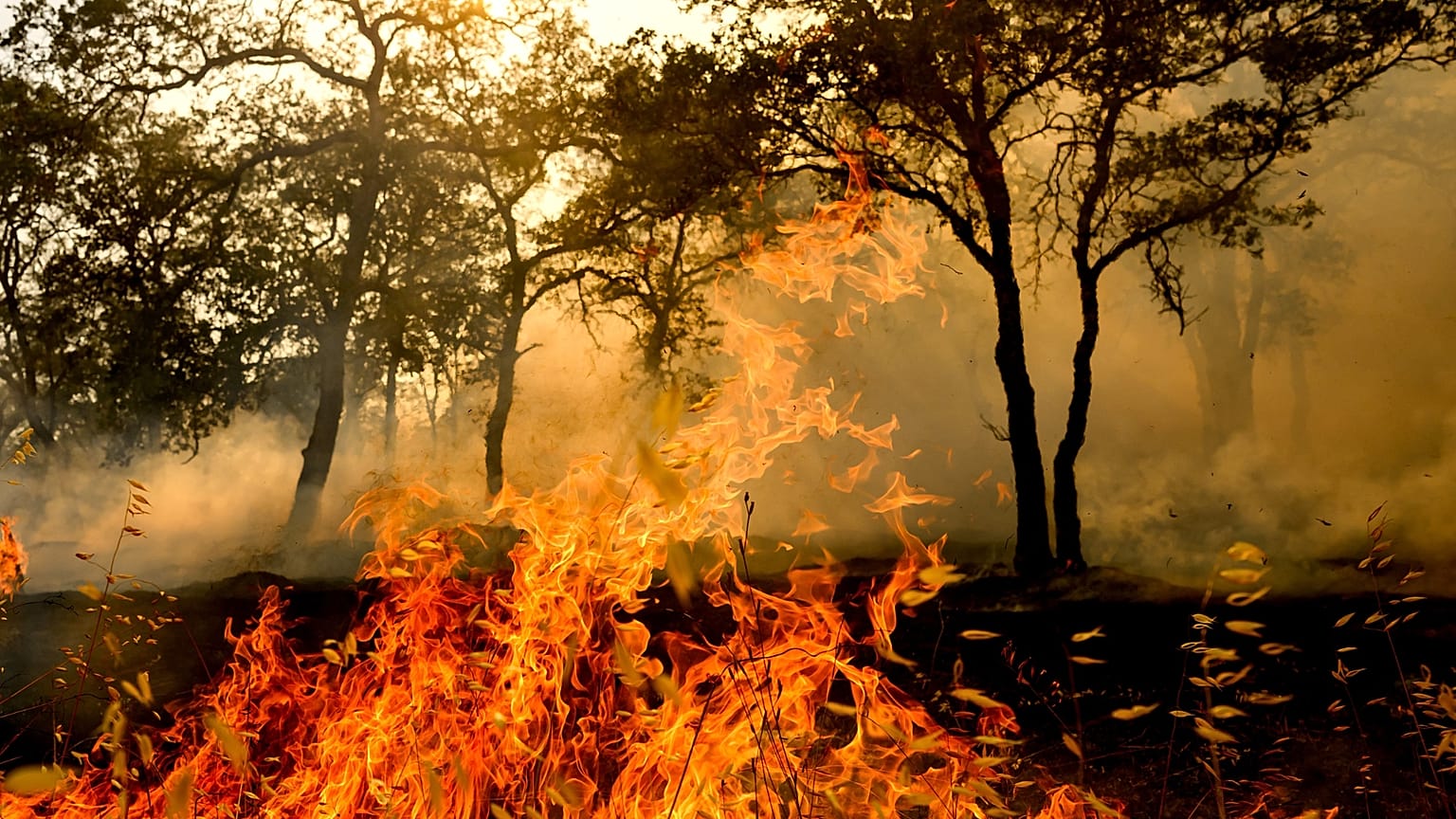
For weeks now, devastating wildfires have been raging across large parts of Europe. Entire regions have to be evacuated, people are losing their homes and, time and again, lives are being lost. The persistent heat is making the situation even worse. According to many researchers, climate change is increasing both the frequency and intensity of forest fires.
 ADVERTISEMENT
ADVERTISEMENT
ADVERTISEMENT
However, science has long since been looking not only at how fires can be extinguished . It is also investigating what happens afterwards and which solutions nature itself has in store. A key role here is played by a rather inconspicuous inhabitant of our forests: the black pine jewel beetle.
A beetle that seeks out fire
The black pine jewel beetle (Melanophila acuminata) is one of the few animals that actively respond to forest fires. As soon as a fire has gone out, it flies to the burnt areas to lay its eggs there. Biologist Lydia Schübel, head of the animal welfare inspection unit at the Munich Animal Welfare Association, explains to Euronews why this is.
"The beetle flies towards the flames because its larvae can only develop in freshly burnt trees. Healthy trees have defence mechanisms that the small white larvae cannot overcome."
What is remarkable, Schübel says, is that the animals can detect a fire "from distances of at least 80 kilometres".
How exactly the beetle finds fires has fascinated researchers for decades. Scientists at the University of Bonn have now been able to show that the insect can literally "hear" fire.
The beetle has special sensory organs on both sides of its body. They consist of tiny cavities filled with fluid. When the heat radiation from a fire hits these structures, the fluid expands and deforms fine sensory hairs. The nervous system registers these pressure changes in much the same way as sound waves.
A model for new fire detectors
This very mechanism is now set to help people as well.
Since the early 2000s, researchers at the University of Bonn have been working on replicating the beetle's sensory organ in technical form. The field of research is known as bionics, in which solutions found in nature are transferred to technical applications.
The scientists developed a simple infrared sensor inspired by the beetle. Instead of the natural sensory organ, they use a thin plastic plate that expands slightly when exposed to heat radiation and passes this movement on to a sensor.
Project leader Helmut Schmitz explained in a report on the project's current status that forest fires cause damage running into billions of euros in the European Union alone. Detecting them as early as possible could help prevent devastating mega-fires. In the long term, bionic infrared sensors could therefore contribute to early detection of fires.
According to the researchers, the first prototypes cost only a few euros and were therefore significantly cheaper than conventional infrared sensors. Although they initially did not match their performance, the researchers see them as a promising approach.
After the fire, the forest starts again
The question of what happens after a fire is also on many people's minds.
The black pine jewel beetle is one of the so-called pyrophilous species, animals that benefit from fire. Its larvae burrow through the dead wood, speeding up its decomposition.
According to Lydia Schübel, this returns nutrients to the forest soil more quickly. The loose deadwood at the same time creates favourable conditions for new plants.
The black pine jewel beetle is not alone in this. "Other pyrophilous animal species in Germany include the four-spotted ground beetle, the pit ground beetle, the pine bark bug and the smoke fly," Schübel tells Euronews.
Worldwide, they are considered important helpers in the regeneration of forests.
Some plants too are adapted to fire, Schübel says. Some possess particularly fire-resistant properties, while others only open their seed pods after being exposed to intense heat, helping forests to grow back quickly.
Even certain bird species benefit temporarily from the altered habitats. Species such as the wryneck, tree pipit or common redstart use dead trees as nesting sites and find food particularly easily in the open areas.
Forest fires remain natural disasters with usually devastating consequences. At the same time, though, they also show how resilient ecosystems can be and how much there is to learn from nature. Ironically, a beetle that goes looking for fire could in future help to detect blazes earlier and limit their impact.