

















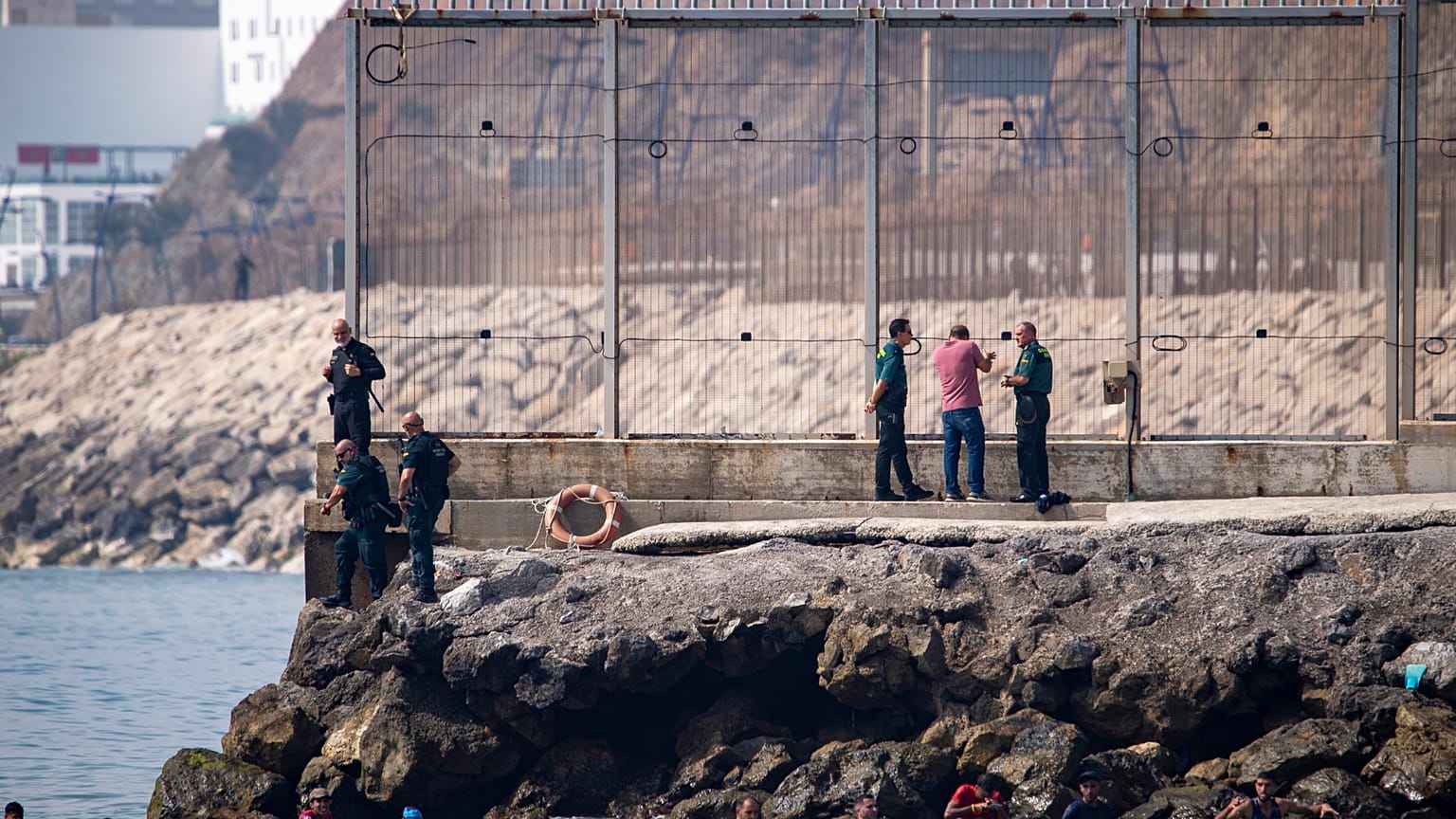














The Spanish government said on Thursday that it would deploy the army to Ceuta to reinforce security after the crossings, which saw many migrants swim around the border to reach the territory.
Italy's foreign minister has called for the closure of the Schengen area to Spain after hundreds of migrants crossed into the North African enclave of Ceuta from Morocco on Thursday.
 ADVERTISEMENT
ADVERTISEMENT
ADVERTISEMENT
In a post on X, Antonio Tajani said he was "in favour" of closing the free travel zone with Spain, arguing that "irregular and uncontrolled immigration poses a threat to national security."
"The images coming out of Ceuta show that the Madrid government’s decision to grant Spanish – and therefore European – citizenship to over 500,000 irregular migrants is profoundly misguided and encourages human trafficking," he added, apparently referring to the Spanish government's previous move to give legal status to some undocumented migrants. Spain's foreign minister said he had summoned the Italian ambassador over what he called Tajani's "inappropriate" comments.
Italian PM Giorgia Meloni echoed Tajani's words in another post on social media, saying Rome was ready to take "extraordinary measures" to defend Italy's borders, including through the "suspension of the Schengen area with Spain."
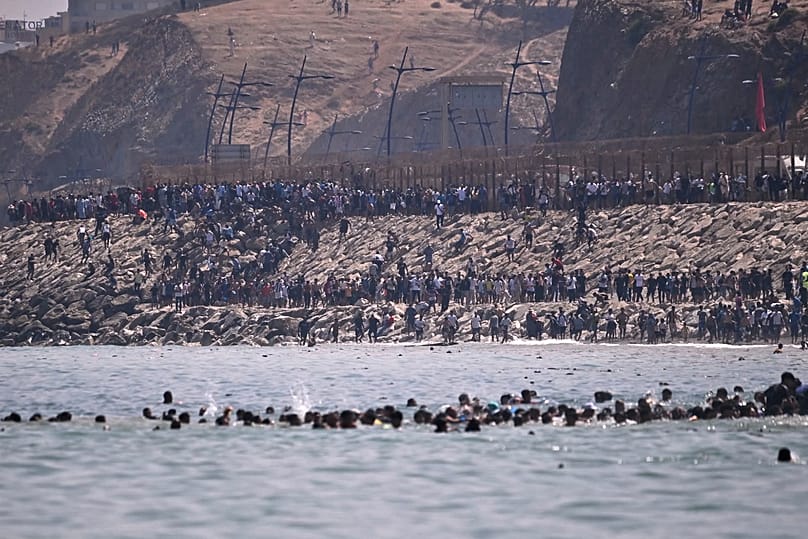
Madrid said on Thursday that it would deploy the army to Ceuta to reinforce security after the crossings, which saw many migrants swim around the border fence. Nine people reportedly died attempting to reach Ceuta.
It comes after the enclave's regional president urged Madrid to declare a national emergency and assume control of the situation in the autonomous city, warning that local authorities had become overwhelmed by the surge in illegal crossings.
The Spanish Interior Ministry had initially ruled out declaring a national emergency. It later announced the deployment of troops to help restore order and reinforce security in the territory. Spanish Prime Minister Pedro Sánchez is expected in Ceuta on Friday as political pressure grows from the opposition.
Meanwhile, the European Commissioner for Migration, Austria's Magnus Brunner, said he was in constant contact with the Spanish authorities and stressed that protecting the EU's external borders remains "a crucial part of our efforts to fight illegal migration".
The European Commission said it had offered operational support through Frontex.
The scenes recalled the 2021 migration crisis, when around 10,000 people entered Ceuta over the course of two days. While Morocco says it is cooperating with Spain and the EU to manage the latest arrivals, Rabat has previously been accused of using migration flows to exert political pressure on its European neighbour.
Spain and Morocco agree to speed up returns
Hundreds of people reached Ceuta from Morocco on Thursday, swimming or using inflatable devices to arrive at Tarajal beach, overwhelming Civil Guard officers.
More than 60 people have died attempting the crossing over the past 12 months.
Sánchez said his government was "fully committed to providing an immediate response to the situation in Ceuta" and pledged to work with the Moroccan authorities to "restore normality as soon as possible".
Spain's Interior Minister Fernando Grande-Marlaska is expected to travel to Ceuta to meet local officials and assess the situation. The two countries said they had agreed a procedure to accelerate returns, although no timeline or figures were made public.
The Spanish Interior Ministry also said human trafficking networks may be exploiting a recent court ruling to encourage undocumented migrants to attempt the crossing. Rabat blamed traffickers too, even-though its law enforcement also handles the border.
Moroccan diplomatic sources said the increase in irregular crossings did not reflect any intention by the authorities in Rabat to facilitate or promote illegal migration into Spain.
Spain's Civil Guard sources in Ceuta, however, questioned the level of Moroccan cooperation, arguing that support from the Moroccan Gendarmerie had been limited and insufficient to ease pressure at the border, despite the Spanish government's insistence that cooperation with Morocco remained active.