




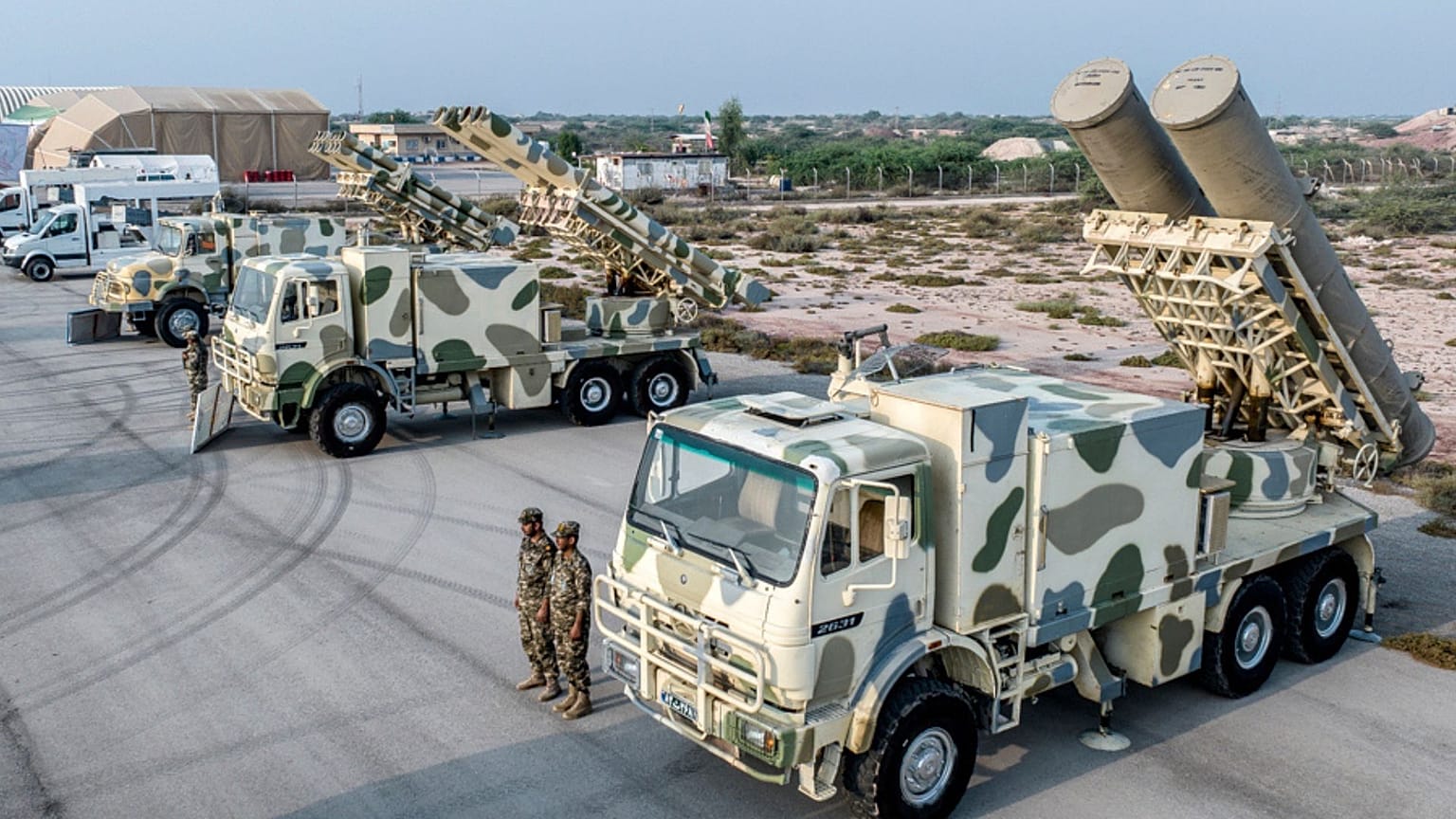













Iran said its response to any US strike on its infrastructure would result in destruction across the region, as multiple reports said Tehran had asked the Houthis to be ready to close the Bab el-Mandeb Strait, threatening a second global shipping chokepoint.
Iran said any US attack on the Islamic Republic’s infrastructure would trigger broader regional destruction, pledging to have its forces target infrastructure across the region that Tehran says has remained untouched due to its restraint.
 ADVERTISEMENT
ADVERTISEMENT
ADVERTISEMENT
Spokesperson for Iran’s Khatam al-Anbiya Central Headquarters Colonel Ebrahim Zolfaqari said Tehran would not tolerate any US interference in the Strait of Hormuz, calling it an “inviolable red line”.
“If the recent threats by the president of the United States to target the infrastructure of the Islamic Republic are carried out,” Zolfaqari said, “all infrastructure across the region that has so far remained intact solely because of Iran’s restraint will be crushed under the strikes of Iran’s armed forces.”
He added that Iran’s response would not be “proportional” but “superior,” warning that any retaliation would be “more severe, more extensive, and more devastating than ever before.”
The warning came as both sides exchanged fresh strikes for the fifth consecutive day.
Iran’s Islamic Revolutionary Guard Corps (IRGC) said it launched two waves of ballistic missiles against a US military base in Jordan, while the Iranian military said it carried out drone attacks against US army facilities in Kuwait and Bahrain.
The IRGC said the strike on Jordan was in response to what it described as a US attack near a children’s cancer hospital in Iran.
“This barbaric attack ... caused severe suffering and anxiety upon the hospitalised children,” Iranian Foreign Ministry spokesperson Esmaeil Baghaei Baghaei wrote on X, calling it “a cowardly war crime against the most innocent of human beings.”
Euronews could not independently verify the claim.
Meanwhile, the US military said it completed another wave of overnight strikes, hitting Iranian command centres, air defence systems, missile and drone capabilities — and for the first time in the current round of fighting, targets around Tehran and further north in the country.
Iranian state-run media reported strikes near Tehran, Qeshm Island, the southern port city of Chabahar and Semnan province, home to key ballistic missile production facilities and the Islamic Republic's space programme.
US forces also said they targeted a vessel they accused of attempting to breach the American naval blockade on Iran.
Bab El-Mandeb a new flashpoint?
Meanwhile, Iranian officials have increasingly framed the Strait of Hormuz as a core national security issue.
Parliament speaker and Iran’s chief negotiator Mohammad Bagher Ghalibaf said Tehran had “no reason” to accept any agreement that does not benefit Iran, adding that the country’s national security depends on maintaining what he described as “Iranian arrangements” in the Strait of Hormuz.
According to Ghalibaf, Iran’s new ayatollah Mojtaba Khamenei remained “the ultimate decision-maker on war or negotiations”.
The statement added that while Tehran does not “welcome” war, it “must always remain prepared for battle” and would continue to use diplomacy when it serves the country’s national interests.
Iranian military officials have also rejected the idea that Tehran’s ability to control the strategic waterway depends only on its southern coastline.
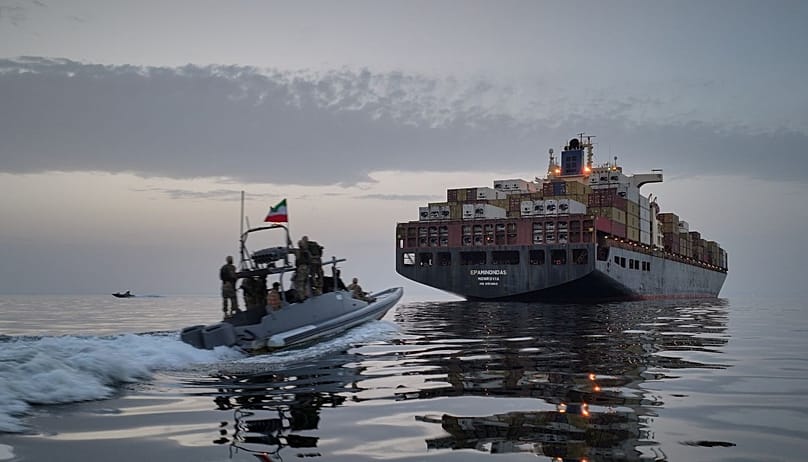
Brigadier General Mohammad Akraminia, spokesperson for the Iranian Army, said Iran could exercise control over the Strait of Hormuz “from every part of its territory.”
“The Americans believed that by attacking some of our southern bases they could gain control of this strategic waterway,” he said.
“In reality, the Islamic Republic is capable of controlling the Strait of Hormuz from across its territory, and this capability is by no means dependent on the coasts or islands.”
Akraminia warned that continued US military operations could expand the war into “new arenas of confrontation,” while insisting Iran has no dispute with neighbouring countries and remains committed to regional cooperation.
Iran’s embassy in Zimbabwe — one of the diplomatic channels tasked with spreading Tehran’s messaging abroad — reinforced that position, writing in a post on X, “The Strait of Hormuz has a master.”
Multiple media reports have since suggested that Iran has asked the Houthis in Yemen — its proxy that is part of Tehran's "Axis of Resistance" network of militants — to be prepared to close the Red Sea shipping route through the Bab el-Mandeb Strait if the US strikes Iranian infrastructure and power plants.
According to sources cited by the reports, the proposal has been discussed within Iran’s leadership and communicated to the Houthis, who have reportedly deployed missiles and drones near the strategic Red Sea waterway.
This would not be the first time that Iran or the IRGC has signalled a willingness to use regional partners to threaten access through Bab el-Mandeb, another potential pressure point for key maritime routes in the region.